
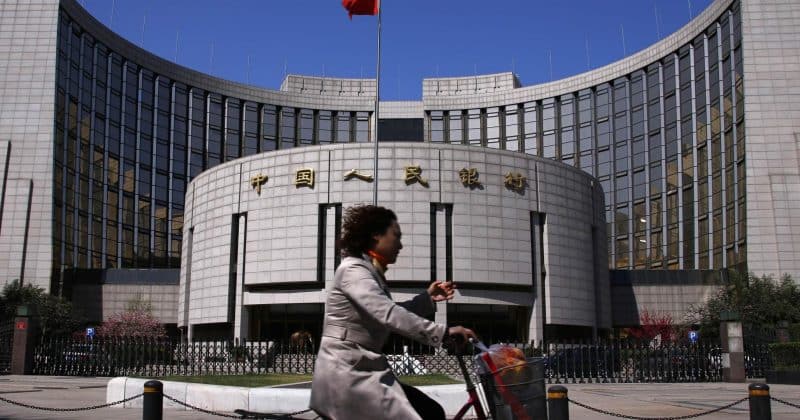
China central bank injects 232B yuan via 7-day reverse repos at 1.40%
The PBOC continues its measured liquidity campaign with no rate change, keeping markets guessing about what comes next
The People’s Bank of China pumped roughly 231.5 billion yuan into its banking system through 7-day reverse repurchase agreements, holding the rate steady at 1.40%. It’s the latest in a series of substantial liquidity injections that have defined the PBOC’s open-market operations throughout June 2026.
For context, a reverse repo is essentially a short-term loan from the central bank to commercial banks. The “fixed-rate, volume-tender” format means the PBOC sets the price and lets banks decide how much they want to borrow.
A busy month for China’s money printer
On June 23, the central bank conducted a 662.5 billion yuan operation, one of the largest single-day reverse repo injections in recent sessions. That was followed by additional operations of 524.5 billion yuan and 420.3 billion yuan in subsequent days.
The 1.40% rate has remained unchanged across multiple sessions this month. The central bank also plans to introduce overnight reverse repo operations on June 29 and 30, adding a new instrument to its liquidity management arsenal that would give the bank finer control over day-to-day money market conditions.
Macro, rates, and crypto—what moved markets and what matters next.
Daily. Free. Join 34,000+ readers across crypto, finance, and policy.
What the PBOC is really saying
The stated goal of these operations is maintaining “reasonably ample liquidity” in the banking system. The decision to hold rates flat while scaling up injection volumes suggests that the PBOC sees the current challenge as one of quantity rather than price: banks need more cash, but they don’t need cheaper cash.
What this means for crypto investors
The more relevant signal for crypto investors may be what the PBOC does next. If the PBOC uses the new overnight reverse repo tools to push overnight rates lower, that could signal a genuine easing bias. Traders should also watch the cumulative net injection figures, as large reverse repo operations can be misleading when viewed in isolation because they often coincide with maturing operations that drain liquidity in equal measure.