
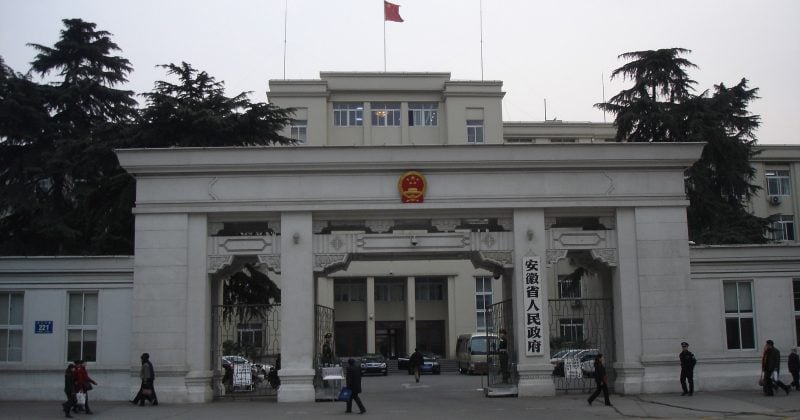
Chinese provinces approach milestone in debt refinancing plan

Chinese provinces approach milestone in debt refinancing plan

A multi-trillion yuan bond swap program is quietly reshaping China's fiscal landscape, with implications that ripple well beyond Beijing.

China’s provinces are closing in on a critical milestone in one of the largest debt restructuring exercises the world has ever seen. The country’s local governments have issued over 1.3 trillion RMB in refinancing bonds as of early May 2026, part of an ambitious program targeting 10-12 trillion RMB (roughly $1.4-$1.7 trillion) in total resources by 2028.

The hidden debt problem, explained

For years, Chinese local governments funded infrastructure through off-the-books borrowing vehicles called local government financing vehicles, or LGFVs. Think of them as shadow credit cards that provinces used to build highways, airports, and housing developments without the debt showing up on official balance sheets.

At the end of 2023, hidden debts across Chinese provinces sat at approximately 14.3 trillion RMB. By the end of 2024, that figure had dropped to about 10.5 trillion RMB. By the close of 2025, it fell further to 7.4 trillion RMB.

Advertisement

The program officially launched in November 2024, with annual quotas set at 2 trillion RMB for 2024 through 2026, and additional bond allocations extending through 2028. Some provinces have been so aggressive that they hit their 2025 annual targets early. Inner Mongolia, previously flagged as a high-risk region, managed to exit the central government’s monitoring list entirely during 2025.

Why this matters beyond China’s borders

The number of LGFVs and their operational debt has been slashed by more than 71% since March 2023. The goal is to remove these vehicles from central oversight entirely by mid-2027, freeing local officials to redirect spending toward infrastructure and public services rather than debt servicing.

The refinancing strategy is projected to save local governments around 600 billion RMB in interest costs over five years.

What this means for investors

The cautious read is equally valid. Overall debt levels across China remain persistently high. The property sector continues to weigh on the broader economy. Swapping hidden debt for official bonds doesn’t eliminate the obligation. The total quantum of liabilities hasn’t vanished. It has migrated from the shadows to the government’s balance sheet.

Watch for two signals in the coming quarters. First, whether the pace of bond issuance accelerates as provinces race toward the mid-2027 deadline for eliminating LGFVs from central oversight. Second, whether the 600 billion RMB in projected interest savings actually translates into incremental infrastructure spending or gets absorbed by other fiscal pressures.

Disclosure: This article was edited by Editorial Team. For more information on how we create and review content, see our Editorial Policy.

Chinese provinces approach milestone in debt refinancing plan

Chinese provinces approach milestone in debt refinancing plan

A multi-trillion yuan bond swap program is quietly reshaping China's fiscal landscape, with implications that ripple well beyond Beijing.

China’s provinces are closing in on a critical milestone in one of the largest debt restructuring exercises the world has ever seen. The country’s local governments have issued over 1.3 trillion RMB in refinancing bonds as of early May 2026, part of an ambitious program targeting 10-12 trillion RMB (roughly $1.4-$1.7 trillion) in total resources by 2028.

The hidden debt problem, explained

For years, Chinese local governments funded infrastructure through off-the-books borrowing vehicles called local government financing vehicles, or LGFVs. Think of them as shadow credit cards that provinces used to build highways, airports, and housing developments without the debt showing up on official balance sheets.

At the end of 2023, hidden debts across Chinese provinces sat at approximately 14.3 trillion RMB. By the end of 2024, that figure had dropped to about 10.5 trillion RMB. By the close of 2025, it fell further to 7.4 trillion RMB.

Advertisement

The program officially launched in November 2024, with annual quotas set at 2 trillion RMB for 2024 through 2026, and additional bond allocations extending through 2028. Some provinces have been so aggressive that they hit their 2025 annual targets early. Inner Mongolia, previously flagged as a high-risk region, managed to exit the central government’s monitoring list entirely during 2025.

Why this matters beyond China’s borders

The number of LGFVs and their operational debt has been slashed by more than 71% since March 2023. The goal is to remove these vehicles from central oversight entirely by mid-2027, freeing local officials to redirect spending toward infrastructure and public services rather than debt servicing.

The refinancing strategy is projected to save local governments around 600 billion RMB in interest costs over five years.

What this means for investors

The cautious read is equally valid. Overall debt levels across China remain persistently high. The property sector continues to weigh on the broader economy. Swapping hidden debt for official bonds doesn’t eliminate the obligation. The total quantum of liabilities hasn’t vanished. It has migrated from the shadows to the government’s balance sheet.

Watch for two signals in the coming quarters. First, whether the pace of bond issuance accelerates as provinces race toward the mid-2027 deadline for eliminating LGFVs from central oversight. Second, whether the 600 billion RMB in projected interest savings actually translates into incremental infrastructure spending or gets absorbed by other fiscal pressures.

Disclosure: This article was edited by Editorial Team. For more information on how we create and review content, see our Editorial Policy.