
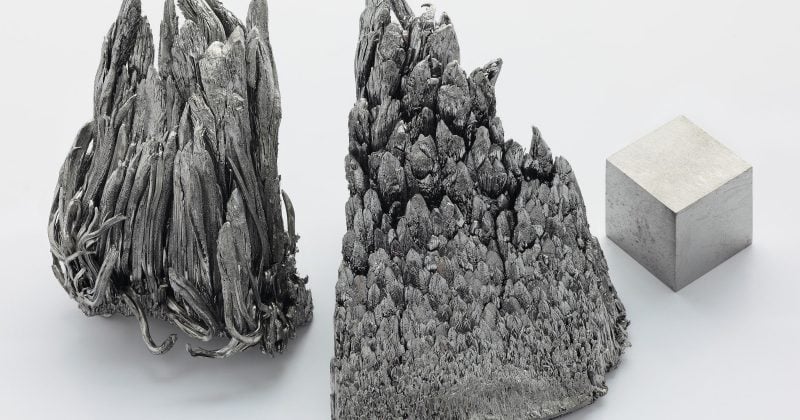
China’s rare earth export bans drive yttrium prices up as global supply chains buckle
Beijing's export controls on seven critical rare earth elements have cratered US imports and sent European spot prices soaring, exposing the West's deep dependence on Chinese mineral processing.
When one country controls roughly 90% of global processing capacity for a critical resource, it doesn’t need missiles to wage economic war. It just needs paperwork. On April 4, 2025, China’s Ministry of Commerce published Announcement No. 18, imposing export controls on seven medium and heavy rare earth elements: yttrium, samarium, gadolinium, terbium, dysprosium, lutetium, and scandium.
The result has been a masterclass in supply-side economics. Yttrium oxide prices in European markets have climbed to approximately $270/kg by late 2025, representing a roughly 4,400% increase. Spot prices surged nearly 1,500% from 2024 levels, when yttrium traded below $8/kg, to about $126/kg.
The numbers behind the squeeze
Here’s the thing about rare earth export controls: they don’t technically ban exports. They require special export licenses, which is bureaucratic code for “good luck getting approval.” The practical impact has been indistinguishable from an outright ban for most buyers.
US imports of yttrium from China tell the story cleanly. In the eight months before the controls took effect, the US imported 333 tons. In the corresponding period afterward, that figure collapsed to 17 tons. That’s a decline of roughly 95%.
These aren’t obscure minerals with niche applications. The seven targeted elements are critical inputs for semiconductors, aerospace components, defense systems, and advanced electronics. Yttrium alone shows up in everything from LED displays to jet engine coatings to medical imaging equipment.
The timing was deliberate. China’s announcement came as a direct response to US tariff increases, making these controls a retaliatory measure in the broader trade conflict between the two economies.
The news moving money, markets, and the world—before your day starts.
Daily. Free. Join 34,000+ readers across crypto, finance, and policy.
Why the West can’t just dig its way out
The common refrain whenever China flexes its rare earth dominance is that Western nations should simply develop their own mining operations. This misunderstands the problem. Rare earth elements aren’t actually rare in the geological sense. They exist in deposits across the US, Australia, Canada, and parts of Africa. The bottleneck is processing.
China controls about 90% of global rare earth processing capacity. Mining the ore is step one. Separating individual elements from that ore, a complex chemical process involving toxic waste streams and massive capital investment, is where China’s dominance becomes nearly impossible to replicate quickly.
Building a processing facility from scratch takes years and billions of dollars. Environmental permitting alone can stretch timelines well beyond a single election cycle in democratic nations. Meanwhile, China spent decades building this infrastructure, often subsidizing it at a loss to capture market share.
What this means for investors and markets
The immediate impact falls on any company whose supply chain touches these seven elements. Semiconductor manufacturers, defense contractors, and electronics producers face inflated input costs that will pressure margins.
The crypto angle here is notable mostly for its absence. Despite the massive commodity price dislocations, no significant tokenized rare earth products or blockchain-based supply chain solutions have emerged in response to these controls. The gap between traditional commodity markets and digital asset innovation remains wide on this front.