
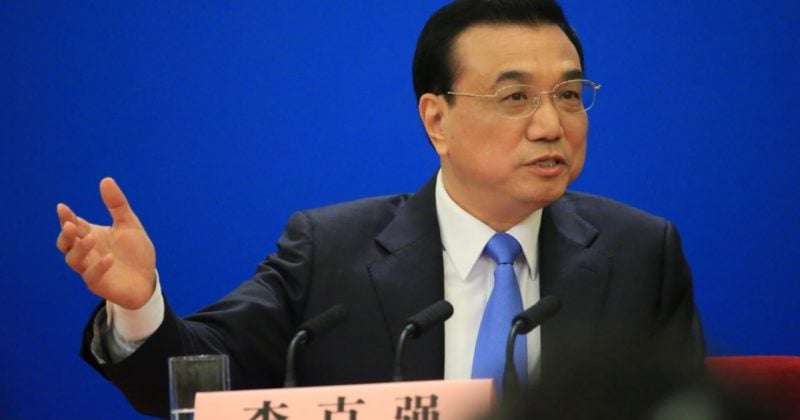
China’s Premier calls for economic adjustments amid growth challenges

https://en.wikipedia.org/wiki/Li_Keqiang

China’s Premier calls for economic adjustments amid growth challenges

China annual GDP growth 2026

China’s Premier Li Qiang has called for a clear acknowledgment of the country’s economic challenges, as reported by CCTV. This statement highlights concerns over structural weaknesses, such as a declining property market and weak consumer demand. The Premier emphasized the need for counter-cyclical adjustments to stabilize economic growth, aligning with China’s GDP target of 4.5% to 5% for 2026, the lowest since 1991. This approach is consistent with the People’s Bank of China’s plans for RRR and interest rate cuts to maintain liquidity and support domestic demand.

Advertisement

Key Takeaways

  • Premier Li Qiang’s comments appear to underscore the challenges facing China’s economy, particularly in the property market and consumer demand.
  • The call for counter-cyclical adjustments suggests a strategic shift aimed at stabilizing growth within the framework of the 15th Five-Year Plan.
  • Market pricing suggests this development is consistent with scenarios where China’s GDP growth may fall below 1.0%, reflecting increased caution among market participants.

What to Watch

Analysts will closely monitor any additional measures announced by the People’s Bank of China, particularly regarding interest rate and RRR adjustments. Attention will also focus on upcoming economic data releases that could impact perceptions of China’s growth trajectory. Further statements from key government officials, such as President Xi Jinping or Finance Minister Lan Fo’an, could provide additional insights into the country’s economic strategy. Markets appear sensitive to these developments, with potential implications for GDP growth forecasts.

Get live prediction-market analysis, powered by Vera. Sign up for Vera.

Disclosure: This article was edited by Estefano Gomez. For more information on how we create and review content, see our Editorial Policy.

China’s Premier calls for economic adjustments amid growth challenges

China’s Premier calls for economic adjustments amid growth challenges

China annual GDP growth 2026

https://en.wikipedia.org/wiki/Li_Keqiang

China’s Premier Li Qiang has called for a clear acknowledgment of the country’s economic challenges, as reported by CCTV. This statement highlights concerns over structural weaknesses, such as a declining property market and weak consumer demand. The Premier emphasized the need for counter-cyclical adjustments to stabilize economic growth, aligning with China’s GDP target of 4.5% to 5% for 2026, the lowest since 1991. This approach is consistent with the People’s Bank of China’s plans for RRR and interest rate cuts to maintain liquidity and support domestic demand.

Advertisement

Key Takeaways

  • Premier Li Qiang’s comments appear to underscore the challenges facing China’s economy, particularly in the property market and consumer demand.
  • The call for counter-cyclical adjustments suggests a strategic shift aimed at stabilizing growth within the framework of the 15th Five-Year Plan.
  • Market pricing suggests this development is consistent with scenarios where China’s GDP growth may fall below 1.0%, reflecting increased caution among market participants.

What to Watch

Analysts will closely monitor any additional measures announced by the People’s Bank of China, particularly regarding interest rate and RRR adjustments. Attention will also focus on upcoming economic data releases that could impact perceptions of China’s growth trajectory. Further statements from key government officials, such as President Xi Jinping or Finance Minister Lan Fo’an, could provide additional insights into the country’s economic strategy. Markets appear sensitive to these developments, with potential implications for GDP growth forecasts.

Get live prediction-market analysis, powered by Vera. Sign up for Vera.

Disclosure: This article was edited by Estefano Gomez. For more information on how we create and review content, see our Editorial Policy.