
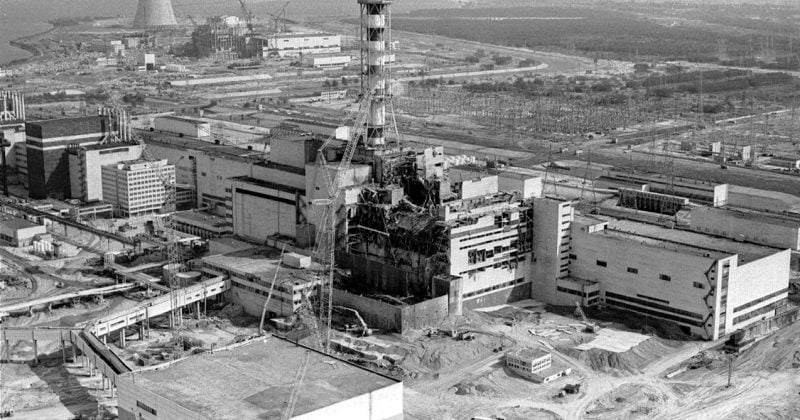
Ukrainian emergency workers battle fire at Chornobyl site after drone strike

Ukrainian emergency workers battle fire at Chornobyl site after drone strike

A Russian Shahed drone hit a spent nuclear fuel facility near the infamous plant, sparking a fire that crews quickly contained with no radiation release detected

A Russian drone struck a spent nuclear fuel reception facility roughly nine miles from the Chornobyl Nuclear Power Plant on June 7, igniting a fire that Ukrainian emergency crews raced to extinguish. The blaze covered approximately 430 square feet before responders brought it under control.

No spent nuclear fuel was actually stored in the building at the time of impact. Radiation levels in the surrounding area remained stable and within normal limits, according to monitoring by the International Atomic Energy Agency (IAEA). No injuries were reported.

What happened and why Chornobyl keeps getting hit

The weapon was identified as a Shahed/Geran-2 drone, the same Iranian-designed loitering munition that Russia has deployed extensively throughout its war in Ukraine. The target was a container-receiving building associated with spent nuclear fuel storage, not the reactor confinement structure itself.

Advertisement

On February 14, 2025, a drone strike hit the New Safe Confinement (NSC), the massive arch-shaped structure built to contain the radioactive remains of Reactor 4. That attack tore a hole greater than 500 square feet in the structure’s insulation cladding and caused smoldering fires. The IAEA inspected the February damage and confirmed no harmful radiation had been released.

Ukrainian President Volodymyr Zelenskyy condemned the latest strike, and Energoatom, Ukraine’s state nuclear energy company, along with the State Emergency Service of Ukraine coordinated the response. IAEA teams continue to maintain a presence at the site for ongoing monitoring.

The Chornobyl problem nobody wants to think about

Chornobyl has been a geopolitical flashpoint since the earliest days of Russia’s full-scale invasion. Russian forces occupied the plant and its exclusion zone in February 2022 before withdrawing weeks later, reportedly after soldiers dug trenches in contaminated soil.

The New Safe Confinement structure, completed in 2016, was engineered to last 100 years. It was designed to withstand environmental degradation, not precision drone strikes. The IAEA has repeatedly called for restraint around Ukrainian nuclear sites throughout the war.

The Shahed drones used in these strikes are relatively cheap, costing an estimated tens of thousands of dollars per unit. They are also imprecise compared to guided missiles, which makes repeated strikes near nuclear infrastructure all the more concerning.

Disclosure: This article was edited by Editorial Team. For more information on how we create and review content, see our Editorial Policy.

Ukrainian emergency workers battle fire at Chornobyl site after drone strike

Ukrainian emergency workers battle fire at Chornobyl site after drone strike

A Russian Shahed drone hit a spent nuclear fuel facility near the infamous plant, sparking a fire that crews quickly contained with no radiation release detected

A Russian drone struck a spent nuclear fuel reception facility roughly nine miles from the Chornobyl Nuclear Power Plant on June 7, igniting a fire that Ukrainian emergency crews raced to extinguish. The blaze covered approximately 430 square feet before responders brought it under control.

No spent nuclear fuel was actually stored in the building at the time of impact. Radiation levels in the surrounding area remained stable and within normal limits, according to monitoring by the International Atomic Energy Agency (IAEA). No injuries were reported.

What happened and why Chornobyl keeps getting hit

The weapon was identified as a Shahed/Geran-2 drone, the same Iranian-designed loitering munition that Russia has deployed extensively throughout its war in Ukraine. The target was a container-receiving building associated with spent nuclear fuel storage, not the reactor confinement structure itself.

Advertisement

On February 14, 2025, a drone strike hit the New Safe Confinement (NSC), the massive arch-shaped structure built to contain the radioactive remains of Reactor 4. That attack tore a hole greater than 500 square feet in the structure’s insulation cladding and caused smoldering fires. The IAEA inspected the February damage and confirmed no harmful radiation had been released.

Ukrainian President Volodymyr Zelenskyy condemned the latest strike, and Energoatom, Ukraine’s state nuclear energy company, along with the State Emergency Service of Ukraine coordinated the response. IAEA teams continue to maintain a presence at the site for ongoing monitoring.

The Chornobyl problem nobody wants to think about

Chornobyl has been a geopolitical flashpoint since the earliest days of Russia’s full-scale invasion. Russian forces occupied the plant and its exclusion zone in February 2022 before withdrawing weeks later, reportedly after soldiers dug trenches in contaminated soil.

The New Safe Confinement structure, completed in 2016, was engineered to last 100 years. It was designed to withstand environmental degradation, not precision drone strikes. The IAEA has repeatedly called for restraint around Ukrainian nuclear sites throughout the war.

The Shahed drones used in these strikes are relatively cheap, costing an estimated tens of thousands of dollars per unit. They are also imprecise compared to guided missiles, which makes repeated strikes near nuclear infrastructure all the more concerning.

Disclosure: This article was edited by Editorial Team. For more information on how we create and review content, see our Editorial Policy.