
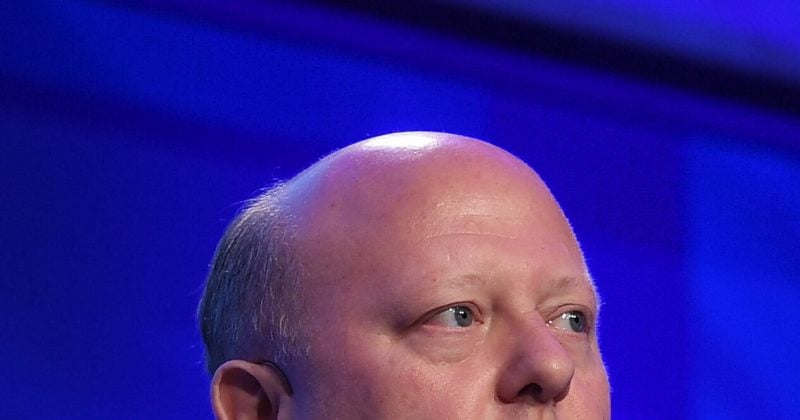
Circle CEO Jeremy Allaire says generative AI is creating an ‘explosion in smart contracts’
Speaking at VivaTech 2026, Allaire outlined a future where tens of billions of AI agents transact autonomously using USDC
Writing a smart contract used to require knowing Solidity, understanding gas optimization, and accepting that one misplaced semicolon could cost you a few million dollars. According to Circle CEO Jeremy Allaire, those days are rapidly ending.
At VivaTech 2026 in Paris on June 17, Allaire made the case that generative AI is fundamentally reshaping programmable finance by letting anyone, not just developers, turn economic intent into executable blockchain code. The result, he said, is an “explosion in smart contracts” that could redefine how financial agreements are created and settled.
From code literacy to plain English
The core argument is deceptively simple. If AI can translate natural language into working smart contracts, then the barrier to entry for programmable finance drops to approximately zero. You don’t need to hire a blockchain developer. You just need to describe what you want.
And Circle isn’t just talking about it. In May 2026, the company launched what it calls the Agent Stack, a suite of tools specifically designed for AI agents to autonomously hold digital assets and execute transactions. The primary currency for those operations: USDC, Circle’s dollar-pegged stablecoin.
Here’s the thing. This isn’t a hypothetical product roadmap. The tools are already live, and they’re built around a stablecoin that currently has nearly $80 billion in circulation.
AI, tech, and the markets they move—in one daily briefing.
Daily. Free. Join 34,000+ readers across crypto, finance, and policy.
Tens of billions of AI agents, one stablecoin
Allaire went further than most crypto executives typically do at conference keynotes. He projected that tens of billions of AI agents will eventually engage in real-economy work, and that stablecoins will serve as their primary medium of exchange.
USDC’s nearly $80 billion circulation already makes it the second-largest stablecoin by market cap, trailing only Tether’s USDT. But Allaire is clearly positioning USDC as the preferred stablecoin for the agentic economy.
The Agent Stack launch in May was the operational proof point. By giving AI agents native tools to hold and move USDC, Circle is essentially building the financial plumbing for a machine economy before most companies have even acknowledged that machine economies are coming.
What this shift means for the broader market
The competitive dynamics within stablecoins are also worth watching. Tether has long dominated by raw circulation numbers, but Circle has consistently pursued the regulated, institutional-friendly lane. Adding AI-agent infrastructure on top of that positioning creates a potential moat that’s harder to replicate than simply minting more tokens.
There’s a risk dimension here too. Autonomous AI agents executing financial transactions at scale introduces questions that regulators haven’t even begun to address. Who is liable when an AI agent enters a smart contract that goes wrong? How do you apply KYC requirements to software? These aren’t theoretical concerns anymore, they’re product design questions that Circle and others will need to answer as this technology scales.