
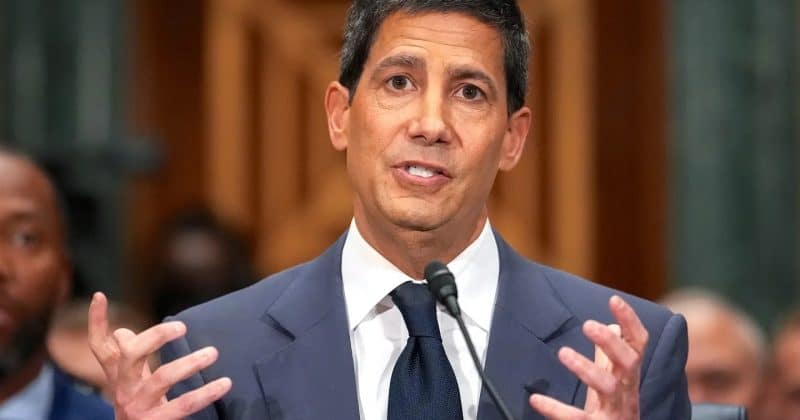
Citadel Securities warns investors underestimate Fed Chairman Warsh’s inflation resolve
The global market maker says markets are sleepwalking into a hawkish surprise that could punish risk assets across the board


Citadel Securities is telling its clients something Wall Street doesn’t want to hear: the new Fed chair means business on inflation, and most investors aren’t priced for it.
Citadel Securities’ strategist Nohshad Shah cautioned that markets are underestimating Kevin Warsh’s commitment to dragging inflation back to the 2% target. With the consumer price index hitting 4.1% in May, that’s not a small gap to close.
Warsh’s hawkish debut
Kevin Warsh was sworn in as Fed Chairman on May 22, 2026. At the FOMC meeting on June 16-17, the committee held the federal funds rate steady at 3.50-3.75%, but Warsh’s accompanying language was unmistakably hawkish.
He framed high prices as a direct burden on American households. Nine FOMC members signaled openness to rate hikes in future communications, reinforcing the impression that the committee is ready to move if conditions warrant it.
The inflation pressure cooker
Shah’s analysis, drawn from notes dated June 6 and June 20, identified three forces pushing inflation higher that investors may be discounting.
First, the AI investment boom. More than $700 billion was committed to AI-related capital expenditures in 2026. That kind of spending generates enormous demand for energy, construction, skilled labor, and specialized hardware.
The news moving money, markets, and the world—before your day starts.
Daily. Free. Join 34,000+ readers across crypto, finance, and policy.
Second, energy markets remain constrained by geopolitical disruptions.
Third, the labor market remains tight. Employers are still competing for workers, which keeps wage growth elevated. When wage growth outpaces productivity gains, it feeds directly into service-sector inflation.
What this means for risk assets
Warsh’s approach represents a notable policy shift from his predecessor’s tenure. The previous Fed leadership had been gradually easing rates from their cycle highs. A reversal of that trajectory, or even a prolonged pause at current levels, forces a fundamental repricing of forward expectations.
It’s worth noting that neither Citadel Securities’ analysis nor Warsh’s communications mentioned digital assets directly.
Citadel Securities is essentially arguing that the market’s base case assigns too little probability to the scenario where Warsh does exactly what he says he’s going to do. If inflation remains above 4% through the summer months and the labor market doesn’t cool meaningfully, the case for rate hikes becomes very difficult to ignore.