
Nexo Earn with Nexo
Clarity Act gains support from Chuck Grassley ahead of Senate vote

Clarity Act gains support from Chuck Grassley ahead of Senate vote

The veteran Iowa senator backs crypto market structure legislation that carves out protections for software developers while adding law enforcement tools.


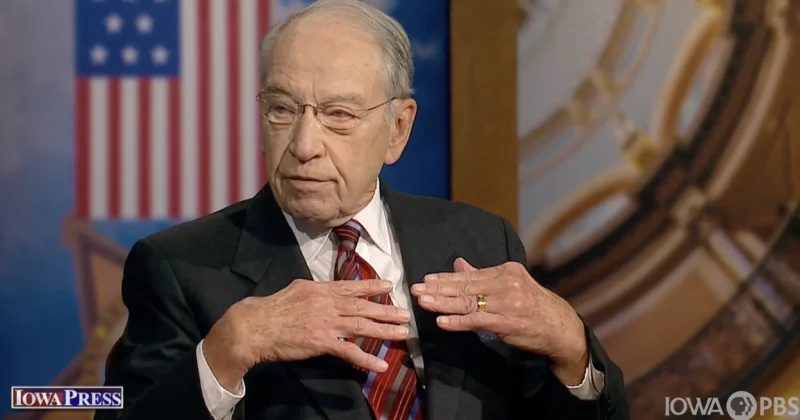
Senator Chuck Grassley has thrown his weight behind the CLARITY Act, adding a significant bipartisan endorsement to one of the most consequential pieces of crypto legislation to reach the Senate floor. The Digital Asset Market Clarity Act of 2025, originally introduced as H.R. 3633 on May 29, 2025, has been slowly building momentum, and Grassley’s support could prove to be the kind of push it needs to clear its final legislative hurdles.

What the CLARITY Act actually does

The bill distinguishes between digital assets that function as securities and those that behave more like commodities. Certain digital commodities would be explicitly exempted from classification as securities, pulling them out from under the SEC’s enforcement umbrella.

One of the bill’s most consequential provisions protects non-controlling software developers from registration requirements. Developers who write code for decentralized protocols but don’t exercise control over user funds wouldn’t be forced to register as if they were running a brokerage.

The legislation mandates anti-money laundering programs and blockchain tracing capabilities for criminal investigations. Senator Cynthia Lummis, who collaborated on the legislation, has been vocal about threading this needle, arguing the bill strengthens both innovation and security simultaneously.

The act also includes anti-CBDC measures, designed to prevent the federal government from issuing a centralized digital currency.

The long road to this moment

Senator Lummis previously championed the Lummis-Gillibrand Responsible Financial Innovation Act back in 2022. That bill stalled out in committee, a victim of political timing, regulatory turf wars, and a market that was still reeling from the FTX collapse and a wave of SEC enforcement actions against major platforms.

A bipartisan deal was closed on May 11, 2026, to enhance the AML measures in the act. The Senate Banking Committee has a markup scheduled for May 8, 2026, which represents a critical procedural step before the bill can advance to a full floor vote.

The digital asset market currently sits at a total capitalization above $2 trillion.

What this means for investors

Senator Lummis has predicted a potential 15-20% price increase for crypto assets if the bill passes. Analysts have suggested the act’s passage could drive up to $50 billion in new capital into digital assets as institutional players gain the legal certainty they’ve been waiting for.

Critics have flagged concerns that the AML requirements could disproportionately burden smaller players who lack the compliance infrastructure of larger exchanges, potentially concentrating market power among the biggest platforms.

The markup date of May 8, 2026, is the next milestone investors should have circled. If it gets bogged down in markup, some observers worry the legislation could face delays that push it into the next congressional session, potentially as far out as 2030 before another serious attempt materializes.

Disclosure: This article was edited by Editorial Team. For more information on how we create and review content, see our Editorial Policy.

Clarity Act gains support from Chuck Grassley ahead of Senate vote

Clarity Act gains support from Chuck Grassley ahead of Senate vote

The veteran Iowa senator backs crypto market structure legislation that carves out protections for software developers while adding law enforcement tools.

Senator Chuck Grassley has thrown his weight behind the CLARITY Act, adding a significant bipartisan endorsement to one of the most consequential pieces of crypto legislation to reach the Senate floor. The Digital Asset Market Clarity Act of 2025, originally introduced as H.R. 3633 on May 29, 2025, has been slowly building momentum, and Grassley’s support could prove to be the kind of push it needs to clear its final legislative hurdles.

What the CLARITY Act actually does

The bill distinguishes between digital assets that function as securities and those that behave more like commodities. Certain digital commodities would be explicitly exempted from classification as securities, pulling them out from under the SEC’s enforcement umbrella.

One of the bill’s most consequential provisions protects non-controlling software developers from registration requirements. Developers who write code for decentralized protocols but don’t exercise control over user funds wouldn’t be forced to register as if they were running a brokerage.

The legislation mandates anti-money laundering programs and blockchain tracing capabilities for criminal investigations. Senator Cynthia Lummis, who collaborated on the legislation, has been vocal about threading this needle, arguing the bill strengthens both innovation and security simultaneously.

The act also includes anti-CBDC measures, designed to prevent the federal government from issuing a centralized digital currency.

The long road to this moment

Senator Lummis previously championed the Lummis-Gillibrand Responsible Financial Innovation Act back in 2022. That bill stalled out in committee, a victim of political timing, regulatory turf wars, and a market that was still reeling from the FTX collapse and a wave of SEC enforcement actions against major platforms.

A bipartisan deal was closed on May 11, 2026, to enhance the AML measures in the act. The Senate Banking Committee has a markup scheduled for May 8, 2026, which represents a critical procedural step before the bill can advance to a full floor vote.

The digital asset market currently sits at a total capitalization above $2 trillion.

What this means for investors

Senator Lummis has predicted a potential 15-20% price increase for crypto assets if the bill passes. Analysts have suggested the act’s passage could drive up to $50 billion in new capital into digital assets as institutional players gain the legal certainty they’ve been waiting for.

Critics have flagged concerns that the AML requirements could disproportionately burden smaller players who lack the compliance infrastructure of larger exchanges, potentially concentrating market power among the biggest platforms.

The markup date of May 8, 2026, is the next milestone investors should have circled. If it gets bogged down in markup, some observers worry the legislation could face delays that push it into the next congressional session, potentially as far out as 2030 before another serious attempt materializes.

Disclosure: This article was edited by Editorial Team. For more information on how we create and review content, see our Editorial Policy.