
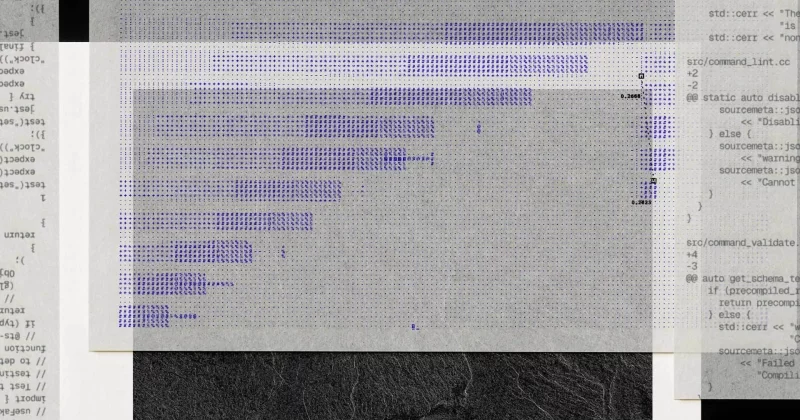
Cognition introduces FrontierCode benchmark that exposes AI coding agents’ biggest weakness
The new evaluation framework tests whether AI-generated code is actually mergeable, and current models are failing badly.
Here’s a dirty secret about AI coding agents: they can write code that works, but they often write code that no human reviewer would ever approve. Cognition Labs just built a benchmark to prove it.
The company introduced FrontierCode on June 8, a new evaluation framework designed to test whether AI-generated code meets real-world production standards. Not just “does it run” standards. Actual “would a maintainer merge this pull request” standards. The best model currently scores around 13% on the hardest subset of tasks, which tells you everything you need to know about where the industry actually stands.
Why existing benchmarks miss the point
The AI coding space has been benchmarking itself against frameworks like SWE-Bench, which primarily test whether an agent can complete isolated tasks and produce functionally correct output.
FrontierCode takes a fundamentally different approach. It evaluates end-to-end code quality across multiple dimensions that mirror what actual code reviewers care about: regression safety, test quality, scope discipline, style adherence, and compliance with repository standards.
The benchmark is split into three task sets. Diamond contains 50 tasks and represents the most challenging tier. Main includes 100 tasks. Extended rounds things out with 150 tasks. Grading relies on a combination of unit tests, rubrics, and custom verifiers, giving evaluators multiple angles to assess quality rather than a simple pass/fail on execution.
Built by the people who actually review code
One of the more notable aspects of FrontierCode is how it was constructed. Cognition didn’t build this in a vacuum. The company consulted more than 20 leading open-source maintainers spanning 36 flagship repositories to develop the benchmark tasks.
AI, tech, and the markets they move—in one daily briefing.
Daily. Free. Join 34,000+ readers across crypto, finance, and policy.
Each task required over 40 hours of expert contribution. That’s not a typo. Forty-plus hours per task, from people who spend their professional lives reviewing and merging code contributions.
Cognition’s broader play
This benchmark didn’t emerge from nowhere. Cognition has been positioning itself at the center of the AI-assisted software engineering space since launching Devin in 2024, an autonomous agent designed to handle full software development workflows in cloud environments.
The company acquired Windsurf for $250 million in 2025, adding capabilities to its autonomous engineering toolkit. FrontierCode represents the logical next step in that trajectory: establishing the evaluation criteria by which the entire industry’s tools will be measured.
What this means for AI development and adoption
The immediate takeaway for anyone building or investing in AI coding tools is sobering. A 13% score on the hardest tasks means that autonomous code generation is nowhere near ready to operate without significant human oversight in production environments.
For enterprises evaluating AI coding agents, FrontierCode provides a much-needed reality check. Marketing materials from AI companies tend to emphasize task completion rates and functional correctness. This benchmark introduces a parallel conversation about whether completed tasks actually meet the bar for professional software engineering.