
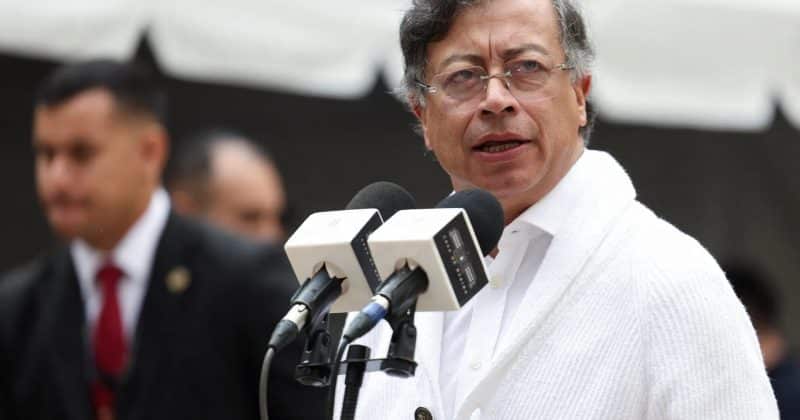
Colombia’s Gustavo Petro suspended as president until after elections
The suspension proposal throws Colombia's nascent Bitcoin mining ambitions into limbo just weeks after Petro championed renewable-energy-powered crypto hubs.
Colombia’s legislative Commission of Investigation and Accusation has proposed suspending President Gustavo Petro from office until June 21, 2026. The proposal, put forward by commission president Gloria Arizabaleta on June 10, is tied to allegations that Petro engaged in political interference in electoral activities, something Colombian law explicitly prohibits for sitting public officials.
Colombia’s first-round presidential election took place on May 31, and Petro, barred from seeking re-election by constitutional term limits, has been working to maintain political influence during the handover.
What the suspension actually means
The suspension is precautionary in nature and linked specifically to the electoral interference probe. Commission members have indicated the proposal is still under deliberation, meaning Petro technically remains in office for now.
US Treasury sanctions, imposed in October 2025, targeted Petro and his associates over drug trafficking allegations. The suspension window, if approved, would run through June 21.
Petro’s Bitcoin mining vision hangs in the balance
Just weeks before the suspension proposal, Petro was publicly championing Bitcoin mining as an economic development tool. Colombia generates roughly 75% of its electricity from renewable sources. Petro’s plan was to channel that energy into Bitcoin mining hubs along the Caribbean coast. He pointed to Paraguay and Venezuela as examples of countries already pursuing similar strategies.
The news moving money, markets, and the world—before your day starts.
Daily. Free. Join 34,000+ readers across crypto, finance, and policy.
Petro expressed intentions to partner with the Wayúu Indigenous community, framing Bitcoin mining as a path toward economic inclusion for historically marginalized populations, with mining facilities in underserved regions powered by hydroelectric and other renewable sources.
The broader Latin American crypto picture
Paraguay has already attracted significant mining operations precisely because of its cheap hydroelectric power from the Itaipu Dam. Colombia’s energy profile, at approximately 75% renewable sourcing, suggests similar potential for mining operations that sidestep criticism over Bitcoin’s energy footprint.
What this means for investors
No notable price movement in Bitcoin or other digital assets has been attributed to the suspension proposal. The mining initiative was still in the advocacy stage, not the execution stage.
The US Treasury sanctions from October 2025 add another wrinkle. Any international mining company or crypto firm considering Colombian operations has to weigh the regulatory risk of operating in a country whose outgoing president is sanctioned by Washington.