
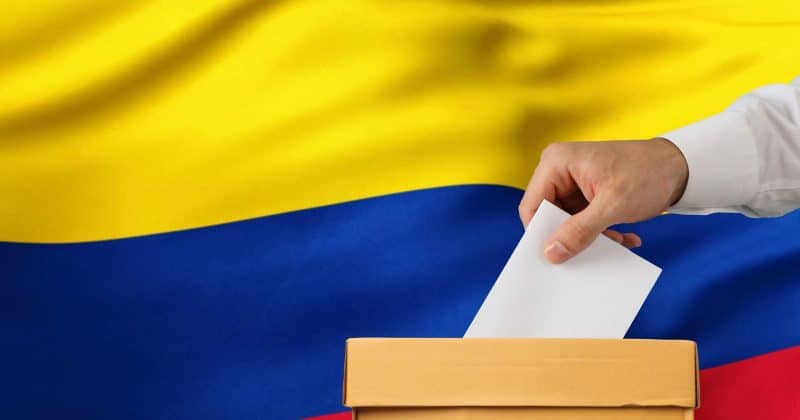
Colombia votes in polarized presidential runoff with crypto policy, US relations, and drug war at stake

Colombia votes in polarized presidential runoff with crypto policy, US relations, and drug war at stake

The runoff between far-right Abelardo de la Espriella and left-wing Iván Cepeda will shape the country's economic trajectory, including its growing crypto sector

Colombians headed to the polls on June 21 in a presidential runoff that pits two ideological opposites against each other, with the outcome poised to reshape everything from drug enforcement policy to the country’s relationship with the United States. For a nation that processed roughly $6.7 billion in crypto transactions in 2024, the result also carries quieter but meaningful implications for digital asset regulation in Latin America’s fourth-largest economy.

Far-right independent candidate Abelardo de la Espriella, a criminal defense attorney running on a hardline anti-cartel platform, faces off against left-wing Historic Pact senator Iván Cepeda, a human rights activist pushing progressive taxation. Neither cleared the 50% threshold needed to win outright in the first round on May 31, setting the stage for today’s decisive vote.

How we got here

The first round wasn’t particularly close, but it wasn’t a blowout either. De la Espriella captured 43.7% of the vote compared to Cepeda’s 40.9%, with overall turnout reaching 57.9%. No election-related violence was reported during that initial round, according to international observers.

Advertisement

De la Espriella enters the runoff as the heavy favorite. Polling and prediction markets have tilted decisively in his direction since the first round.

The election is fundamentally a referendum on outgoing President Gustavo Petro’s tenure, and specifically his “total peace” negotiation strategy. Petro’s approach aimed to bring armed groups and criminal organizations to the bargaining table rather than confront them militarily. His critics, de la Espriella chief among them, argue that strategy backfired spectacularly, pointing to rising violence and record cocaine production during Petro’s time in office.

Cepeda’s platform centers on expanding social programs funded through higher taxes on the wealthy.

The crypto angle Colombia doesn’t talk about

Neither candidate has made cryptocurrency a centerpiece of their campaign. Colombia ranked 29th globally in crypto adoption, backed by that $6.7 billion in transaction volume during 2024.

Outgoing President Petro himself floated the idea of Bitcoin mining in Colombia’s Caribbean region, a comment that signaled at least some openness to integrating digital assets into the country’s energy and economic planning.

What this means for investors

Colombia’s relationship with the United States has been strained under Petro, with ongoing disputes over counternarcotics cooperation and sanctions. De la Espriella has signaled he would take a more conciliatory approach toward Washington, which could ease economic friction and potentially open the door for more foreign investment across sectors, crypto included.

The winner takes office on August 7. Between now and then, investors in Latin American crypto markets should watch for three things: the new president’s cabinet appointments, particularly the finance minister; any early signals on financial regulation; and the tone of initial diplomatic exchanges with the US.

Disclosure: This article was edited by Editorial Team. For more information on how we create and review content, see our Editorial Policy.

Colombia votes in polarized presidential runoff with crypto policy, US relations, and drug war at stake

Colombia votes in polarized presidential runoff with crypto policy, US relations, and drug war at stake

The runoff between far-right Abelardo de la Espriella and left-wing Iván Cepeda will shape the country's economic trajectory, including its growing crypto sector

Colombians headed to the polls on June 21 in a presidential runoff that pits two ideological opposites against each other, with the outcome poised to reshape everything from drug enforcement policy to the country’s relationship with the United States. For a nation that processed roughly $6.7 billion in crypto transactions in 2024, the result also carries quieter but meaningful implications for digital asset regulation in Latin America’s fourth-largest economy.

Far-right independent candidate Abelardo de la Espriella, a criminal defense attorney running on a hardline anti-cartel platform, faces off against left-wing Historic Pact senator Iván Cepeda, a human rights activist pushing progressive taxation. Neither cleared the 50% threshold needed to win outright in the first round on May 31, setting the stage for today’s decisive vote.

How we got here

The first round wasn’t particularly close, but it wasn’t a blowout either. De la Espriella captured 43.7% of the vote compared to Cepeda’s 40.9%, with overall turnout reaching 57.9%. No election-related violence was reported during that initial round, according to international observers.

Advertisement

De la Espriella enters the runoff as the heavy favorite. Polling and prediction markets have tilted decisively in his direction since the first round.

The election is fundamentally a referendum on outgoing President Gustavo Petro’s tenure, and specifically his “total peace” negotiation strategy. Petro’s approach aimed to bring armed groups and criminal organizations to the bargaining table rather than confront them militarily. His critics, de la Espriella chief among them, argue that strategy backfired spectacularly, pointing to rising violence and record cocaine production during Petro’s time in office.

Cepeda’s platform centers on expanding social programs funded through higher taxes on the wealthy.

The crypto angle Colombia doesn’t talk about

Neither candidate has made cryptocurrency a centerpiece of their campaign. Colombia ranked 29th globally in crypto adoption, backed by that $6.7 billion in transaction volume during 2024.

Outgoing President Petro himself floated the idea of Bitcoin mining in Colombia’s Caribbean region, a comment that signaled at least some openness to integrating digital assets into the country’s energy and economic planning.

What this means for investors

Colombia’s relationship with the United States has been strained under Petro, with ongoing disputes over counternarcotics cooperation and sanctions. De la Espriella has signaled he would take a more conciliatory approach toward Washington, which could ease economic friction and potentially open the door for more foreign investment across sectors, crypto included.

The winner takes office on August 7. Between now and then, investors in Latin American crypto markets should watch for three things: the new president’s cabinet appointments, particularly the finance minister; any early signals on financial regulation; and the tone of initial diplomatic exchanges with the US.

Disclosure: This article was edited by Editorial Team. For more information on how we create and review content, see our Editorial Policy.