
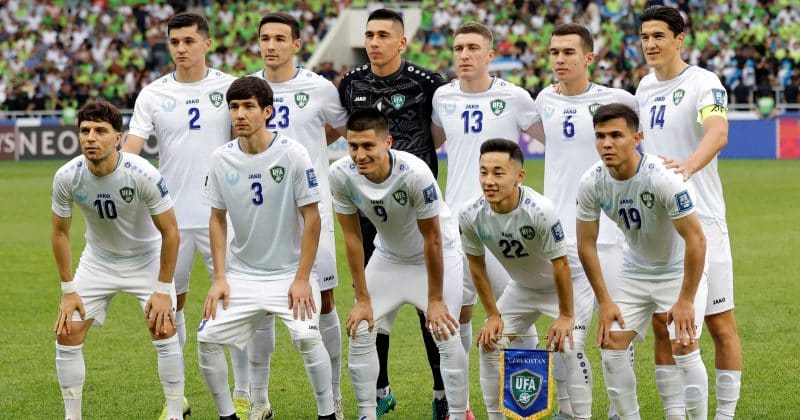
Colombia defeats Uzbekistan 3-1 in World Cup opener as crypto sponsors flood FIFA’s biggest stage

Colombia defeats Uzbekistan 3-1 in World Cup opener as crypto sponsors flood FIFA’s biggest stage

Kraken, Avalanche, and Chiliz are embedded in the 2026 tournament while prediction markets trade match outcomes in real time

Colombia opened their 2026 FIFA World Cup campaign with a convincing 3-1 win over Uzbekistan on June 17 at Estadio Azteca in Mexico City. The result was significant beyond the pitch. It played out against the backdrop of crypto’s most aggressive push yet into global sports, with exchanges, Layer 1 blockchains, and prediction markets all staking claims inside FIFA’s expanded 48-team tournament.

For Uzbekistan, the match marked the nation’s first-ever World Cup appearance, making them the first Central Asian country to reach the finals. They showed early resilience but ultimately couldn’t contain a Colombian squad loaded with elite talent.

How the match unfolded

Daniel Muñoz broke the deadlock for Colombia before halftime, giving the South American side a 1-0 lead heading into the break. Uzbekistan responded almost immediately after the restart, with Abbosbek Fayzullaev finding the equalizer to level the score at 1-1.

The parity didn’t last. Luis Díaz restored Colombia’s lead in the second half, and Jáminton Campaz added a third to put the game beyond reach. The final whistle read 3-1, giving Colombia a strong start in Group K and leaving Uzbekistan with a steep hill to climb in their remaining fixtures.

Advertisement

Crypto’s growing footprint inside FIFA

Kraken was announced as the Official Crypto Exchange Supporter of the 2026 FIFA World Cup on June 9, just over a week before the Colombia-Uzbekistan match.

Kraken isn’t alone. The tournament features partnerships with Avalanche, Chiliz, and Chainlink for crypto infrastructure. Chiliz, the company behind the Socios fan token platform, has been the dominant player in sports-blockchain crossover for years. Avalanche brings Layer 1 scalability to whatever fan engagement or ticketing experiments FIFA wants to run. Chainlink provides the oracle infrastructure that connects on-chain applications to real-world data, including match results and statistics.

Prediction markets also entered the picture. Platforms like Kalshi and Fanatics Markets offered trading options on match outcomes, letting users put money on results in a way that blurs the line between sports betting and financial speculation.

A gap at the team level

For all the institutional crypto activity swirling around the tournament, neither Colombia nor Uzbekistan has launched fan tokens or entered into blockchain-specific sponsorship deals.

Fan tokens, popularized by clubs like Paris Saint-Germain and Barcelona through Socios, give holders governance-lite voting rights and access to exclusive content. But for this particular match, neither squad brought crypto partnerships to the table.

What this means for investors

Second, prediction markets are quietly becoming one of crypto’s most compelling use cases. Traditional prediction platforms like Kalshi entering the World Cup space signals that regulated and crypto-native versions of this market are converging. For investors in oracle networks like Chainlink, which provide the data feeds these markets depend on, increased prediction market activity is a direct tailwind.

Third, the fan token sector remains a wild card. Chiliz’s CHZ token and the broader Socios ecosystem have experienced volatile cycles tied to major sporting events. Previous World Cups and European Championships triggered short-term surges in fan token trading volume.

Disclosure: This article was edited by Editorial Team. For more information on how we create and review content, see our Editorial Policy.

Colombia defeats Uzbekistan 3-1 in World Cup opener as crypto sponsors flood FIFA’s biggest stage

Colombia defeats Uzbekistan 3-1 in World Cup opener as crypto sponsors flood FIFA’s biggest stage

Kraken, Avalanche, and Chiliz are embedded in the 2026 tournament while prediction markets trade match outcomes in real time

Colombia opened their 2026 FIFA World Cup campaign with a convincing 3-1 win over Uzbekistan on June 17 at Estadio Azteca in Mexico City. The result was significant beyond the pitch. It played out against the backdrop of crypto’s most aggressive push yet into global sports, with exchanges, Layer 1 blockchains, and prediction markets all staking claims inside FIFA’s expanded 48-team tournament.

For Uzbekistan, the match marked the nation’s first-ever World Cup appearance, making them the first Central Asian country to reach the finals. They showed early resilience but ultimately couldn’t contain a Colombian squad loaded with elite talent.

How the match unfolded

Daniel Muñoz broke the deadlock for Colombia before halftime, giving the South American side a 1-0 lead heading into the break. Uzbekistan responded almost immediately after the restart, with Abbosbek Fayzullaev finding the equalizer to level the score at 1-1.

The parity didn’t last. Luis Díaz restored Colombia’s lead in the second half, and Jáminton Campaz added a third to put the game beyond reach. The final whistle read 3-1, giving Colombia a strong start in Group K and leaving Uzbekistan with a steep hill to climb in their remaining fixtures.

Advertisement

Crypto’s growing footprint inside FIFA

Kraken was announced as the Official Crypto Exchange Supporter of the 2026 FIFA World Cup on June 9, just over a week before the Colombia-Uzbekistan match.

Kraken isn’t alone. The tournament features partnerships with Avalanche, Chiliz, and Chainlink for crypto infrastructure. Chiliz, the company behind the Socios fan token platform, has been the dominant player in sports-blockchain crossover for years. Avalanche brings Layer 1 scalability to whatever fan engagement or ticketing experiments FIFA wants to run. Chainlink provides the oracle infrastructure that connects on-chain applications to real-world data, including match results and statistics.

Prediction markets also entered the picture. Platforms like Kalshi and Fanatics Markets offered trading options on match outcomes, letting users put money on results in a way that blurs the line between sports betting and financial speculation.

A gap at the team level

For all the institutional crypto activity swirling around the tournament, neither Colombia nor Uzbekistan has launched fan tokens or entered into blockchain-specific sponsorship deals.

Fan tokens, popularized by clubs like Paris Saint-Germain and Barcelona through Socios, give holders governance-lite voting rights and access to exclusive content. But for this particular match, neither squad brought crypto partnerships to the table.

What this means for investors

Second, prediction markets are quietly becoming one of crypto’s most compelling use cases. Traditional prediction platforms like Kalshi entering the World Cup space signals that regulated and crypto-native versions of this market are converging. For investors in oracle networks like Chainlink, which provide the data feeds these markets depend on, increased prediction market activity is a direct tailwind.

Third, the fan token sector remains a wild card. Chiliz’s CHZ token and the broader Socios ecosystem have experienced volatile cycles tied to major sporting events. Previous World Cups and European Championships triggered short-term surges in fan token trading volume.

Disclosure: This article was edited by Editorial Team. For more information on how we create and review content, see our Editorial Policy.