
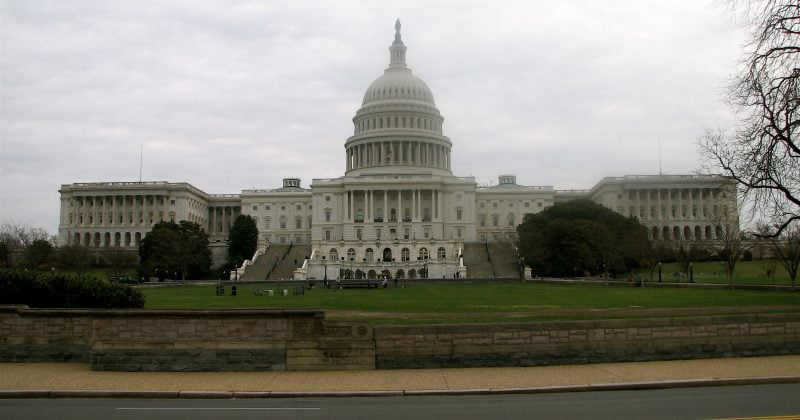
https://commons.wikimedia.org/wiki/United_States_Capitol
Congress nears new sanctions on Russia over Ukraine conflict
Russia-Ukraine ceasefire agreement
The U.S. Congress is reportedly nearing the passage of new sanctions against Russia in response to its ongoing military actions in Ukraine, according to a report from Punchbowl News. The legislative measures aim to intensify pressure on Moscow by targeting the country’s oil and gas sectors, which are crucial to funding its military operations. This development occurs against the backdrop of continued hostilities, with Russia maintaining its occupation of approximately 20% of Ukrainian territory. The potential for increased U.S. sanctions reflects a broader escalation in international efforts to restrain Moscow’s actions, despite some resistance from within the U.S. Senate and the White House.
The market for a ceasefire agreement between Russia and Ukraine by the end of 2026 has shown a decrease in confidence, as reflected in the latest pricing. This market has seen a decline in the probability of a ceasefire, with the December 31, 2026 sub-market currently priced at a 39% likelihood for a YES resolution, down from 40% a week ago. This trend suggests that market participants perceive the new legislative actions as potentially extending the conflict, thus diminishing the prospects for a ceasefire agreement within the specified timeframe.
Key Takeaways
- Market pricing suggests that Congress’s move to enact new penalties on Russia is perceived as reducing the likelihood of a ceasefire agreement by 2026.
- The probability of a ceasefire agreement by December 31, 2026, has decreased from 40% to 39%, indicating increased skepticism among market participants.
- Legislative measures are focused on Russia’s oil and gas sectors, aiming to cut off a key revenue stream for its military operations in Ukraine.
What to Watch
Observers should monitor any further developments in U.S. legislative actions and their potential impacts on international relations with Russia. Key indicators include announcements from President Donald Trump or Secretary of State Marco Rubio regarding U.S. mediation efforts or sanctions. Additionally, any significant changes in the military situation in Ukraine, such as new offensives or territorial gains by either side, could influence market sentiment on the likelihood of a ceasefire agreement. The response from Russian officials, including President Vladimir Putin and Foreign Minister Sergey Lavrov, will also be crucial in assessing the potential for diplomatic resolutions.