
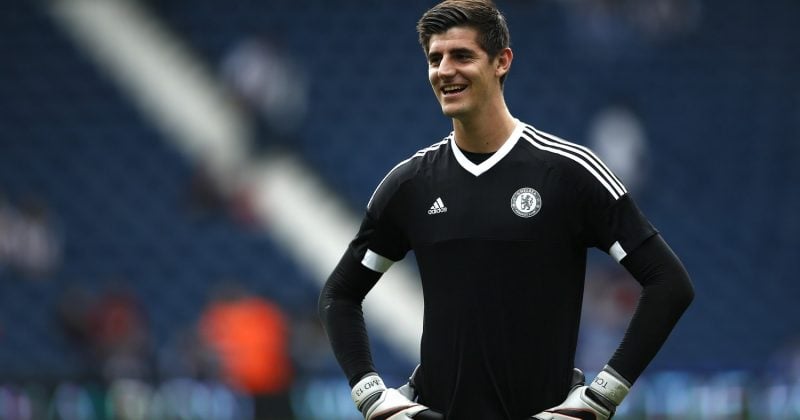
Belgium’s World Cup dreams collapse after Courtois exits in tears, and sports betting markets moved fast
The goalkeeper's quarterfinal injury against Spain triggered immediate shifts in live betting odds, highlighting how real-time sports events ripple through prediction markets and crypto-native sportsbooks.
Thibaut Courtois, Belgium’s 34-year-old goalkeeper and one of the most decorated shot-stoppers in modern football, was substituted in the 71st minute of Belgium’s World Cup 2026 quarterfinal against Spain on July 10. He left the pitch at SoFi Stadium in tears, clutching what appeared to be a hip or thigh injury sustained while diving to stop a shot from Spain’s Mikel Oyarzabal.
Minutes later, Spain’s Mikel Merino buried the decisive goal. Belgium’s tournament was over.
What happened on the pitch
Courtois, who has accumulated over 100 international caps for Belgium, went down attempting a save and was unable to continue. Senne Lammens came on as his replacement during a hydration break.
For Courtois personally, the moment was devastating. The Real Madrid starter has battled a brutal sequence of lower-body injuries over the past two years, including an ACL tear in 2023 and recurring thigh strains and knee problems that have limited his availability at both club and international level.
Why crypto markets care about a goalkeeper’s knee
Sports betting is one of the largest real-world use cases for blockchain technology right now. Platforms like Polymarket, Azuro, and a growing number of decentralized sportsbooks process significant volume around major sporting events, with the World Cup historically driving some of the highest engagement spikes in prediction market history.
The news moving money, markets, and the world—before your day starts.
Daily. Free. Join 34,000+ readers across crypto, finance, and policy.
When a starting goalkeeper exits a World Cup quarterfinal, the implied probability of the opposing team winning shifts dramatically within seconds. On-chain prediction markets, which settle automatically via smart contracts, reflect these shifts with a transparency and speed that traditional bookmakers often can’t match.
The broader sports betting landscape
Events like the Courtois injury illustrate both the opportunity and the challenge. The opportunity is that real-time, permissionless markets can react to live events without intermediaries. The challenge is that information asymmetry, where some bettors learn about an injury seconds before others, can create front-running dynamics that are even harder to police on decentralized platforms than on centralized ones.
For protocols like Azuro, which provides liquidity infrastructure for on-chain sports betting, and Overtime Markets, built on Thales Protocol, high-profile World Cup moments generate volume and visibility that attract new users and liquidity providers. These platforms typically take a small fee on each trade, meaning more volume translates directly to more protocol revenue.
What investors should watch
For investors tracking the prediction market space, the key metrics to watch are total volume processed during the tournament, the speed and accuracy of oracle updates during live events, and whether any major settlement disputes arise.
The risk, as always, is regulatory. Sports betting regulations vary wildly by jurisdiction, and decentralized platforms operate in a legal gray area in many countries.