
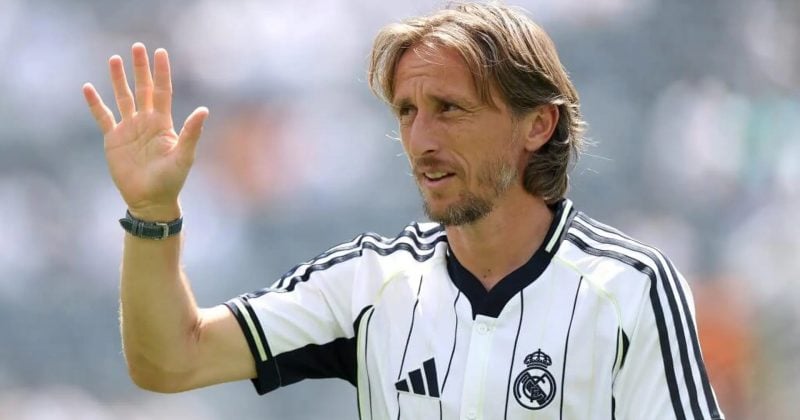
Croatia defies odds with Luka Modric ahead of 2026 World Cup, and crypto is along for the ride
The 40-year-old midfielder is heading to his fifth World Cup while moonlighting as a crypto exchange ambassador, bridging two worlds that rarely overlap this cleanly
A country of roughly 4 million people has no business producing one of the greatest midfielders in football history. And yet Croatia keeps showing up to major tournaments like it didn’t get the memo about population-based expectations.
Luka Modric, now 40 years old and carrying 198 international caps, was named to Croatia’s 2026 World Cup squad on May 18. He’s targeting 200 appearances during the tournament, a number that would cement an already absurd legacy. He’s also calling this his final World Cup.
The football story that writes itself
Modric’s inclusion in the squad wasn’t a given. He fractured his cheekbone in April, the kind of injury that might have sidelined a younger player for longer. But Modric recovered in time.
This will be his fifth World Cup.
Croatia opens their 2026 campaign against England on June 17. That’s a rematch of the 2018 World Cup semifinal, which Croatia won before losing to France in the final. Modric took home the Ballon d’Or that year, the sport’s highest individual honor, breaking the decade-long stranglehold Messi and Ronaldo had on the award.
Four years later, Croatia grabbed third place at the 2022 World Cup in Qatar.
The news moving money, markets, and the world—before your day starts.
Daily. Free. Join 34,000+ readers across crypto, finance, and policy.
Where crypto enters the picture
Modric isn’t just lacing up boots for one last tournament run. He’s also stepped into the digital assets world as a global brand ambassador for CoinW, a crypto trading platform. That deal was announced on April 9, 2026.
CoinW is running a World Trading Championship promotion timed to the World Cup, using Modric’s face and reputation to bridge the gap between football fans and crypto traders.
Meanwhile, fan tokens bearing Modric’s name have popped up on the Solana blockchain. These MODRIC tokens carry a market cap hovering around $100K to $107K, with trading volumes that can charitably be described as thin.
Team-based fan tokens, like those on Chiliz’s platform for clubs like Barcelona and PSG, have historically performed better than individual player tokens, partly because club loyalty tends to be more durable than individual celebrity attachment.