
Nexo Earn with Nexo
Abaxx Markets’ Jeff Currie warns Hormuz oil flows may not normalize until year-end

Abaxx Markets’ Jeff Currie warns Hormuz oil flows may not normalize until year-end

The former Goldman Sachs commodities chief says global oil inventories are drawing down fast, with Asian markets approaching 'tank bottoms' and US storage potentially empty by July

Jeff Currie, the newly appointed executive co-chairman at Abaxx Markets, delivered a blunt assessment of the global oil supply picture on May 18: the market is in deficit, inventories are draining at an alarming pace, and the uncertainty around the Strait of Hormuz isn’t going away anytime soon.

“The uncertainty remains quite high” around the Strait, Currie said, adding that maintaining the US-Iran ceasefire will prove challenging.

The inventory problem is worse than it looks

Asian oil markets have approached what traders call “tank bottoms,” the point where storage facilities are essentially running on fumes. Europe isn’t far behind. And Currie’s most striking claim: US storage could be effectively depleted by July 4, 2026.

Advertisement

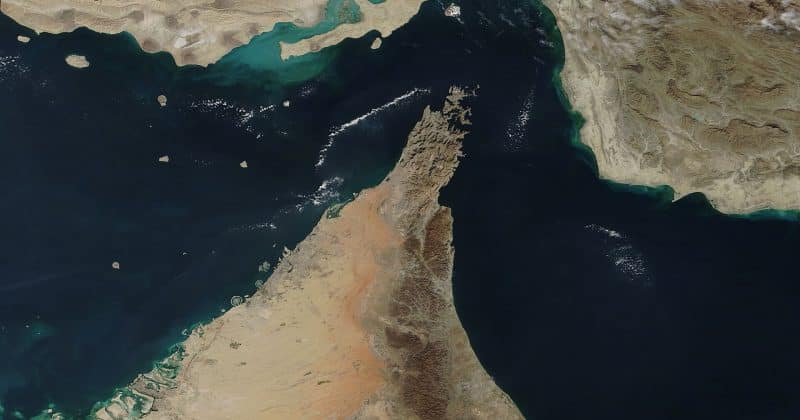
Roughly 20-25% of the world’s seaborne oil trade passes through the Strait of Hormuz. When that chokepoint faces disruptions, the downstream effects ripple across every major importing region. The early 2026 disruptions created exactly this scenario, and the market is still digesting the consequences.

Currie’s new perch at Abaxx

Currie joined Abaxx Markets as executive co-chairman on May 13, 2026, just five days before issuing these warnings. He also serves as a senior advisor at Carlyle Group, giving him a dual vantage point across commodity markets and private capital.

Abaxx operates a commodity futures exchange offering physically deliverable contracts, including gold and LNG futures. But it’s also building Digital Title technology designed for tokenization and collateral mobilization of real-world assets, targeting T+0 settlement rather than the glacial pace of traditional commodity settlement.

Why this matters beyond oil trading desks

With global inventories this depleted, Iran holds significantly more negotiating power in any ceasefire discussions. Every week of restricted flows tightens the market further, which means Tehran’s bargaining position improves with time.

Even in a best-case scenario where full flows resume immediately, rebuilding strategic and commercial reserves will require sustained purchasing that keeps demand elevated. Currie’s assessment is that normalization may not arrive until year-end.

Investors watching this space should pay attention to three signals: weekly inventory reports from the US Energy Information Administration to track the July depletion timeline, any changes in Iranian export volumes as a proxy for ceasefire health, and Asian refinery run rates that indicate whether the region is managing through its storage constraints or hitting operational limits. The spread between near-term and longer-dated oil futures, known as backwardation, will also tell the story.

Disclosure: This article was edited by Editorial Team. For more information on how we create and review content, see our Editorial Policy.

Abaxx Markets’ Jeff Currie warns Hormuz oil flows may not normalize until year-end

Abaxx Markets’ Jeff Currie warns Hormuz oil flows may not normalize until year-end

The former Goldman Sachs commodities chief says global oil inventories are drawing down fast, with Asian markets approaching 'tank bottoms' and US storage potentially empty by July

Jeff Currie, the newly appointed executive co-chairman at Abaxx Markets, delivered a blunt assessment of the global oil supply picture on May 18: the market is in deficit, inventories are draining at an alarming pace, and the uncertainty around the Strait of Hormuz isn’t going away anytime soon.

“The uncertainty remains quite high” around the Strait, Currie said, adding that maintaining the US-Iran ceasefire will prove challenging.

The inventory problem is worse than it looks

Asian oil markets have approached what traders call “tank bottoms,” the point where storage facilities are essentially running on fumes. Europe isn’t far behind. And Currie’s most striking claim: US storage could be effectively depleted by July 4, 2026.

Advertisement

Roughly 20-25% of the world’s seaborne oil trade passes through the Strait of Hormuz. When that chokepoint faces disruptions, the downstream effects ripple across every major importing region. The early 2026 disruptions created exactly this scenario, and the market is still digesting the consequences.

Currie’s new perch at Abaxx

Currie joined Abaxx Markets as executive co-chairman on May 13, 2026, just five days before issuing these warnings. He also serves as a senior advisor at Carlyle Group, giving him a dual vantage point across commodity markets and private capital.

Abaxx operates a commodity futures exchange offering physically deliverable contracts, including gold and LNG futures. But it’s also building Digital Title technology designed for tokenization and collateral mobilization of real-world assets, targeting T+0 settlement rather than the glacial pace of traditional commodity settlement.

Why this matters beyond oil trading desks

With global inventories this depleted, Iran holds significantly more negotiating power in any ceasefire discussions. Every week of restricted flows tightens the market further, which means Tehran’s bargaining position improves with time.

Even in a best-case scenario where full flows resume immediately, rebuilding strategic and commercial reserves will require sustained purchasing that keeps demand elevated. Currie’s assessment is that normalization may not arrive until year-end.

Investors watching this space should pay attention to three signals: weekly inventory reports from the US Energy Information Administration to track the July depletion timeline, any changes in Iranian export volumes as a proxy for ceasefire health, and Asian refinery run rates that indicate whether the region is managing through its storage constraints or hitting operational limits. The spread between near-term and longer-dated oil futures, known as backwardation, will also tell the story.

Disclosure: This article was edited by Editorial Team. For more information on how we create and review content, see our Editorial Policy.