
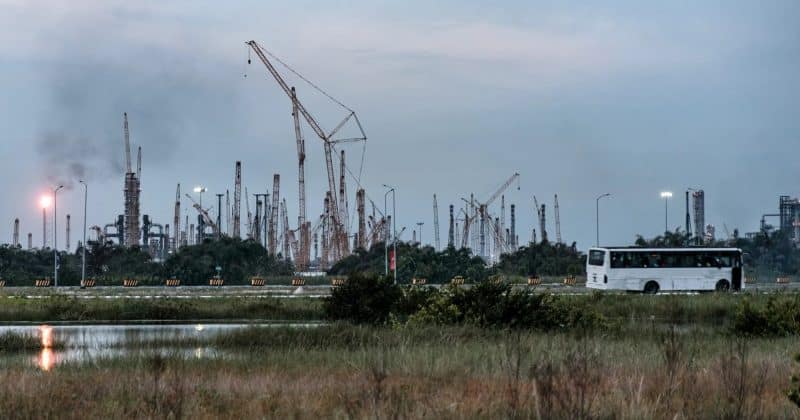
Dangote Petroleum Refinery’s $40B IPO ignites investor frenzy in Nigeria
Africa's largest-ever initial public offering is drawing institutional heavyweights and first-time retail investors alike, forcing Nigeria's securities regulator to pump the brakes on marketing
Nigeria’s securities regulator has had to step in and pause marketing activities for the Dangote Petroleum Refinery IPO. The reason: too much enthusiasm.
The offering, targeting a valuation of roughly $40 billion with some estimates stretching to $50 billion, is set for September 2026. It would be the largest IPO in African history by a wide margin, and pre-IPO demand has already reached nearly $2 billion from institutional investors jockeying for position.
The biggest deal Africa has ever seen
Dangote Petroleum Refinery plans to sell approximately 10% of its equity, a stake that could raise up to $2 billion across multiple African exchanges, including the Nigerian Exchange.
Aliko Dangote, Africa’s wealthiest individual, is leading the effort. The facility, located in the Lekki Free Trade Zone near Lagos, has ramped production to an estimated 700,000 barrels per day.
The refinery has transformed Nigeria from a country that imported its own gasoline, despite sitting on vast crude reserves, into a net exporter of refined petroleum products.
Retail investors are showing up in droves
The offering has generated strong interest from both wealthy, experienced investors and first-time retail participants.
The Nigerian Securities and Exchange Commission suspended marketing activities in June 2026, citing excessive promotional activities.
The nearly $2 billion in pre-IPO demand, primarily from institutional investors, suggests the sophisticated money is already committed.
What this means for investors
The valuation deserves scrutiny. A $40 billion price tag, let alone the $50 billion upper estimate, would make this one of the most valuable refining operations globally.
The IPO builds on earlier proposals for a smaller domestic offering that never materialized. With production at 700,000 barrels per day and exports flowing to other African markets, the company can now point to actual revenue rather than projections.