
Nexo Earn with Nexo
Deep Fission seeks $156M in US IPO to power AI’s insatiable energy appetite

Deep Fission seeks $156M in US IPO to power AI’s insatiable energy appetite

The Berkeley-based nuclear startup is betting its underground reactor technology can solve the data center power crisis, targeting a $1.66B valuation.

A nuclear startup you’ve probably never heard of just filed to go public with a $1.66 billion implied valuation. Deep Fission Inc., based in Berkeley, California, wants to raise up to $156 million through a US initial public offering, selling 6 million shares priced between $24 and $26 each.

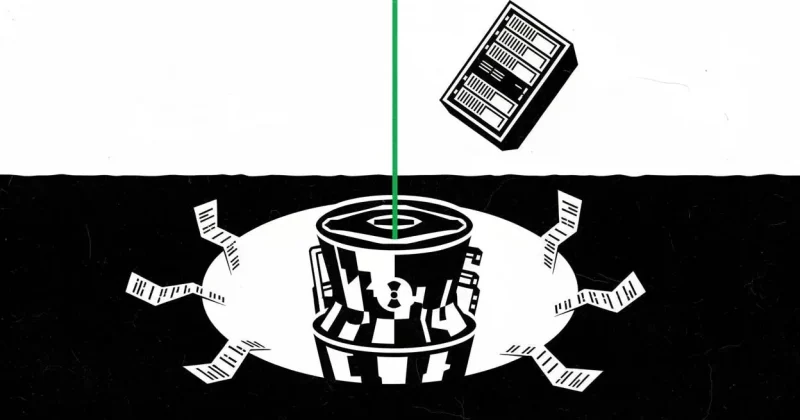
The company filed its S-1 registration statement on May 20, 2026, and plans to trade under the ticker FISN on the Nasdaq. William Blair, Stifel, and Canaccord Genuity are handling the underwriting. The capital will fund the development of what Deep Fission calls its Gravity Nuclear Reactor, a small modular reactor designed to be built underground in deep boreholes.

The pitch: nuclear reactors, but cheaper and underground

Deep Fission claims its underground borehole approach can cut construction costs by 70 to 80 percent compared to conventional reactor builds. Instead of building a massive above-ground facility with layers of concrete containment, Deep Fission wants to drill deep holes and let the earth itself serve as the containment structure.

Advertisement

In February 2026, Deep Fission closed an $80 million financing round. It has also locked in a pilot reactor agreement with the Department of Energy in Kansas. Commercial deployment is targeted for the 2027-2028 timeframe.

Deep Fission’s non-binding pipeline currently targets 15 GWe of operational capacity.

Why AI makes this a different kind of nuclear bet

Deep Fission has already positioned itself to capture AI infrastructure demand. The company struck a strategic partnership with Endeavour Energy to supply up to 2 GW of power specifically tailored for AI data centers.

Deep Fission’s CEO, Elizabeth (Liz) Muller, previously founded Deep Isolation, a company focused on nuclear waste disposal using deep boreholes.

What this means for investors

A $1.66 billion valuation for a pre-revenue nuclear company is a bet on execution, not earnings. The 2027-2028 deployment timeline means investors are buying a story that won’t have a revenue chapter for at least a year or two.

The 70 to 80 percent cost reduction claim is the number to watch most closely. If the underground borehole approach genuinely eliminates most of the containment construction overhead, the company could undercut every competing SMR design on price. The DOE pilot agreement in Kansas offers some de-risking, but a pilot is not a commercial deployment.

Whether the company can convert its 15 GWe non-binding pipeline into contracted revenue will determine if that $1.66 billion valuation looks prescient or premature.

Disclosure: This article was edited by Editorial Team. For more information on how we create and review content, see our Editorial Policy.

Deep Fission seeks $156M in US IPO to power AI’s insatiable energy appetite

Deep Fission seeks $156M in US IPO to power AI’s insatiable energy appetite

The Berkeley-based nuclear startup is betting its underground reactor technology can solve the data center power crisis, targeting a $1.66B valuation.

A nuclear startup you’ve probably never heard of just filed to go public with a $1.66 billion implied valuation. Deep Fission Inc., based in Berkeley, California, wants to raise up to $156 million through a US initial public offering, selling 6 million shares priced between $24 and $26 each.

The company filed its S-1 registration statement on May 20, 2026, and plans to trade under the ticker FISN on the Nasdaq. William Blair, Stifel, and Canaccord Genuity are handling the underwriting. The capital will fund the development of what Deep Fission calls its Gravity Nuclear Reactor, a small modular reactor designed to be built underground in deep boreholes.

The pitch: nuclear reactors, but cheaper and underground

Deep Fission claims its underground borehole approach can cut construction costs by 70 to 80 percent compared to conventional reactor builds. Instead of building a massive above-ground facility with layers of concrete containment, Deep Fission wants to drill deep holes and let the earth itself serve as the containment structure.

Advertisement

In February 2026, Deep Fission closed an $80 million financing round. It has also locked in a pilot reactor agreement with the Department of Energy in Kansas. Commercial deployment is targeted for the 2027-2028 timeframe.

Deep Fission’s non-binding pipeline currently targets 15 GWe of operational capacity.

Why AI makes this a different kind of nuclear bet

Deep Fission has already positioned itself to capture AI infrastructure demand. The company struck a strategic partnership with Endeavour Energy to supply up to 2 GW of power specifically tailored for AI data centers.

Deep Fission’s CEO, Elizabeth (Liz) Muller, previously founded Deep Isolation, a company focused on nuclear waste disposal using deep boreholes.

What this means for investors

A $1.66 billion valuation for a pre-revenue nuclear company is a bet on execution, not earnings. The 2027-2028 deployment timeline means investors are buying a story that won’t have a revenue chapter for at least a year or two.

The 70 to 80 percent cost reduction claim is the number to watch most closely. If the underground borehole approach genuinely eliminates most of the containment construction overhead, the company could undercut every competing SMR design on price. The DOE pilot agreement in Kansas offers some de-risking, but a pilot is not a commercial deployment.

Whether the company can convert its 15 GWe non-binding pipeline into contracted revenue will determine if that $1.66 billion valuation looks prescient or premature.

Disclosure: This article was edited by Editorial Team. For more information on how we create and review content, see our Editorial Policy.