
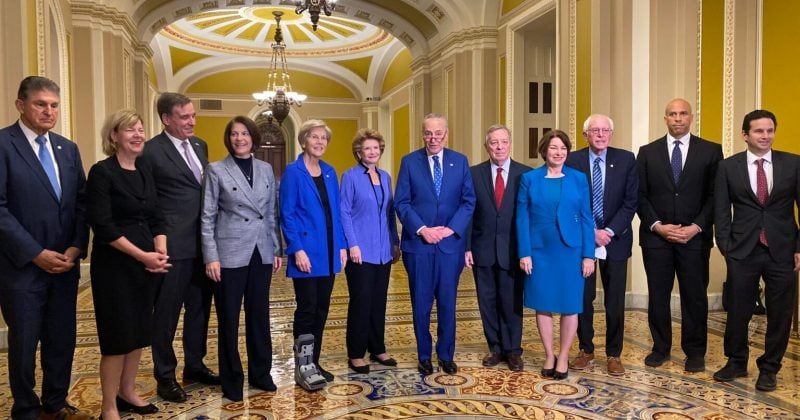
Recent polling from the New York Times/Siena College suggests heightened competitiveness in the battle for control of the U.S. Senate, with Democrats showing strength in several key states. The Democrats need to gain four seats to secure a majority, while Republicans aim to defend their current 53-seat control, including seats held by two independents who caucus with Democrats. The polls indicate Democrats are making gains in states like Maine, North Carolina, Ohio, and Alaska, with significant support appearing to come from independent candidates and recent primary results.
The prediction markets have reacted to this new data, with a noticeable shift in the pricing of scenarios where Republicans hold 47 or fewer Senate seats after the 2026 elections. Market pricing suggests that participants may view the Democrats’ recent polling gains as a challenge for Republicans in defending their current majority. The market odds for Republicans retaining their majority have decreased, reflecting increased uncertainty.
Polling data indicates that Democrats are benefitting from improved fundraising in key battleground states, while Republicans are seeing gains in others like Florida and Michigan. This dynamic has led to increased market activity, with participants closely monitoring shifts in polling and fundraising as the November 3 elections approach.
Key Takeaways
- Recent polls appear to suggest increased competitiveness for Democrats in the upcoming U.S. Senate elections.
- Markets have adjusted their pricing, indicating a decreased probability of Republicans holding 47 or fewer Senate seats.
- Democrats’ strong polling and fundraising in key states may indicate challenging conditions for Republicans to maintain their majority.
What to Watch
As the midterm elections approach, key developments to watch include further polling results, especially in battleground states like North Carolina and Ohio, and any shifts in fundraising dynamics. Additionally, endorsements and campaign strategies from influential figures such as former President Donald Trump could significantly impact market perceptions and pricing. The Democrats’ ability to sustain momentum and the Republicans’ defensive strategies will be closely scrutinized as potential indicators of election outcomes.
Get prediction market intelligence as a structured API feed. Early access waitlist.