
Nexo Earn with Nexo
DHS reports 3M illegal immigrant departures, 94% drop in crossings under Trump

DHS reports 3M illegal immigrant departures, 94% drop in crossings under Trump

The immigration crackdown's ripple effects could reshape how billions in remittances move, with stablecoins waiting in the wings.

More than 3 million people have left the United States since President Donald Trump returned to the Oval Office on January 20, 2025, according to figures the Department of Homeland Security shared with Fox News Digital. Of that total, roughly 2.2 million are classified as “self-deportations,” facilitated in part through the CBP Home app.

DHS says the administration has formally deported nearly 900,000 individuals and arrested more than 900,000 others as of May 17. Illegal border crossings, meanwhile, have plummeted 94% compared to the record highs recorded during the Biden administration.

The remittance angle no one’s talking about

Traditional remittance services like Western Union and MoneyGram have long dominated these corridors, charging fees that eat into every dollar sent. Dollar-pegged tokens like USDC and USDT already serve as de facto remittance rails in parts of Latin America, where recipients can convert to local currency through peer-to-peer exchanges or crypto on-ramps. Sending $200 worth of USDC costs a few cents in network fees. The same transfer through a legacy provider can cost $10 to $20.

Advertisement

Trump’s digital asset executive order adds fuel

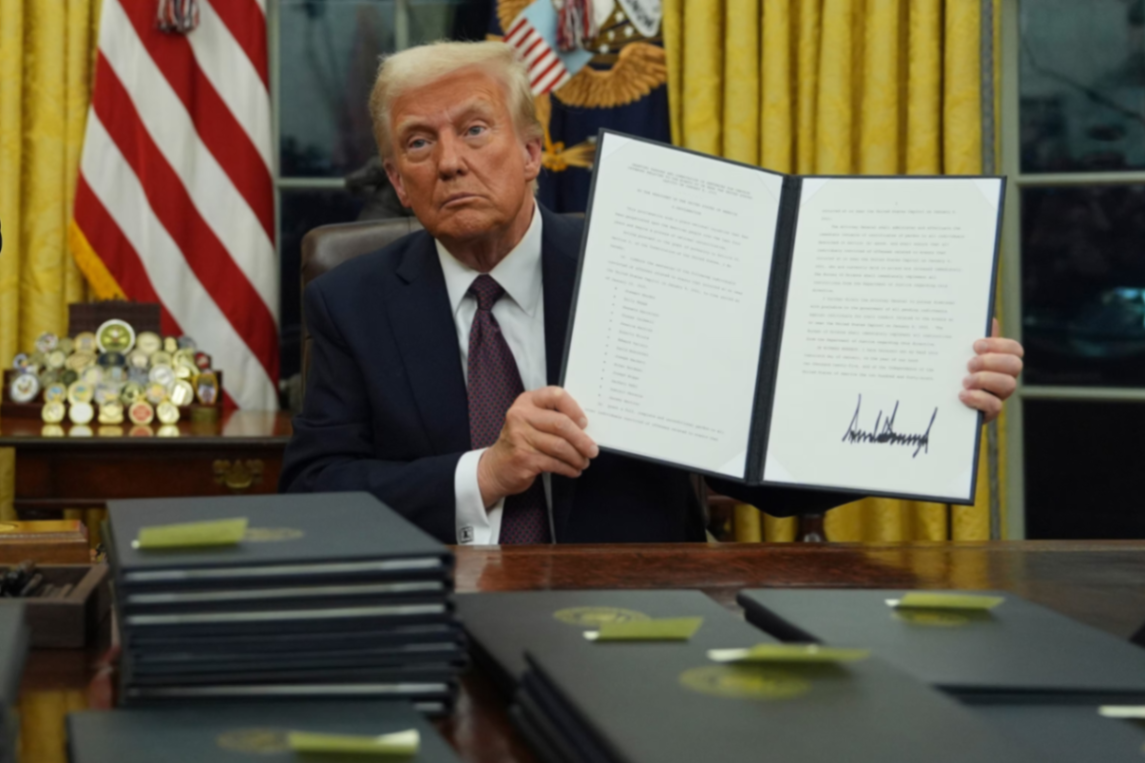
On January 23, 2025, just three days after taking office, Trump signed an executive order explicitly supporting the growth of stablecoins and blockchain technology. The same order banned the creation of a US central bank digital currency, effectively clearing the runway for private-sector dollar tokens.

Circle, which manages USDC, has been aggressively expanding its Latin American presence. Tether’s USDT already dominates peer-to-peer trading in countries like Argentina, Venezuela, and Mexico.

Questions about the numbers

The 2.2 million self-deportation figure has drawn scrutiny. Measuring voluntary departures is inherently difficult, and analysts have raised questions about how reliably the CBP Home app tracks these exits. Traditional data sources for migration flows don’t always align neatly with government-reported figures.

DHS had previously reported over 2.5 million departures by December 2025, meaning roughly 500,000 additional departures were logged in the first few months of 2026.

What this means for crypto investors

Investors should pay attention to two things. First, any legislative proposals that impose taxes or reporting requirements on remittance outflows. Second, stablecoin transaction volume on chains popular in Latin America, particularly Tron, which already handles the majority of USDT transfers globally.

Europe is moving toward its own digital euro. China already has the digital yuan. The US, by contrast, has banned a CBDC and is betting on the private sector to digitize the dollar, creating a regulatory moat for issuers like Circle and Tether that doesn’t exist in most other jurisdictions.

Disclosure: This article was edited by Editorial Team. For more information on how we create and review content, see our Editorial Policy.

DHS reports 3M illegal immigrant departures, 94% drop in crossings under Trump

DHS reports 3M illegal immigrant departures, 94% drop in crossings under Trump

The immigration crackdown's ripple effects could reshape how billions in remittances move, with stablecoins waiting in the wings.

More than 3 million people have left the United States since President Donald Trump returned to the Oval Office on January 20, 2025, according to figures the Department of Homeland Security shared with Fox News Digital. Of that total, roughly 2.2 million are classified as “self-deportations,” facilitated in part through the CBP Home app.

DHS says the administration has formally deported nearly 900,000 individuals and arrested more than 900,000 others as of May 17. Illegal border crossings, meanwhile, have plummeted 94% compared to the record highs recorded during the Biden administration.

The remittance angle no one’s talking about

Traditional remittance services like Western Union and MoneyGram have long dominated these corridors, charging fees that eat into every dollar sent. Dollar-pegged tokens like USDC and USDT already serve as de facto remittance rails in parts of Latin America, where recipients can convert to local currency through peer-to-peer exchanges or crypto on-ramps. Sending $200 worth of USDC costs a few cents in network fees. The same transfer through a legacy provider can cost $10 to $20.

Advertisement

Trump’s digital asset executive order adds fuel

On January 23, 2025, just three days after taking office, Trump signed an executive order explicitly supporting the growth of stablecoins and blockchain technology. The same order banned the creation of a US central bank digital currency, effectively clearing the runway for private-sector dollar tokens.

Circle, which manages USDC, has been aggressively expanding its Latin American presence. Tether’s USDT already dominates peer-to-peer trading in countries like Argentina, Venezuela, and Mexico.

Questions about the numbers

The 2.2 million self-deportation figure has drawn scrutiny. Measuring voluntary departures is inherently difficult, and analysts have raised questions about how reliably the CBP Home app tracks these exits. Traditional data sources for migration flows don’t always align neatly with government-reported figures.

DHS had previously reported over 2.5 million departures by December 2025, meaning roughly 500,000 additional departures were logged in the first few months of 2026.

What this means for crypto investors

Investors should pay attention to two things. First, any legislative proposals that impose taxes or reporting requirements on remittance outflows. Second, stablecoin transaction volume on chains popular in Latin America, particularly Tron, which already handles the majority of USDT transfers globally.

Europe is moving toward its own digital euro. China already has the digital yuan. The US, by contrast, has banned a CBDC and is betting on the private sector to digitize the dollar, creating a regulatory moat for issuers like Circle and Tether that doesn’t exist in most other jurisdictions.

Disclosure: This article was edited by Editorial Team. For more information on how we create and review content, see our Editorial Policy.