
Dollar rallies for second day as traders bet on Fed rate hikes
The Bloomberg Dollar Spot Index posted its best single-day gain since early March after the Fed's dot plot revealed a surprising hawkish pivot
The US dollar just did something it hasn’t done since May 2025: climb to roughly 100.7 on the DXY index. The catalyst was a Federal Reserve meeting that didn’t actually change interest rates, but changed everything about how traders think rates will move from here.
On June 17, 2026, the Fed held the federal funds rate steady at 3.50%-3.75% for the fourth consecutive meeting. That part was expected. What wasn’t expected was the dot plot, where 9 of 18 to 19 officials now anticipate at least one rate hike before year-end. The Bloomberg Dollar Spot Index jumped 0.7% in response, its strongest single-session performance since early March.
From rate cuts to rate hikes in a matter of weeks
The Personal Consumption Expenditures inflation forecast, the Fed’s preferred price gauge, was revised from 2.7% to 3.6% for 2026. GDP growth expectations, meanwhile, were trimmed slightly to 2.2%.
Markets responded exactly how you’d expect. Traders rapidly repriced rate expectations, moving from bets on cuts to pricing in a 40% to 70% probability of a rate hike by year-end. October is the meeting most traders have circled on their calendars as the likely moment for action.
What’s driving the hawkish turn
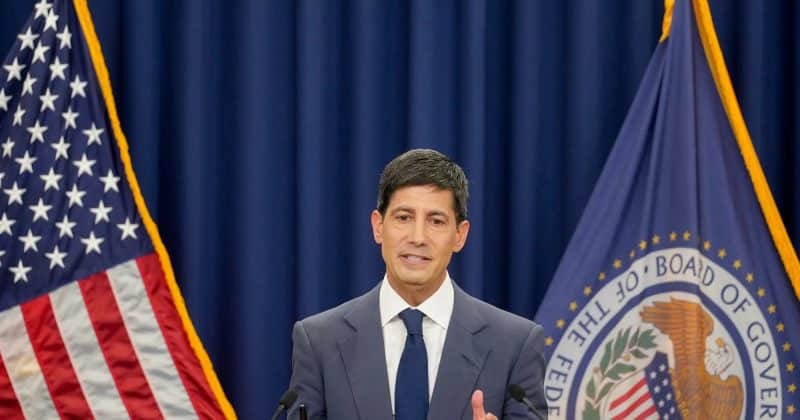
Kevin Warsh, the Fed’s relatively new chair, appears to be steering the committee toward a more aggressive posture on inflation. The median year-end rate projection now sits at 3.8%, up from the current range. That implies at least one 25-basis-point hike is baked into the committee’s central forecast.
Beyond domestic inflation data, geopolitical tensions in the Middle East are adding fuel to the fire. Uncertainty in that region tends to push energy prices higher, which feeds directly into the inflation numbers the Fed is watching so closely.
What this means for crypto and risk assets
A strengthening dollar and rising rate expectations are, historically, not kind to risk assets. This includes crypto.
When the dollar strengthens, assets priced in dollars become more expensive for international buyers, dampening demand. When rates rise, the opportunity cost of holding non-yielding assets like Bitcoin increases.
A PCE forecast of 3.6% means purchasing power is eroding at a meaningful clip. Historically, persistent inflation has driven some investors toward Bitcoin as a hedge. Whether that narrative holds in a rising-rate environment is the key question.
Traders should watch two things closely. First, incoming inflation data over the summer will determine whether the Fed’s revised 3.6% PCE forecast looks conservative or aggressive. Second, if DXY pushes convincingly past the late-March high, it could trigger a broader repricing of risk assets that hits crypto portfolios hard, particularly in altcoins and tokens with thinner liquidity.