
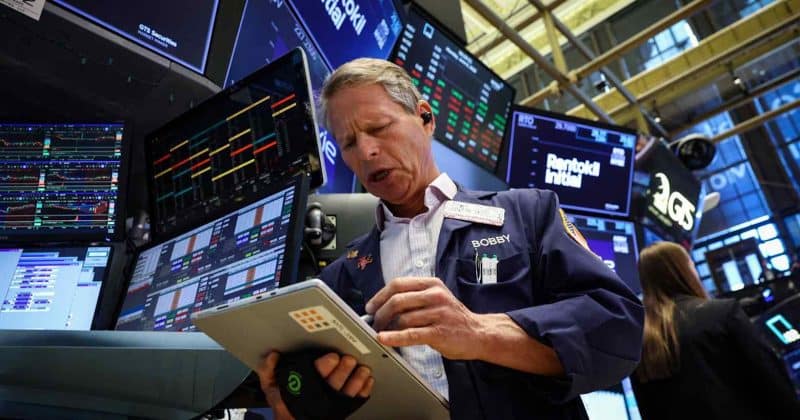
Dow hits record close as Wall Street rallies on US-Iran deal, oil prices fall
A preliminary agreement to reopen the Strait of Hormuz sent oil tumbling over 4% and lifted equities across the board, with Bitcoin also climbing above $65,000.
The Dow Jones Industrial Average closed at an all-time high on June 15 after the US and Iran announced a preliminary agreement to extend their ceasefire and reopen the Strait of Hormuz. Oil prices cratered over 4% on the news, hitting their lowest levels since March 2026, and suddenly the mood across every asset class shifted from anxious to something approaching giddy.
The Nasdaq posted gains of roughly 3%, while the S&P 500 also moved sharply higher. Bitcoin, never one to miss a party, climbed above $65,000 during the session, with some trading desks reporting peaks near $65,958. The broader crypto market followed suit, as Ether, Solana, and XRP all caught a bid from traders rotating into risk assets.
What the deal actually involves
The announcement describes an interim framework, not a final treaty. An official signing ceremony is planned for Switzerland, with a 60-day window for further negotiations on the remaining sticking points.
The most immediate and market-relevant provision is the reopening of the Strait of Hormuz. That narrow waterway handles roughly 20-25% of the world’s seaborne oil transport.
Oil prices had repeatedly spiked above $100 per barrel during the months of heightened tensions between Washington and Tehran. The over-4% single-day decline on the back of this announcement reflects just how much geopolitical risk premium had been baked into crude.
Macro, rates, and crypto—what moved markets and what matters next.
Daily. Free. Join 34,000+ readers across crypto, finance, and policy.
The agreement notably leaves several critical issues unresolved, particularly around Iran’s nuclear program.
Why falling oil matters beyond gas prices
When energy costs drop, inflationary pressures ease. That gives central bankers more room to hold rates steady or even consider cuts, which is rocket fuel for equities and risk assets alike. It also reduces input costs for manufacturers, airlines, shipping companies, and basically any business that moves physical goods.
What this means for crypto investors
Bitcoin’s move above $65,000 is notable, but look at the relative magnitude. Equities surged. Oil cratered. Crypto moved up, but more cautiously. Traders clearly shifted toward risk-on positioning, pulling capital into Bitcoin, Ether, Solana, and XRP. But the muted enthusiasm compared to traditional markets suggests that crypto investors remain skeptical about building positions on geopolitical news that could reverse in weeks.
A 60-day negotiation window means 60 days of potential headlines that could swing sentiment in either direction. If talks break down, oil spikes again, inflation expectations reset higher, and risk assets, crypto included, give back their gains.
The next catalysts to watch are the Swiss signing ceremony and any concrete details that emerge during the 60-day negotiation period. If Iran’s nuclear program becomes a dealbreaker, the entire risk-on trade unwinds fast.