
European Central Bank assesses euro adoption progress in five EU countries

European Central Bank assesses euro adoption progress in five EU countries

Bulgaria clears the bar for eurozone entry in 2026 while five other nations still fall short, raising questions about the future of euro-denominated digital assets

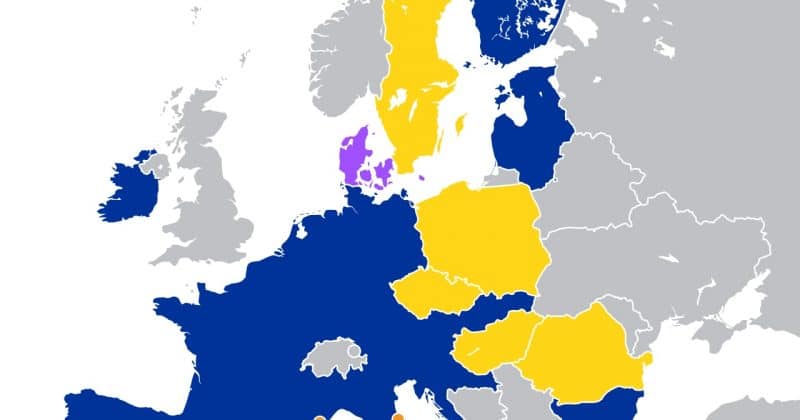
Bulgaria is set to become the 21st member of the eurozone on January 1, 2026, after the European Central Bank’s June 2025 Convergence Report confirmed the country had achieved sufficient economic and legal convergence. The remaining five non-euro EU nations under review, the Czech Republic, Hungary, Poland, Romania, and Sweden, haven’t crossed the finish line yet.

What the ECB found

The ECB’s convergence assessments follow a structured process that evaluates countries against a set of traditional macroeconomic criteria. The June 2024 report examined all six non-euro EU members, and by the time the June 2025 follow-up landed, Bulgaria was the only one that had made the grade.

The primary stumbling block for the remaining five countries is inflation. Meeting the price stability criterion requires a nation’s inflation rate to be close to that of the three best-performing EU member states over a 12-month observation period. For countries like Hungary and Romania, which have wrestled with elevated consumer prices in recent years, that bar has been particularly hard to clear.

Poland, the Czech Republic, and Sweden each face their own mix of challenges across the convergence criteria, ranging from fiscal targets to central bank independence requirements. Sweden’s case is especially notable: the country has been eligible to join the eurozone for years but has shown little political appetite to do so, effectively treating its EU treaty obligation as optional.

Advertisement

The ECB’s assessment is purely focused on traditional economic indicators. There were no references to crypto assets, blockchain protocols, or decentralized finance in either the 2024 or 2025 reports.

Bulgaria’s path to the euro

Bulgaria’s accession has been a long time coming. The country joined the EU back in 2007 and entered the Exchange Rate Mechanism II (ERM II), the eurozone’s waiting room, in July 2020. That step pegged the Bulgarian lev to the euro and started the clock on a minimum two-year observation period.

The European Commission issued its own positive evaluation alongside the ECB’s, creating the institutional consensus needed to greenlight the transition. For Bulgaria’s roughly 6.5 million residents, the practical implications are straightforward: one less currency conversion when doing business with the other 20 eurozone members, and access to the ECB’s monetary policy framework.

The digital euro looms in the background

While the convergence report itself didn’t touch on digital currencies, the ECB has been laying the groundwork for the digital euro in parallel. The central bank is currently in the technical preparation phase for the project, with a target of first issuance by 2029 if the legislative process moves favorably through EU institutions.

A larger eurozone and a digital euro are two sides of the same coin. As more countries adopt the euro, the addressable market for a central bank digital currency grows. Bulgaria joining means one more nation where the digital euro would be legal tender from day one, should it launch on schedule.

The digital euro is being designed as a retail CBDC, meaning it would be used by everyday consumers and businesses rather than just banks. That positioning puts it on a direct collision course with private stablecoins operating in the euro-denominated market. Projects issuing euro-pegged stablecoins would face a competitor that doesn’t carry counterparty risk and comes pre-loaded with regulatory legitimacy.

MiCA, the EU’s comprehensive crypto regulatory framework, already establishes strict rules for stablecoin issuers operating in the bloc. A digital euro layered on top of that regulatory structure would give European institutions a powerful tool to channel digital payments through centrally controlled rails.

Disclosure: This article was edited by Editorial Team. For more information on how we create and review content, see our Editorial Policy.

European Central Bank assesses euro adoption progress in five EU countries

European Central Bank assesses euro adoption progress in five EU countries

Bulgaria clears the bar for eurozone entry in 2026 while five other nations still fall short, raising questions about the future of euro-denominated digital assets

Bulgaria is set to become the 21st member of the eurozone on January 1, 2026, after the European Central Bank’s June 2025 Convergence Report confirmed the country had achieved sufficient economic and legal convergence. The remaining five non-euro EU nations under review, the Czech Republic, Hungary, Poland, Romania, and Sweden, haven’t crossed the finish line yet.

What the ECB found

The ECB’s convergence assessments follow a structured process that evaluates countries against a set of traditional macroeconomic criteria. The June 2024 report examined all six non-euro EU members, and by the time the June 2025 follow-up landed, Bulgaria was the only one that had made the grade.

The primary stumbling block for the remaining five countries is inflation. Meeting the price stability criterion requires a nation’s inflation rate to be close to that of the three best-performing EU member states over a 12-month observation period. For countries like Hungary and Romania, which have wrestled with elevated consumer prices in recent years, that bar has been particularly hard to clear.

Poland, the Czech Republic, and Sweden each face their own mix of challenges across the convergence criteria, ranging from fiscal targets to central bank independence requirements. Sweden’s case is especially notable: the country has been eligible to join the eurozone for years but has shown little political appetite to do so, effectively treating its EU treaty obligation as optional.

Advertisement

The ECB’s assessment is purely focused on traditional economic indicators. There were no references to crypto assets, blockchain protocols, or decentralized finance in either the 2024 or 2025 reports.

Bulgaria’s path to the euro

Bulgaria’s accession has been a long time coming. The country joined the EU back in 2007 and entered the Exchange Rate Mechanism II (ERM II), the eurozone’s waiting room, in July 2020. That step pegged the Bulgarian lev to the euro and started the clock on a minimum two-year observation period.

The European Commission issued its own positive evaluation alongside the ECB’s, creating the institutional consensus needed to greenlight the transition. For Bulgaria’s roughly 6.5 million residents, the practical implications are straightforward: one less currency conversion when doing business with the other 20 eurozone members, and access to the ECB’s monetary policy framework.

The digital euro looms in the background

While the convergence report itself didn’t touch on digital currencies, the ECB has been laying the groundwork for the digital euro in parallel. The central bank is currently in the technical preparation phase for the project, with a target of first issuance by 2029 if the legislative process moves favorably through EU institutions.

A larger eurozone and a digital euro are two sides of the same coin. As more countries adopt the euro, the addressable market for a central bank digital currency grows. Bulgaria joining means one more nation where the digital euro would be legal tender from day one, should it launch on schedule.

The digital euro is being designed as a retail CBDC, meaning it would be used by everyday consumers and businesses rather than just banks. That positioning puts it on a direct collision course with private stablecoins operating in the euro-denominated market. Projects issuing euro-pegged stablecoins would face a competitor that doesn’t carry counterparty risk and comes pre-loaded with regulatory legitimacy.

MiCA, the EU’s comprehensive crypto regulatory framework, already establishes strict rules for stablecoin issuers operating in the bloc. A digital euro layered on top of that regulatory structure would give European institutions a powerful tool to channel digital payments through centrally controlled rails.

Disclosure: This article was edited by Editorial Team. For more information on how we create and review content, see our Editorial Policy.