
ECB’s Kazaks signals no rush for multiple rate hikes, easing pressure on risk assets

ECB’s Kazaks signals no rush for multiple rate hikes, easing pressure on risk assets

The ECB governing council member's dovish tone comes weeks after the central bank's first rate increase in nearly three years, with implications rippling across crypto markets.

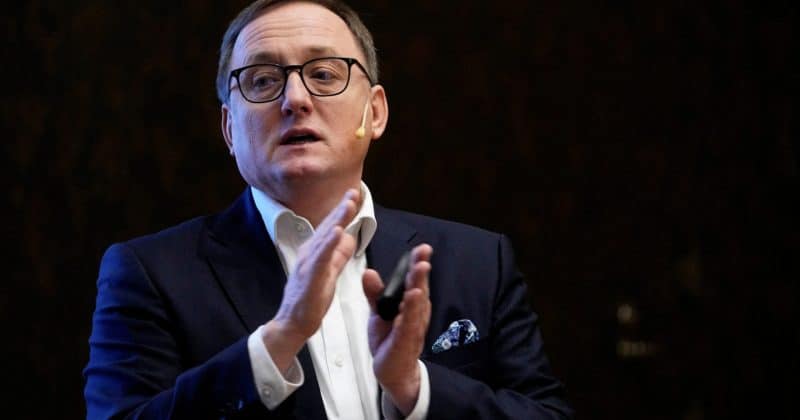
Mārtiņš Kazāks, Governor of the Bank of Latvia and a member of the European Central Bank’s Governing Council, told Econostream Media on June 29 that there is “no need for multiple ECB hikes in a rushed way.” The statement lands just weeks after the ECB raised its three key interest rates by 25 basis points on June 11, its first hike in nearly three years.

What actually happened with ECB rates

The June 11 hike pushed the ECB’s deposit facility rate to 2.25%, effective June 17. The main refinancing rate now sits at 2.40%, and the marginal lending rate at 2.65%.

Those numbers matter because they set the baseline cost of money across the eurozone. When rates go up, the opportunity cost of holding assets that don’t generate yield, like Bitcoin or most altcoins, goes up with them.

Advertisement

Kazāks pointed to a significant decrease in the probability of severe negative economic scenarios, suggesting the ECB’s outlook has improved enough that a measured approach makes sense.

Market traders have already adjusted. Pricing for additional ECB hikes throughout the remainder of 2026 has dropped below 25 basis points. Easing oil prices, partly driven by improved geopolitical relations in the Middle East, have taken some of the heat off inflation expectations.

The inflation picture

The ECB’s post-hike inflation projections show an average of 3.0% in 2026, 2.3% in 2027, and 2.0% in 2028. Kazāks acknowledged that persistent inflation risks remain, largely tied to geopolitical factors and energy cost fluctuations. Kazāks’ advocacy for a “cautious, data-dependent approach” leaves open the possibility of further action if conditions change.

What this means for crypto investors

When traditional finance offers risk-free yields above 2%, decentralized lending rates need to compensate accordingly, and that squeezes margins across the ecosystem. Euro-denominated stablecoins and DeFi protocols that rely on euro liquidity could face continued pressure.

The market’s current expectation of less than 25 basis points in additional hikes this year removes one source of uncertainty for risk assets. A data-dependent stance means the ECB could reverse course if inflation surprises to the upside, including from an energy shock or a breakdown in Middle East diplomacy.

Disclosure: This article was edited by Editorial Team. For more information on how we create and review content, see our Editorial Policy.

ECB’s Kazaks signals no rush for multiple rate hikes, easing pressure on risk assets

ECB’s Kazaks signals no rush for multiple rate hikes, easing pressure on risk assets

The ECB governing council member's dovish tone comes weeks after the central bank's first rate increase in nearly three years, with implications rippling across crypto markets.

Mārtiņš Kazāks, Governor of the Bank of Latvia and a member of the European Central Bank’s Governing Council, told Econostream Media on June 29 that there is “no need for multiple ECB hikes in a rushed way.” The statement lands just weeks after the ECB raised its three key interest rates by 25 basis points on June 11, its first hike in nearly three years.

What actually happened with ECB rates

The June 11 hike pushed the ECB’s deposit facility rate to 2.25%, effective June 17. The main refinancing rate now sits at 2.40%, and the marginal lending rate at 2.65%.

Those numbers matter because they set the baseline cost of money across the eurozone. When rates go up, the opportunity cost of holding assets that don’t generate yield, like Bitcoin or most altcoins, goes up with them.

Advertisement

Kazāks pointed to a significant decrease in the probability of severe negative economic scenarios, suggesting the ECB’s outlook has improved enough that a measured approach makes sense.

Market traders have already adjusted. Pricing for additional ECB hikes throughout the remainder of 2026 has dropped below 25 basis points. Easing oil prices, partly driven by improved geopolitical relations in the Middle East, have taken some of the heat off inflation expectations.

The inflation picture

The ECB’s post-hike inflation projections show an average of 3.0% in 2026, 2.3% in 2027, and 2.0% in 2028. Kazāks acknowledged that persistent inflation risks remain, largely tied to geopolitical factors and energy cost fluctuations. Kazāks’ advocacy for a “cautious, data-dependent approach” leaves open the possibility of further action if conditions change.

What this means for crypto investors

When traditional finance offers risk-free yields above 2%, decentralized lending rates need to compensate accordingly, and that squeezes margins across the ecosystem. Euro-denominated stablecoins and DeFi protocols that rely on euro liquidity could face continued pressure.

The market’s current expectation of less than 25 basis points in additional hikes this year removes one source of uncertainty for risk assets. A data-dependent stance means the ECB could reverse course if inflation surprises to the upside, including from an energy shock or a breakdown in Middle East diplomacy.

Disclosure: This article was edited by Editorial Team. For more information on how we create and review content, see our Editorial Policy.