
European Central Bank’s Lagarde warns of lagging effects from crises
ECB president says even an immediate end to Middle East tensions won't undo the economic damage already baked in, reaffirming a strict 2% inflation target.
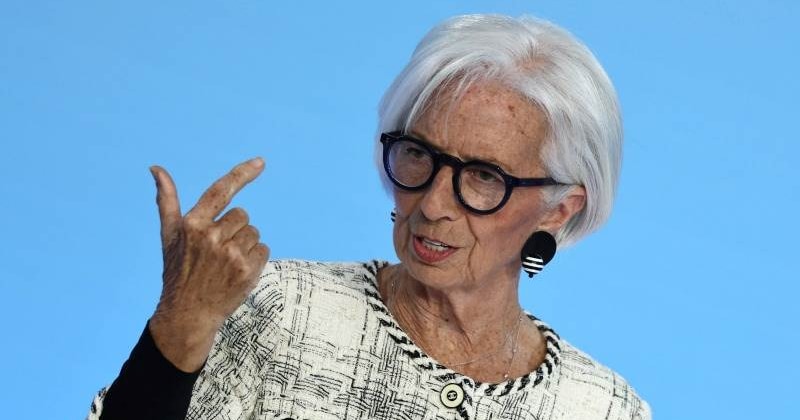
Christine Lagarde delivered a blunt message from Cyprus on May 22: the damage is already done, and it’s going to stick around.
Speaking at a press conference following the Eurogroup meeting, the European Central Bank president warned that even if the Middle East crisis were resolved tomorrow, the “lagging effects” on the European economy would persist. In other words, you can turn off the fire, but the burn marks remain.
Lagarde reaffirmed the ECB’s commitment to its medium-term inflation target of 2%, while declining to offer any forward guidance ahead of the bank’s June 11 policy decision. The message was clear: we’re watching, we’re ready, and we’re not making promises.
The crisis hangover
Here’s the thing about supply shocks. They don’t politely reverse themselves once the headline crisis fades. Energy prices spike, companies adjust their pricing, workers demand higher wages, and suddenly you’ve got a new baseline that looks nothing like the old one.
Lagarde pointed to exactly this dynamic. She emphasized that price levels could remain persistently elevated even after geopolitical tensions ease, making a return to pre-crisis economic conditions far more difficult than simply flipping a switch.
The ECB has been here before. The 2022 energy crisis, triggered by the Russia-Ukraine conflict, taught Europe some painful lessons about how quickly supply disruptions can cascade through an economy. Those lessons prompted a significant revision of the ECB’s monetary policy framework in 2025, specifically designed to handle frequent supply shocks more effectively.
Lagarde referenced those revised strategic principles, first outlined in detail during a March 25, 2026 speech, where she laid out three core guidelines for navigating economic disruptions. The framework rests on what she calls the “triple-T” principle: any fiscal response should be temporary, targeted, and tailored. The goal is to avoid the kind of broad, blunt fiscal interventions that would force the ECB to dramatically shift its monetary policy in response.
Think of it as trying to use a scalpel instead of a sledgehammer. If governments keep their spending responses precise enough, the central bank doesn’t have to overcorrect with interest rates.
What the ECB is actually watching
Lagarde was unusually specific about the indicators the ECB is tracking. The bank is monitoring wage trackers, price-setting frequency among businesses, consumer confidence surveys, and energy reserve depletion levels. Each of these feeds into the ECB’s understanding of whether current inflationary pressures are temporary or becoming embedded in the economy.
The good news, relatively speaking: headline inflation has remained near the 2% target for close to a year as of early 2026, with core measures broadly consistent with that goal. That’s a meaningful improvement from the double-digit readings Europe was staring down just a few years ago.
The less comforting news is that Lagarde flagged the risk of non-linear inflation pass-throughs. In English: the relationship between energy prices and consumer prices isn’t always a straight line. Sometimes costs hit slowly, sometimes they hit all at once, and sometimes they hit in ways nobody modeled. The ECB is particularly focused on second-round effects, where rising prices lead to higher wage demands, which lead to higher prices, which lead to… you get the picture.
By offering no forward guidance on the June 11 decision, Lagarde is signaling that the ECB’s next move will be entirely data-dependent. No predetermined conclusions, no political considerations, just numbers. Whether markets actually believe that level of analytical purity is a different question.
What this means for crypto investors
Lagarde didn’t mention Bitcoin, Ethereum, or any cryptocurrency during her remarks. She rarely does. But that doesn’t mean her comments are irrelevant to digital asset markets.
Central bank inflation management is one of the fundamental macro forces shaping capital flows across every asset class, crypto included. When the ECB signals that price levels may stay permanently elevated even after crises resolve, it implicitly makes the case for assets that serve as inflation hedges. Bitcoin has long positioned itself in that narrative, whether or not the data always supports it.
The more immediate connection is the ECB’s ongoing digital euro project. While Lagarde didn’t address it directly in Cyprus, the central bank continues to advance its plans for a central bank digital currency. The digital euro is designed as a fundamentally different animal from decentralized cryptocurrencies: centrally issued, price-stable, and operating within the existing financial system rather than outside it.
For crypto markets, the risk isn’t that a digital euro replaces Bitcoin. It’s that a functioning CBDC gives European policymakers another tool to manage monetary conditions, potentially reducing the appeal of stablecoins as on-ramps to the broader crypto ecosystem. If consumers can hold a digital euro directly with the central bank, the value proposition of dollar-pegged stablecoins in European markets gets a bit more complicated.
The broader takeaway for investors is that Lagarde’s “lagging effects” framework should inform how anyone models European economic recovery. Persistently higher price levels mean persistently different consumer behavior, corporate margins, and government borrowing costs. Those variables ripple through every market, from Frankfurt to DeFi.
Traders positioning around the June 11 ECB meeting should note the deliberate absence of forward guidance. In a data-dependent regime, every inflation print, every wage report, and every energy price swing between now and then becomes a potential catalyst. The ECB has made clear it won’t telegraph its moves, which means volatility around macro data releases is likely to stay elevated across both traditional and digital asset markets.