
Nexo Earn with Nexo
ECB hikes rates for first time in three years as energy crisis reshapes European monetary policy

ECB hikes rates for first time in three years as energy crisis reshapes European monetary policy

Chief economist Philip Lane signals further inflation forecast revisions as Middle East conflict drives energy prices higher across Europe

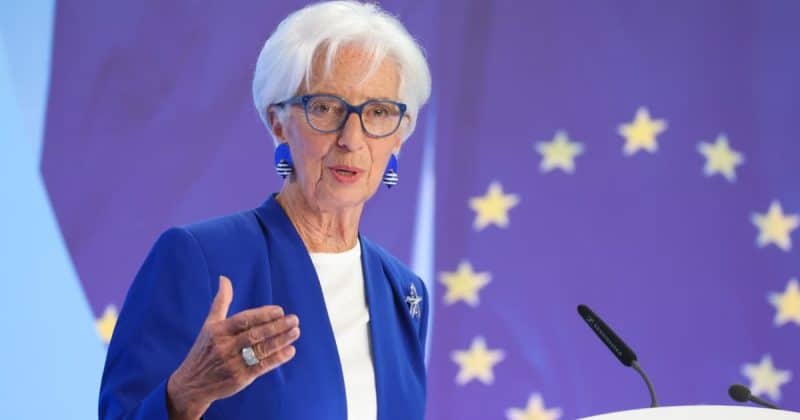
The European Central Bank just made its most consequential monetary policy move since 2023. On June 11, the ECB raised its deposit rate by 25 basis points, ending a nearly three-year stretch without a hike. Five days later, Chief Economist Philip R. Lane took the stage at the inaugural Reuters NEXT Europe 2026 summit in London to explain why.

The short version: energy prices tied to the escalating conflict in the Middle East, particularly involving Iran, are forcing the ECB’s hand. Lane indicated that the bank would likely revise its inflation outlook upward during June 2026, a signal that this rate hike may not be the last.

What happened in London

The Reuters NEXT Europe summit, held on June 16, brought together policymakers and market participants to discuss the economic landscape confronting the continent. Lane’s session focused squarely on traditional economic indicators: inflation dynamics, the growth outlook, and the geopolitical forces reshaping European markets.

Advertisement

Lane had previously warned in interviews that energy shocks stemming from the Iran situation could have longer-lasting effects on price stability than markets were pricing in. That framing set the tone for his London appearance, where the discussion centered on how sustained energy cost pressures are bleeding into broader inflation metrics across the eurozone.

The reduced growth forecasts accompanying the rate hike tell the other side of the story. The ECB is hiking into weakness. Tightening monetary policy when economic momentum is already fading can tip a slowdown into something worse. But the alternative, letting inflation expectations become unanchored, is a scenario every central banker fears more.

The energy problem Europe can’t ignore

The Iran situation has pushed energy costs higher across the board, creating exactly the kind of supply-driven inflation that central banks find hardest to manage. Lane’s warning that energy shocks might have longer-lasting effects on price stability was essentially the ECB acknowledging that transitory inflation narratives, which burned central bankers badly in 2021 and 2022, aren’t going to fly this time around.

What this means for investors

For crypto markets, Lane’s London appearance offered precisely zero direct commentary on digital assets. The discussion stayed entirely within the boundaries of traditional economic indicators and geopolitical analysis. It suggests the ECB continues to view cryptocurrencies as peripheral to its core monetary policy framework, not as a factor that influences or is influenced by rate decisions in any meaningful way.

The 2022 crypto winter coincided with aggressive rate hikes globally. While the current move is far more modest, the direction of travel matters.

For traders positioning around ECB decisions, the next set of economic projections will be the most important data point. Lane’s indication that inflation forecasts are heading higher gives a clear preview of the direction.

Disclosure: This article was edited by Editorial Team. For more information on how we create and review content, see our Editorial Policy.

ECB hikes rates for first time in three years as energy crisis reshapes European monetary policy

ECB hikes rates for first time in three years as energy crisis reshapes European monetary policy

Chief economist Philip Lane signals further inflation forecast revisions as Middle East conflict drives energy prices higher across Europe

The European Central Bank just made its most consequential monetary policy move since 2023. On June 11, the ECB raised its deposit rate by 25 basis points, ending a nearly three-year stretch without a hike. Five days later, Chief Economist Philip R. Lane took the stage at the inaugural Reuters NEXT Europe 2026 summit in London to explain why.

The short version: energy prices tied to the escalating conflict in the Middle East, particularly involving Iran, are forcing the ECB’s hand. Lane indicated that the bank would likely revise its inflation outlook upward during June 2026, a signal that this rate hike may not be the last.

What happened in London

The Reuters NEXT Europe summit, held on June 16, brought together policymakers and market participants to discuss the economic landscape confronting the continent. Lane’s session focused squarely on traditional economic indicators: inflation dynamics, the growth outlook, and the geopolitical forces reshaping European markets.

Advertisement

Lane had previously warned in interviews that energy shocks stemming from the Iran situation could have longer-lasting effects on price stability than markets were pricing in. That framing set the tone for his London appearance, where the discussion centered on how sustained energy cost pressures are bleeding into broader inflation metrics across the eurozone.

The reduced growth forecasts accompanying the rate hike tell the other side of the story. The ECB is hiking into weakness. Tightening monetary policy when economic momentum is already fading can tip a slowdown into something worse. But the alternative, letting inflation expectations become unanchored, is a scenario every central banker fears more.

The energy problem Europe can’t ignore

The Iran situation has pushed energy costs higher across the board, creating exactly the kind of supply-driven inflation that central banks find hardest to manage. Lane’s warning that energy shocks might have longer-lasting effects on price stability was essentially the ECB acknowledging that transitory inflation narratives, which burned central bankers badly in 2021 and 2022, aren’t going to fly this time around.

What this means for investors

For crypto markets, Lane’s London appearance offered precisely zero direct commentary on digital assets. The discussion stayed entirely within the boundaries of traditional economic indicators and geopolitical analysis. It suggests the ECB continues to view cryptocurrencies as peripheral to its core monetary policy framework, not as a factor that influences or is influenced by rate decisions in any meaningful way.

The 2022 crypto winter coincided with aggressive rate hikes globally. While the current move is far more modest, the direction of travel matters.

For traders positioning around ECB decisions, the next set of economic projections will be the most important data point. Lane’s indication that inflation forecasts are heading higher gives a clear preview of the direction.

Disclosure: This article was edited by Editorial Team. For more information on how we create and review content, see our Editorial Policy.