
European Central Bank’s Rehn pushes for flexible rate policy as geopolitical tensions cloud inflation outlook

European Central Bank’s Rehn pushes for flexible rate policy as geopolitical tensions cloud inflation outlook

The ECB governing council member warns against locking in a fixed rate path ahead of the bank's June decision, citing shifting geopolitical dynamics and oil price volatility.

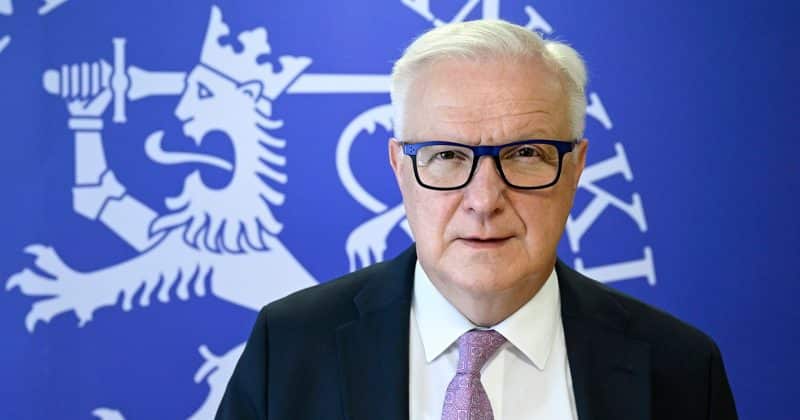
Olli Rehn, Governor of the Bank of Finland and a member of the ECB Governing Council, wants the European Central Bank to keep its options open. In a Reuters interview on May 21, Rehn argued that committing to a predetermined interest rate path would be a mistake, particularly as geopolitical uncertainty, specifically the US-Iran conflict, continues to inject volatility into energy markets and, by extension, inflation readings across the euro area.

The timing matters. The ECB’s next rate decision lands on June 11, and markets are already pricing in a potential hike from the current 2% deposit facility rate toward a range of 2.5% to 2.75%. Rehn’s message to those markets: don’t assume anything.

Inflation is elevated, but Rehn sees a ceiling

Euro-area inflation has recently pushed above the ECB’s 2% target, driven largely by oil price spikes linked to the Iran conflict. His argument rests on two pillars. First, medium-to-long-term inflation expectations in the euro area remain broadly anchored at 2%. Second, Rehn sees limited evidence of the dreaded second-round effects, specifically wage-price spirals where workers demand higher pay to keep up with rising costs, which then forces companies to raise prices further, which then forces workers to demand even higher pay.

Advertisement

He also pointed to a potential ceasefire in the US-Iran conflict as a factor that could meaningfully reduce price pressures. Rehn expects such a development to cool things down without triggering major secondary effects throughout the broader economy.

Why flexibility matters more than a fixed path

Since beginning his tenure as Bank of Finland Governor in 2018, Rehn has consistently argued that monetary policy needs to remain responsive to evolving conditions rather than locked into forward guidance. Rehn explicitly noted that market expectations for rate hikes should not dictate ECB actions. The ECB will look at the data, factor in the latest economic projections, and decide accordingly.

Rehn’s emphasis on preparation for a prolonged conflict also deserves attention. Even if a ceasefire happens, the ECB is clearly gaming out scenarios where elevated energy prices persist for an extended period.

What this means for investors

The most immediate variable to watch is the US-Iran situation. Oil prices remain the primary transmission mechanism between geopolitical risk and euro-area inflation. A ceasefire or de-escalation would likely moderate expectations for aggressive ECB tightening. Conversely, an escalation that sends oil prices higher would increase the odds of a more hawkish move, with implications for bond yields and borrowing costs across the bloc.

Crypto markets are not immune. Higher interest rates across major economies tend to pull capital away from risk assets, including digital assets, as traditional yield-bearing instruments become more attractive. A surprise hike to the upper end of the anticipated 2.5% to 2.75% range could create headwinds for crypto prices. If the ECB opts for a more gradual approach, keeping rates closer to 2% or implementing only a modest increase, that would represent a relatively dovish outcome compared to current market pricing.

Disclosure: This article was edited by Editorial Team. For more information on how we create and review content, see our Editorial Policy.

European Central Bank’s Rehn pushes for flexible rate policy as geopolitical tensions cloud inflation outlook

European Central Bank’s Rehn pushes for flexible rate policy as geopolitical tensions cloud inflation outlook

The ECB governing council member warns against locking in a fixed rate path ahead of the bank's June decision, citing shifting geopolitical dynamics and oil price volatility.

Olli Rehn, Governor of the Bank of Finland and a member of the ECB Governing Council, wants the European Central Bank to keep its options open. In a Reuters interview on May 21, Rehn argued that committing to a predetermined interest rate path would be a mistake, particularly as geopolitical uncertainty, specifically the US-Iran conflict, continues to inject volatility into energy markets and, by extension, inflation readings across the euro area.

The timing matters. The ECB’s next rate decision lands on June 11, and markets are already pricing in a potential hike from the current 2% deposit facility rate toward a range of 2.5% to 2.75%. Rehn’s message to those markets: don’t assume anything.

Inflation is elevated, but Rehn sees a ceiling

Euro-area inflation has recently pushed above the ECB’s 2% target, driven largely by oil price spikes linked to the Iran conflict. His argument rests on two pillars. First, medium-to-long-term inflation expectations in the euro area remain broadly anchored at 2%. Second, Rehn sees limited evidence of the dreaded second-round effects, specifically wage-price spirals where workers demand higher pay to keep up with rising costs, which then forces companies to raise prices further, which then forces workers to demand even higher pay.

Advertisement

He also pointed to a potential ceasefire in the US-Iran conflict as a factor that could meaningfully reduce price pressures. Rehn expects such a development to cool things down without triggering major secondary effects throughout the broader economy.

Why flexibility matters more than a fixed path

Since beginning his tenure as Bank of Finland Governor in 2018, Rehn has consistently argued that monetary policy needs to remain responsive to evolving conditions rather than locked into forward guidance. Rehn explicitly noted that market expectations for rate hikes should not dictate ECB actions. The ECB will look at the data, factor in the latest economic projections, and decide accordingly.

Rehn’s emphasis on preparation for a prolonged conflict also deserves attention. Even if a ceasefire happens, the ECB is clearly gaming out scenarios where elevated energy prices persist for an extended period.

What this means for investors

The most immediate variable to watch is the US-Iran situation. Oil prices remain the primary transmission mechanism between geopolitical risk and euro-area inflation. A ceasefire or de-escalation would likely moderate expectations for aggressive ECB tightening. Conversely, an escalation that sends oil prices higher would increase the odds of a more hawkish move, with implications for bond yields and borrowing costs across the bloc.

Crypto markets are not immune. Higher interest rates across major economies tend to pull capital away from risk assets, including digital assets, as traditional yield-bearing instruments become more attractive. A surprise hike to the upper end of the anticipated 2.5% to 2.75% range could create headwinds for crypto prices. If the ECB opts for a more gradual approach, keeping rates closer to 2% or implementing only a modest increase, that would represent a relatively dovish outcome compared to current market pricing.

Disclosure: This article was edited by Editorial Team. For more information on how we create and review content, see our Editorial Policy.