
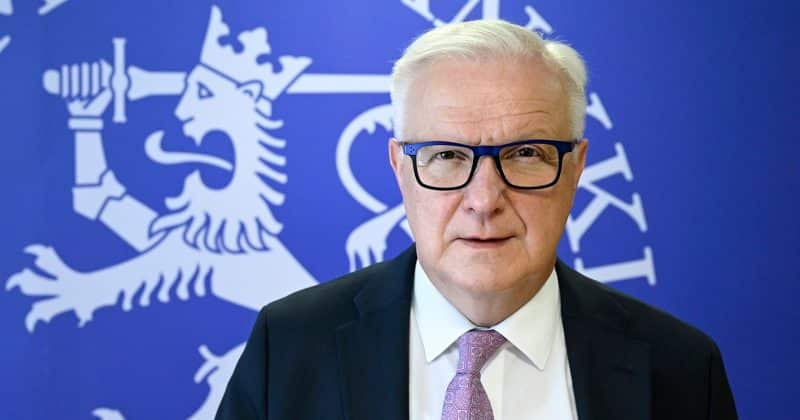
European Central Bank’s Olli Rehn warns of stagflation from energy shock tied to Middle East conflict
The ECB governing council member says the Iran war is simultaneously inflating prices and crushing growth, with euro-area GDP forecast at just 0.8% for 2026
Olli Rehn, a member of the European Central Bank’s Governing Council and Governor of the Bank of Finland, told Bloomberg on June 30 that the Middle East conflict is producing the economic outcome central bankers dread most: stagflation. Rising energy prices are pushing inflation higher while dragging growth lower.
The euro area’s growth forecast for 2026 now sits at a meager 0.8%, according to Eurosystem projections. Inflation, meanwhile, has spiked to 3%, well above the ECB’s 2% target.
The stagflation signal Rehn has been tracking
This isn’t the first time Rehn has sounded the alarm. Back in May 2026, he pointed to what he called the “first signs” of stagflation, noting that euro-area GDP growth for the first quarter came in only marginally positive while inflation was climbing fast. A month later, his tone has hardened considerably.
The culprit is straightforward: energy. The Iran war has damaged Middle Eastern energy infrastructure, sending oil and gas prices surging across global markets.
Rehn emphasized that future rate decisions will be data-dependent. The ECB has so far chosen the inflation-fighting path, raising key interest rates with a stated commitment to anchoring inflation expectations at the 2% target.
Macro, rates, and crypto—what moved markets and what matters next.
Daily. Free. Join 34,000+ readers across crypto, finance, and policy.
What damaged energy infrastructure means for duration
The more concerning element of Rehn’s assessment isn’t the current snapshot but the trajectory. Damage to Middle Eastern energy infrastructure isn’t the kind of problem that resolves in a quarter or two, meaning the inflationary impulse from energy costs could persist well beyond what markets are currently pricing in.
What this means for crypto and risk assets
Rehn didn’t mention crypto in his Bloomberg interview. During the 2022 rate-hiking cycle, Bitcoin lost roughly three-quarters of its value from peak to trough before eventually recovering.
Higher energy costs directly impact Bitcoin mining economics, particularly for operations in regions with exposure to global energy markets. Miners operating on thin margins could face profitability squeezes, potentially leading to hashrate declines or miner capitulation events that introduce additional selling pressure.