
Elroy Air nears $1B merger with blank-check company to take autonomous cargo drones public

Elroy Air nears $1B merger with blank-check company to take autonomous cargo drones public

The San Francisco drone maker, which has raised roughly $48 million to date, is in advanced talks to go public through a SPAC deal that would value it at around $1 billion

Elroy Air, the autonomous cargo drone startup out of San Francisco, is in advanced negotiations to merge with a special purpose acquisition company in a deal that would value the combined entity at roughly $1 billion.

For a company that has raised approximately $48 million in total funding, a billion-dollar valuation through a SPAC merger represents a significant leap. The identity of the SPAC has not been disclosed.

What Elroy Air actually does

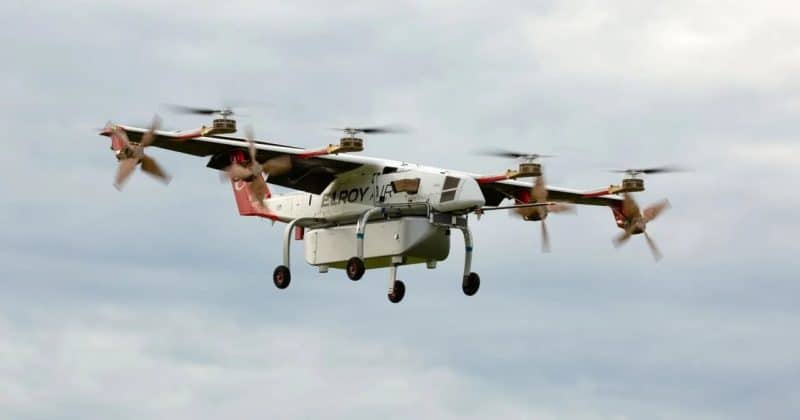
Founded in 2017 by David Merrill and Clint Cope, Elroy Air builds the Chaparral, a hybrid vertical takeoff and landing drone designed for what the logistics industry calls “middle-mile” delivery. Think of it as the trucking leg of a package’s journey, the stretch between distribution centers, but handled by an autonomous aircraft instead of a semi on the highway.

Advertisement

The Chaparral is designed for same-day logistics operations. Its hybrid VTOL capabilities mean it can take off and land without a runway, then transition to more efficient forward flight for the actual hauling portion.

The company has attracted backing from Lockheed Martin Ventures, among other investors. Its $40 million Series A round closed in 2021.

More recently, Elroy Air locked in a $200 million joint venture with Abu Dhabi’s Barq Group in January 2026. That partnership is focused on manufacturing the Chaparral aircraft, with commercial deployment targeted for 2026.

The SPAC route: why now

The identity of the SPAC has not been disclosed. The quality of a SPAC sponsor, their track record, the trust size, and the redemption dynamics determine whether the deal actually delivers usable capital or just a stock ticker and a pile of complications.

The approximately $1 billion valuation being discussed represents a significant premium to the company’s private fundraising history. Going from $48 million raised to a billion-dollar public listing is a 20x-plus leap in implied value.

What this means for investors

The $200 million Barq joint venture gives Elroy Air a concrete, funded path to commercial production. If the Chaparral reaches commercial deployment in 2026 as planned, the company would enter public markets with actual operational data rather than just a pitch deck and a prototype.

Investors watching this deal should pay close attention to three things. First, the SPAC sponsor identity and trust size, because that determines how much cash actually makes it through redemptions. Second, the terms of the merger agreement, specifically any earnout provisions or lockup structures that align management incentives with post-merger performance. Third, the regulatory timeline for the Chaparral’s commercial certification, which remains the single biggest variable between “billion-dollar company” and “billion-dollar aspiration.”

Disclosure: This article was edited by Editorial Team. For more information on how we create and review content, see our Editorial Policy.

Elroy Air nears $1B merger with blank-check company to take autonomous cargo drones public

Elroy Air nears $1B merger with blank-check company to take autonomous cargo drones public

The San Francisco drone maker, which has raised roughly $48 million to date, is in advanced talks to go public through a SPAC deal that would value it at around $1 billion

Elroy Air, the autonomous cargo drone startup out of San Francisco, is in advanced negotiations to merge with a special purpose acquisition company in a deal that would value the combined entity at roughly $1 billion.

For a company that has raised approximately $48 million in total funding, a billion-dollar valuation through a SPAC merger represents a significant leap. The identity of the SPAC has not been disclosed.

What Elroy Air actually does

Founded in 2017 by David Merrill and Clint Cope, Elroy Air builds the Chaparral, a hybrid vertical takeoff and landing drone designed for what the logistics industry calls “middle-mile” delivery. Think of it as the trucking leg of a package’s journey, the stretch between distribution centers, but handled by an autonomous aircraft instead of a semi on the highway.

Advertisement

The Chaparral is designed for same-day logistics operations. Its hybrid VTOL capabilities mean it can take off and land without a runway, then transition to more efficient forward flight for the actual hauling portion.

The company has attracted backing from Lockheed Martin Ventures, among other investors. Its $40 million Series A round closed in 2021.

More recently, Elroy Air locked in a $200 million joint venture with Abu Dhabi’s Barq Group in January 2026. That partnership is focused on manufacturing the Chaparral aircraft, with commercial deployment targeted for 2026.

The SPAC route: why now

The identity of the SPAC has not been disclosed. The quality of a SPAC sponsor, their track record, the trust size, and the redemption dynamics determine whether the deal actually delivers usable capital or just a stock ticker and a pile of complications.

The approximately $1 billion valuation being discussed represents a significant premium to the company’s private fundraising history. Going from $48 million raised to a billion-dollar public listing is a 20x-plus leap in implied value.

What this means for investors

The $200 million Barq joint venture gives Elroy Air a concrete, funded path to commercial production. If the Chaparral reaches commercial deployment in 2026 as planned, the company would enter public markets with actual operational data rather than just a pitch deck and a prototype.

Investors watching this deal should pay close attention to three things. First, the SPAC sponsor identity and trust size, because that determines how much cash actually makes it through redemptions. Second, the terms of the merger agreement, specifically any earnout provisions or lockup structures that align management incentives with post-merger performance. Third, the regulatory timeline for the Chaparral’s commercial certification, which remains the single biggest variable between “billion-dollar company” and “billion-dollar aspiration.”

Disclosure: This article was edited by Editorial Team. For more information on how we create and review content, see our Editorial Policy.