
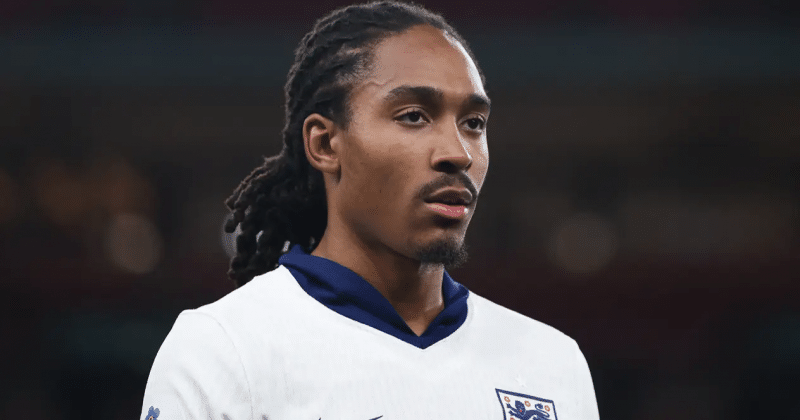
England names Djed Spence as starting right-back against DR Congo in World Cup

England names Djed Spence as starting right-back against DR Congo in World Cup

With Reece James and Jarell Quansah both injured, Spence gets his biggest call yet on the world stage

Djed Spence is getting his moment. England manager Thomas Tuchel has named the Tottenham Hotspur defender as his starting right-back for the Round of 32 match against the Democratic Republic of Congo at the 2026 FIFA World Cup, scheduled for July 1.

It is not the circumstance anyone would have scripted. Spence is stepping into the role because both Reece James and Jarell Quansah are injured and unavailable. But that is the thing about football at this level: opportunity rarely arrives cleanly wrapped.

How Spence got here

Spence only received his first senior England call-up in August 2025. He made his debut for the national team in September 2025, making his path from first cap to World Cup starter a remarkably compressed one.

He has also made history along the way, becoming the first Muslim player to represent the senior England men’s team.

Advertisement

At club level, Spence has built a reputation for versatility. He can operate effectively on both sides of the defense, which is exactly the kind of flexibility that becomes invaluable when a squad is navigating an injury crisis mid-tournament.

Training sessions in the lead-up to the Congo match have reportedly shown Spence as the standout option at right-back, with Tuchel’s staff working around the reality that the more established names simply are not fit to play.

The injury problem Tuchel cannot ignore

Reece James has long been considered England’s first-choice right-back when fit. Jarell Quansah was seen as part of the defensive depth England could rely on. Losing both players to injury for the same knockout-stage match is the kind of compounding problem that tests a manager’s squad-building instincts.

The broader question this raises is about squad depth. A 26-man World Cup roster is supposed to account for exactly these situations. Spence being the clear answer in training suggests Tuchel’s staff has confidence in him, even if the path to that confidence was paved by misfortune.

What this match means for England

The 2026 FIFA World Cup is being hosted across North America, spread across venues in the United States, Canada, and Mexico. England’s Round of 32 fixture against DR Congo on July 1 is a knockout match, meaning there is no margin for error.

For Spence personally, this is the kind of appearance that can define a career trajectory. Starting a World Cup knockout match less than a year after your international debut is an extraordinary leap.

His versatility is worth underlining here. Spence has demonstrated he can function on either flank, which gives Tuchel options in how he sets up the team’s shape and how he responds if the game demands adjustment.

The historical footnote of Spence being the first Muslim player in the senior England men’s squad adds another layer of significance to this moment.

Disclosure: This article was edited by Editorial Team. For more information on how we create and review content, see our Editorial Policy.

England names Djed Spence as starting right-back against DR Congo in World Cup

England names Djed Spence as starting right-back against DR Congo in World Cup

With Reece James and Jarell Quansah both injured, Spence gets his biggest call yet on the world stage

Djed Spence is getting his moment. England manager Thomas Tuchel has named the Tottenham Hotspur defender as his starting right-back for the Round of 32 match against the Democratic Republic of Congo at the 2026 FIFA World Cup, scheduled for July 1.

It is not the circumstance anyone would have scripted. Spence is stepping into the role because both Reece James and Jarell Quansah are injured and unavailable. But that is the thing about football at this level: opportunity rarely arrives cleanly wrapped.

How Spence got here

Spence only received his first senior England call-up in August 2025. He made his debut for the national team in September 2025, making his path from first cap to World Cup starter a remarkably compressed one.

He has also made history along the way, becoming the first Muslim player to represent the senior England men’s team.

Advertisement

At club level, Spence has built a reputation for versatility. He can operate effectively on both sides of the defense, which is exactly the kind of flexibility that becomes invaluable when a squad is navigating an injury crisis mid-tournament.

Training sessions in the lead-up to the Congo match have reportedly shown Spence as the standout option at right-back, with Tuchel’s staff working around the reality that the more established names simply are not fit to play.

The injury problem Tuchel cannot ignore

Reece James has long been considered England’s first-choice right-back when fit. Jarell Quansah was seen as part of the defensive depth England could rely on. Losing both players to injury for the same knockout-stage match is the kind of compounding problem that tests a manager’s squad-building instincts.

The broader question this raises is about squad depth. A 26-man World Cup roster is supposed to account for exactly these situations. Spence being the clear answer in training suggests Tuchel’s staff has confidence in him, even if the path to that confidence was paved by misfortune.

What this match means for England

The 2026 FIFA World Cup is being hosted across North America, spread across venues in the United States, Canada, and Mexico. England’s Round of 32 fixture against DR Congo on July 1 is a knockout match, meaning there is no margin for error.

For Spence personally, this is the kind of appearance that can define a career trajectory. Starting a World Cup knockout match less than a year after your international debut is an extraordinary leap.

His versatility is worth underlining here. Spence has demonstrated he can function on either flank, which gives Tuchel options in how he sets up the team’s shape and how he responds if the game demands adjustment.

The historical footnote of Spence being the first Muslim player in the senior England men’s squad adds another layer of significance to this moment.

Disclosure: This article was edited by Editorial Team. For more information on how we create and review content, see our Editorial Policy.