
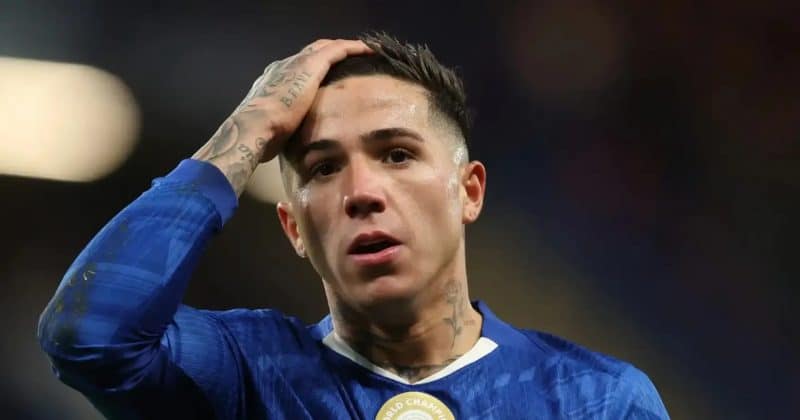
Enzo Fernandez agrees personal terms with Real Madrid as BingX ambassador deal highlights crypto-sports convergence
The Argentine midfielder's move to Madrid could exceed €100 million, while his recent role as BingX global ambassador underscores how deeply crypto has embedded itself in elite football
Enzo Fernandez, the Argentine midfielder currently at Chelsea, has reportedly agreed personal terms with Real Madrid. The deal, first reported by Spanish journalist Miguel Serrano around June 2, leaves one rather important detail unresolved: the two clubs still need to agree on a transfer fee.
Chelsea values Fernandez at around €140 million. The potential deal is expected to exceed €100 million. No official confirmation of the transfer has been made.
Where crypto enters the picture
Just weeks before this transfer saga heated up, Fernandez was appointed as the Global Ambassador for BingX, a cryptocurrency exchange. The partnership, announced in May 2026, centers on the company’s “Build Your Legacy” campaign.
BingX gets to ride the wave of attention that inevitably follows a nine-figure transfer negotiation. Fernandez, a two-time World Cup winner with Argentina, brings the kind of global recognition that most brands spend years trying to manufacture.
Real Madrid’s blockchain history
Real Madrid has previously experimented with smart-ticket NFTs designed to enhance fan engagement. These can verify authenticity, prevent scalping, and potentially offer holders access to exclusive content or experiences. Those experiments have not been directly linked to the Fernandez negotiations.
The news moving money, markets, and the world—before your day starts.
Daily. Free. Join 34,000+ readers across crypto, finance, and policy.
The transfer itself
Real Madrid’s interest comes as the club looks to rebuild under Jose Mourinho, who has returned to the coaching role at the Bernabeu. Chelsea and Real Madrid still need to negotiate the fee, and the gap between what Chelsea wants (reportedly around €140 million) and what Madrid is willing to pay could take weeks to bridge.
What this means for crypto investors watching the sports sector
The BingX-Fernandez partnership is one data point in a larger pattern of crypto exchanges spending money to embed themselves in mainstream sports culture through global ambassador roles with marquee athletes. When a football fan in Buenos Aires or Madrid sees Fernandez promoting a crypto exchange, that’s a touchpoint across millions of fans across dozens of markets.
Real Madrid’s smart-ticket NFT experiments add another dimension. If a club of that magnitude fully commits to blockchain-based ticketing, it could create demand for the underlying infrastructure in ways that address real problems like ticket fraud and scalping.
The difference between a marketing stunt and a meaningful integration is whether fans actually end up using the product. That distinction is what separates noise from signal in the crypto-sports space.