
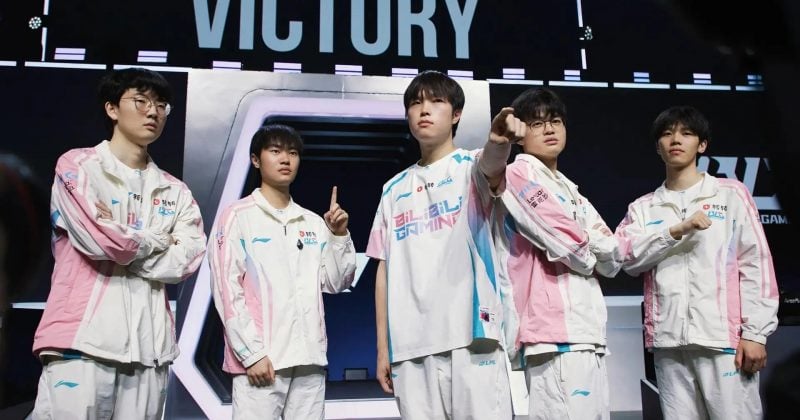
Esports prediction markets heat up as Bilibili Gaming edges closer to MSI Grand Final
BLG's dominant run through the MSI 2026 bracket is drawing fresh attention to the growing overlap between competitive gaming and crypto betting platforms.
Bilibili Gaming just took Game 2 against Hanwha Life Esports in the MSI 2026 Upper Bracket Finals, putting the Chinese powerhouse one win away from punching their ticket to the Grand Final. For League of Legends fans, that’s a big deal. For crypto markets, it’s becoming one too.
The match, played on July 9, represents another chapter in what’s becoming a remarkably consistent dynasty. BLG has now qualified for the Mid-Season Invitational four consecutive years, a feat that puts them in rarefied air within the League of Legends Pro League ecosystem.
A bracket run built on dominance
Before dismantling HLE in Game 2, BLG had already posted a clean 3-0 sweep over LYON and a hard-fought 3-2 victory against T1, one of the most decorated organizations in League of Legends history.
Here’s the thing about BLG’s consistency: four straight MSI appearances doesn’t just signal individual talent. It signals organizational stability, the kind of infrastructure that keeps rosters competitive across multiple metas and patch cycles. Their sponsorship portfolio, which includes Ping An Bank, Alienware, and Logitech G, reflects the traditional corporate backing you’d expect from a tier-one esports franchise.
None of those sponsors operate in crypto or blockchain. But the financial activity surrounding BLG’s matches tells a different story.
The news moving money, markets, and the world—before your day starts.
Daily. Free. Join 34,000+ readers across crypto, finance, and policy.
Where esports meets prediction markets
Platforms like Crypto.com and Coinbase have noted increased trading activity surrounding MSI match outcomes, with community engagement in betting-adjacent scenarios reflecting genuine financial participation. No team-specific tokens exist here. No blockchain integration is baked into the tournament infrastructure.
The absence of direct blockchain ties to BLG or Hanwha Life doesn’t diminish this trend. If anything, it highlights how the crypto-esports overlap is being driven by users rather than institutions. No partnership deal or token launch is required when the audience is already on-chain.
What this means for the crypto-esports intersection
Every major esports event that draws prediction market activity creates a data point. For crypto investors, the esports vertical represents a recurring, high-engagement use case for prediction markets that doesn’t depend on regulatory approval or institutional adoption.
There’s also a secondary effect worth watching. Users who enter crypto through esports betting don’t necessarily stay in that lane. They discover yield products, NFT marketplaces, and trading platforms.
BLG’s four-year MSI streak is about competitive legacy, not financial innovation. But the ecosystem forming around their matches is worth paying attention to. When a team with BLG’s consistency meets a tournament with MSI’s global reach, and both collide with a crypto-native audience that’s already comfortable placing digital wagers, you get something that looks less like a niche curiosity and more like an emerging market vertical.