
Nexo Earn with Nexo
Ethereum transaction fees hit all-time lows as activity surges

Ethereum transaction fees hit all-time lows as activity surges

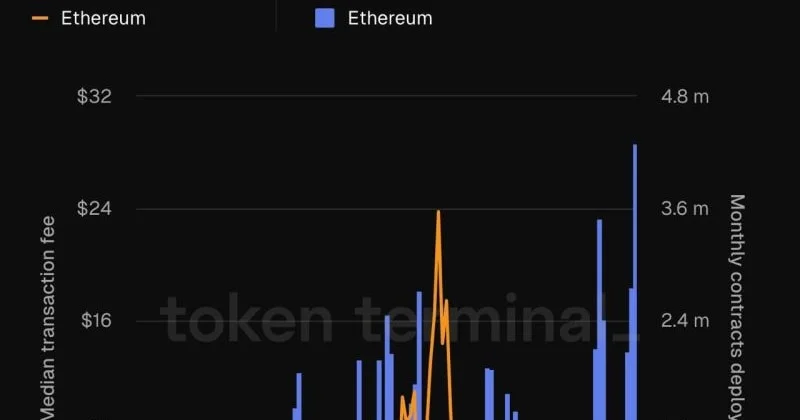
The network is processing nearly 2.5 million daily transactions at roughly $0.15 a pop, and the Fusaka upgrade deserves most of the credit.

Ethereum is doing something unusual for a blockchain that spent years being roasted for its gas fees: it’s getting cheaper while getting busier. The network’s seven-day moving average of daily transactions has climbed to roughly 2.5 million, nearly double the figure from a year ago, while average transaction costs have cratered to around $0.15.

Some swaps are going through for as little as $0.04. For anyone who remembers paying $50 or more to move tokens during the 2021 NFT mania, that number feels like a typo.

The Fusaka effect

The biggest catalyst behind this shift landed on December 3, 2025, when Ethereum rolled out the Fusaka upgrade. The update pushed the block gas limit to approximately 60 million and introduced a mechanism called PeerDAS, which makes it cheaper for Layer 2 rollups to post data back to the mainnet.

Advertisement

Q1 2026 turned out to be Ethereum’s busiest quarter on record, logging 200.4 million total transactions. That figure is more than double the lows observed during the network’s quieter stretches in 2023, when DeFi activity slumped and users migrated to alternative chains in search of lower costs.

The upgrade didn’t just benefit mainnet users. Layer 2 networks, which handle the bulk of Ethereum’s scaling by bundling transactions off-chain, saw their data costs drop meaningfully thanks to the increased blob capacity Fusaka introduced. Lower L2 costs tend to trickle down to end users in the form of cheaper transactions on networks like Arbitrum, Optimism, and Base.

Stablecoins are eating the chain

Here’s a detail that often gets buried in the excitement over raw transaction counts: stablecoin transfers now account for 35-40% of all Ethereum transaction activity. That’s not a niche use case anymore. That’s the primary use case.

USDC, USDT, and their peers have quietly become the backbone of Ethereum’s daily throughput. The implication is straightforward. Ethereum isn’t just a platform for speculative token trading or NFT flipping. It’s increasingly the settlement layer for dollar-denominated digital payments.

The price disconnect investors should watch

All of this adoption hasn’t translated into a corresponding jump in ETH’s price. Market analysts have flagged a growing disconnect between network usage metrics and the token’s market performance.

Ethereum co-founder Vitalik Buterin has framed 2026 as a critical year for reinforcing the platform’s core values amid this wave of adoption growth.

The disconnect isn’t entirely surprising. Lower fees mean the network burns less ETH through its EIP-1559 mechanism, which destroys a portion of each transaction fee. When gas is cheap, less ETH gets removed from circulation, reducing the deflationary pressure that bulls loved during high-fee periods. In English: the very thing making Ethereum more usable is also making its token economics less aggressively bullish in the short term.

Disclosure: This article was edited by Editorial Team. For more information on how we create and review content, see our Editorial Policy.

Ethereum transaction fees hit all-time lows as activity surges

Ethereum transaction fees hit all-time lows as activity surges

The network is processing nearly 2.5 million daily transactions at roughly $0.15 a pop, and the Fusaka upgrade deserves most of the credit.

Ethereum is doing something unusual for a blockchain that spent years being roasted for its gas fees: it’s getting cheaper while getting busier. The network’s seven-day moving average of daily transactions has climbed to roughly 2.5 million, nearly double the figure from a year ago, while average transaction costs have cratered to around $0.15.

Some swaps are going through for as little as $0.04. For anyone who remembers paying $50 or more to move tokens during the 2021 NFT mania, that number feels like a typo.

The Fusaka effect

The biggest catalyst behind this shift landed on December 3, 2025, when Ethereum rolled out the Fusaka upgrade. The update pushed the block gas limit to approximately 60 million and introduced a mechanism called PeerDAS, which makes it cheaper for Layer 2 rollups to post data back to the mainnet.

Advertisement

Q1 2026 turned out to be Ethereum’s busiest quarter on record, logging 200.4 million total transactions. That figure is more than double the lows observed during the network’s quieter stretches in 2023, when DeFi activity slumped and users migrated to alternative chains in search of lower costs.

The upgrade didn’t just benefit mainnet users. Layer 2 networks, which handle the bulk of Ethereum’s scaling by bundling transactions off-chain, saw their data costs drop meaningfully thanks to the increased blob capacity Fusaka introduced. Lower L2 costs tend to trickle down to end users in the form of cheaper transactions on networks like Arbitrum, Optimism, and Base.

Stablecoins are eating the chain

Here’s a detail that often gets buried in the excitement over raw transaction counts: stablecoin transfers now account for 35-40% of all Ethereum transaction activity. That’s not a niche use case anymore. That’s the primary use case.

USDC, USDT, and their peers have quietly become the backbone of Ethereum’s daily throughput. The implication is straightforward. Ethereum isn’t just a platform for speculative token trading or NFT flipping. It’s increasingly the settlement layer for dollar-denominated digital payments.

The price disconnect investors should watch

All of this adoption hasn’t translated into a corresponding jump in ETH’s price. Market analysts have flagged a growing disconnect between network usage metrics and the token’s market performance.

Ethereum co-founder Vitalik Buterin has framed 2026 as a critical year for reinforcing the platform’s core values amid this wave of adoption growth.

The disconnect isn’t entirely surprising. Lower fees mean the network burns less ETH through its EIP-1559 mechanism, which destroys a portion of each transaction fee. When gas is cheap, less ETH gets removed from circulation, reducing the deflationary pressure that bulls loved during high-fee periods. In English: the very thing making Ethereum more usable is also making its token economics less aggressively bullish in the short term.

Disclosure: This article was edited by Editorial Team. For more information on how we create and review content, see our Editorial Policy.