
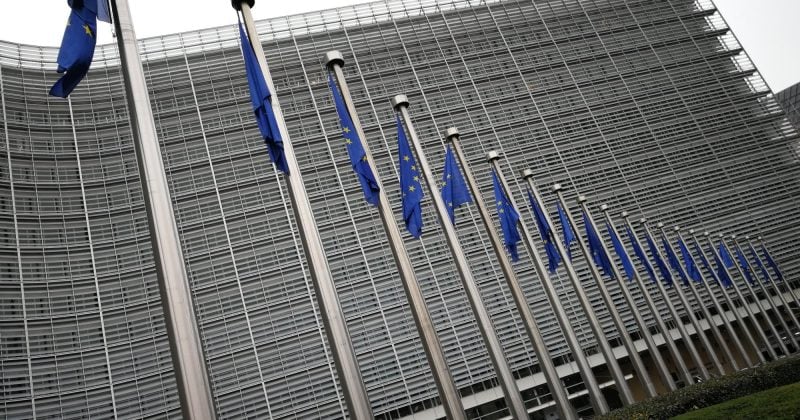
European Union, China set October deadline to resolve trade tensions

European Union, China set October deadline to resolve trade tensions

With a €360 billion goods deficit and tariffs already flying, Brussels and Beijing have given themselves until October to find common ground

The European Union and China have agreed to target October as a soft deadline for making meaningful progress on their escalating trade dispute.

The backdrop here is not subtle. The EU’s goods trade deficit with China hit €360 billion in 2025, a figure that European Commission President Ursula von der Leyen has described publicly as roughly €1 billion per day. That is not a rounding error. That is a structural problem.

How the deficit got this bad

Chinese imports into the EU surged 45% over the five years leading up to 2025. The growth was powered by a combination of Chinese industrial overcapacity and state-subsidized exports flooding European markets at prices domestic manufacturers simply cannot compete with.

Advertisement

The electric vehicle sector became the most visible flashpoint. The EU imposed definitive anti-subsidy tariffs of up to 35.3% on Chinese-made EVs, effective October 2024. Chinese automakers were pricing vehicles below what unsubsidized production would allow, and European carmakers were absorbing the competitive damage.

China’s response was predictably cool. Beijing cancelled at least two high-level EU meetings as tensions climbed.

Von der Leyen, speaking in June 2026, pushed for even more aggressive use of trade defense tools. The EU has also launched anti-dumping probes into a range of Chinese products, and steel import safeguards, which could double tariffs to 50%, were approaching their expiration at mid-2026.

What October actually means

The EU is not negotiating from a position of internal unity. European automakers, particularly German manufacturers, remain deeply embedded in the Chinese market and have historically lobbied against aggressive tariff measures that might invite retaliation. At the same time, the political pressure from French and southern European industries, which are more exposed to Chinese competition and less reliant on Chinese sales, pushes in the opposite direction.

China’s dominance over critical raw materials and key components in supply chains for everything from EVs to semiconductors gives Beijing real negotiating power that goes beyond the trade balance numbers.

What investors should watch

If talks stall or collapse, the escalation path includes more anti-dumping probes, steel safeguard tariffs doubling toward 50%, and potential Chinese retaliatory measures against European luxury goods, agriculture, or aerospace. European manufacturers already navigating high energy costs and sluggish domestic demand do not have much cushion to absorb another layer of trade friction.

A €360 billion annual deficit reflects an enormous volume of goods flowing one direction. Unwinding or rebalancing that dependency takes years, not months, regardless of what happens in October.

Disclosure: This article was edited by Editorial Team. For more information on how we create and review content, see our Editorial Policy.

European Union, China set October deadline to resolve trade tensions

European Union, China set October deadline to resolve trade tensions

With a €360 billion goods deficit and tariffs already flying, Brussels and Beijing have given themselves until October to find common ground

The European Union and China have agreed to target October as a soft deadline for making meaningful progress on their escalating trade dispute.

The backdrop here is not subtle. The EU’s goods trade deficit with China hit €360 billion in 2025, a figure that European Commission President Ursula von der Leyen has described publicly as roughly €1 billion per day. That is not a rounding error. That is a structural problem.

How the deficit got this bad

Chinese imports into the EU surged 45% over the five years leading up to 2025. The growth was powered by a combination of Chinese industrial overcapacity and state-subsidized exports flooding European markets at prices domestic manufacturers simply cannot compete with.

Advertisement

The electric vehicle sector became the most visible flashpoint. The EU imposed definitive anti-subsidy tariffs of up to 35.3% on Chinese-made EVs, effective October 2024. Chinese automakers were pricing vehicles below what unsubsidized production would allow, and European carmakers were absorbing the competitive damage.

China’s response was predictably cool. Beijing cancelled at least two high-level EU meetings as tensions climbed.

Von der Leyen, speaking in June 2026, pushed for even more aggressive use of trade defense tools. The EU has also launched anti-dumping probes into a range of Chinese products, and steel import safeguards, which could double tariffs to 50%, were approaching their expiration at mid-2026.

What October actually means

The EU is not negotiating from a position of internal unity. European automakers, particularly German manufacturers, remain deeply embedded in the Chinese market and have historically lobbied against aggressive tariff measures that might invite retaliation. At the same time, the political pressure from French and southern European industries, which are more exposed to Chinese competition and less reliant on Chinese sales, pushes in the opposite direction.

China’s dominance over critical raw materials and key components in supply chains for everything from EVs to semiconductors gives Beijing real negotiating power that goes beyond the trade balance numbers.

What investors should watch

If talks stall or collapse, the escalation path includes more anti-dumping probes, steel safeguard tariffs doubling toward 50%, and potential Chinese retaliatory measures against European luxury goods, agriculture, or aerospace. European manufacturers already navigating high energy costs and sluggish domestic demand do not have much cushion to absorb another layer of trade friction.

A €360 billion annual deficit reflects an enormous volume of goods flowing one direction. Unwinding or rebalancing that dependency takes years, not months, regardless of what happens in October.

Disclosure: This article was edited by Editorial Team. For more information on how we create and review content, see our Editorial Policy.