
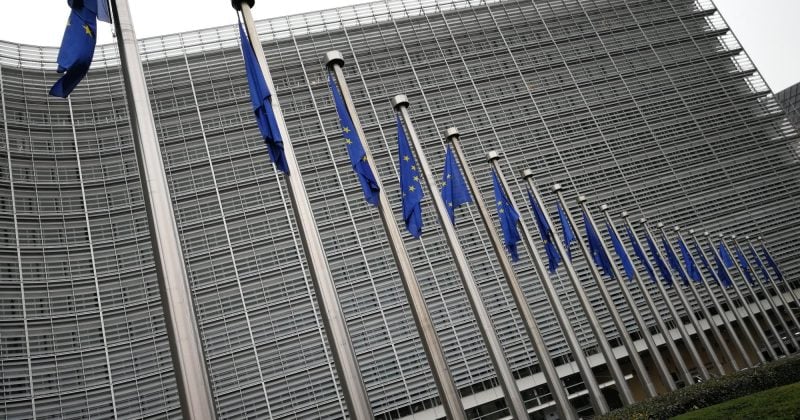
EU leaders debate tougher measures to address China trade imbalance
The bloc's trade deficit with China hit a record pace of roughly $1 billion per day in early 2026, and member states can't agree on what to do about it
The European Union is bleeding roughly €1 billion per day to China in trade deficits, and the bloc’s leaders are gathering for a summit that may determine whether they actually do something about it or just talk about it some more.
EU leaders are set to convene on June 18-19 for a summit where the trade imbalance with China will be a central, if politically delicate, topic. The European Commission declared the current trade relationship “not sustainable” following a meeting of commissioners on May 29, setting the stage for what could be the most consequential shift in EU-China economic relations in years.
The numbers tell a brutal story
The EU’s goods trade deficit with China reached €360 billion in 2025. In early 2026, that deficit accelerated to approximately €1 billion per day.
The Commission’s response has been to propose new mechanisms that would limit China’s access to EU markets in critical sectors. Chemicals, metals, and clean energy technologies are the primary targets. The proposals also include strategies to diversify supply chains away from Chinese suppliers.
The Franco-German fault line
A coalition of five member states, France, Italy, Spain, the Netherlands, and Lithuania, is pushing for stronger trade defenses. Their wish list includes faster anti-dumping investigations and new tariffs designed to counteract what they see as unfair Chinese trade practices, particularly in sectors where Chinese state subsidies have enabled producers to undercut European competitors.
Macro, rates, and crypto—what moved markets and what matters next.
Daily. Free. Join 34,000+ readers across crypto, finance, and policy.
Then there’s Germany. Europe’s largest economy has a different calculus. German industry, particularly its automotive and manufacturing sectors, depends heavily on Chinese market access. Berlin’s position has consistently been that any punitive measures risk triggering retaliation that could hurt German exporters more than the current deficit hurts them.
The internal division is already visible in the summit preparations. Draft conclusions for the June meeting reportedly make no reference to China at all.
Beijing isn’t sitting still
Beijing has cancelled high-level meetings with EU officials. Chinese officials have also warned that restrictive actions could harm European consumers and undermine competitiveness.