
EU and Persian Gulf states pressure Iran to keep Strait of Hormuz open as crypto toll payments reshape sanctions landscape

EU and Persian Gulf states pressure Iran to keep Strait of Hormuz open as crypto toll payments reshape sanctions landscape

Iran's demand for passage fees, including in bitcoin and stablecoins, adds an unprecedented crypto dimension to the world's most important oil chokepoint

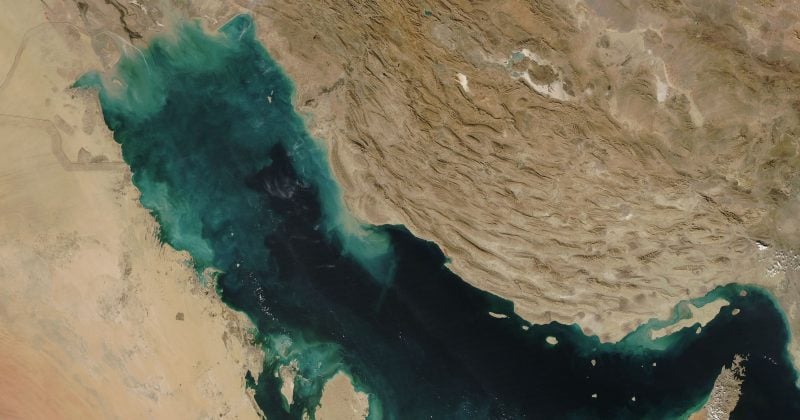
The European Union and Persian Gulf states have jointly urged Iran to maintain unrestricted access through the Strait of Hormuz, the narrow waterway where roughly 20 million barrels of oil pass through every single day. That’s about 20% of the global oil supply flowing through a channel you could almost see across on a clear afternoon.

The diplomatic pressure comes as Iran has imposed fees on vessels transiting the strait, demanding around $1 per barrel or up to $2 million per ship. Iran has been accepting bitcoin and stablecoins like USDT for those toll payments.

How we got here

The crisis traces back to February 28, 2026, when US-Israeli military strikes on Iran triggered a cascade of retaliatory measures. Iran’s response included asserting stricter controls over the strait, effectively treating an international waterway like a private toll road.

Advertisement

Diplomacy made a brief appearance on June 17, 2026, when Iran and the US signed a memorandum of understanding aimed at stabilizing shipping operations. It didn’t hold.

Subsequent tanker attacks and renewed military actions undermined whatever goodwill that agreement had generated. The situation has since deteriorated to the point where the EU and Gulf states felt compelled to issue a joint call for unconditional, fee-free passage.

Their position is straightforward: the Strait of Hormuz is an international waterway, and no single country gets to install a payment terminal at its entrance. International maritime law, specifically the UN Convention on the Law of the Sea, guarantees transit passage through straits used for international navigation.

The crypto angle

When you’re under heavy international sanctions, the traditional banking system isn’t exactly rolling out the red carpet. SWIFT transfers are off the table. Correspondent banking relationships have been severed. So Iran turned to the one financial rail that doesn’t require anyone’s permission: blockchain.

Iran found a way to collect billions in potential revenue while sidestepping the very sanctions designed to cut it off from global finance. Bitcoin and stablecoins don’t care about OFAC lists or EU sanctions frameworks.

What this means for investors

Start with oil. Twenty million barrels per day flowing through a contested chokepoint means any escalation can spike crude prices overnight.

Iran’s acceptance of bitcoin and USDT for transit fees creates a direct, real-world link between geopolitical tension and crypto transaction volumes. The risk of secondary sanctions hitting crypto infrastructure is real. If US or EU regulators determine that specific wallets, exchanges, or stablecoin issuers are facilitating Iran’s toll collections, enforcement actions could follow. Tether, the issuer of USDT, has historically cooperated with law enforcement to freeze wallets. Bitcoin transactions operate on a permissionless network that no single entity controls.

Disclosure: This article was edited by Editorial Team. For more information on how we create and review content, see our Editorial Policy.

EU and Persian Gulf states pressure Iran to keep Strait of Hormuz open as crypto toll payments reshape sanctions landscape

EU and Persian Gulf states pressure Iran to keep Strait of Hormuz open as crypto toll payments reshape sanctions landscape

Iran's demand for passage fees, including in bitcoin and stablecoins, adds an unprecedented crypto dimension to the world's most important oil chokepoint

The European Union and Persian Gulf states have jointly urged Iran to maintain unrestricted access through the Strait of Hormuz, the narrow waterway where roughly 20 million barrels of oil pass through every single day. That’s about 20% of the global oil supply flowing through a channel you could almost see across on a clear afternoon.

The diplomatic pressure comes as Iran has imposed fees on vessels transiting the strait, demanding around $1 per barrel or up to $2 million per ship. Iran has been accepting bitcoin and stablecoins like USDT for those toll payments.

How we got here

The crisis traces back to February 28, 2026, when US-Israeli military strikes on Iran triggered a cascade of retaliatory measures. Iran’s response included asserting stricter controls over the strait, effectively treating an international waterway like a private toll road.

Advertisement

Diplomacy made a brief appearance on June 17, 2026, when Iran and the US signed a memorandum of understanding aimed at stabilizing shipping operations. It didn’t hold.

Subsequent tanker attacks and renewed military actions undermined whatever goodwill that agreement had generated. The situation has since deteriorated to the point where the EU and Gulf states felt compelled to issue a joint call for unconditional, fee-free passage.

Their position is straightforward: the Strait of Hormuz is an international waterway, and no single country gets to install a payment terminal at its entrance. International maritime law, specifically the UN Convention on the Law of the Sea, guarantees transit passage through straits used for international navigation.

The crypto angle

When you’re under heavy international sanctions, the traditional banking system isn’t exactly rolling out the red carpet. SWIFT transfers are off the table. Correspondent banking relationships have been severed. So Iran turned to the one financial rail that doesn’t require anyone’s permission: blockchain.

Iran found a way to collect billions in potential revenue while sidestepping the very sanctions designed to cut it off from global finance. Bitcoin and stablecoins don’t care about OFAC lists or EU sanctions frameworks.

What this means for investors

Start with oil. Twenty million barrels per day flowing through a contested chokepoint means any escalation can spike crude prices overnight.

Iran’s acceptance of bitcoin and USDT for transit fees creates a direct, real-world link between geopolitical tension and crypto transaction volumes. The risk of secondary sanctions hitting crypto infrastructure is real. If US or EU regulators determine that specific wallets, exchanges, or stablecoin issuers are facilitating Iran’s toll collections, enforcement actions could follow. Tether, the issuer of USDT, has historically cooperated with law enforcement to freeze wallets. Bitcoin transactions operate on a permissionless network that no single entity controls.

Disclosure: This article was edited by Editorial Team. For more information on how we create and review content, see our Editorial Policy.