
Nexo Earn with Nexo
EU economy chief rules out easing sanctions on Russian oil and gas amid energy crisis

EU economy chief rules out easing sanctions on Russian oil and gas amid energy crisis

Valdis Dombrovskis says Russia is exploiting Middle East turmoil for energy profits, and the bloc won't blink on its sanctions regime.

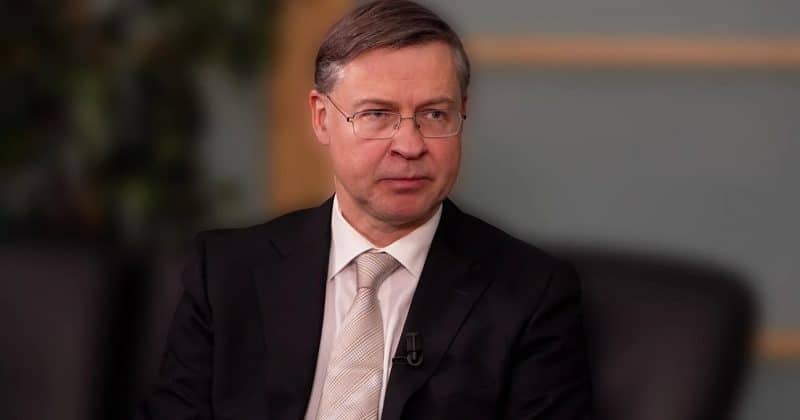
European Commissioner for the Economy Valdis Dombrovskis has made the EU’s position crystal clear: no amount of energy pain will convince Brussels to soften its sanctions on Russian oil and gas. In remarks delivered this week, Dombrovskis accused Moscow of deliberately milking the ongoing Middle East crisis to boost its fossil fuel revenues.

The statement comes as energy prices across the continent remain stubbornly elevated, squeezing consumers and businesses alike. For crypto markets, which have become increasingly sensitive to macroeconomic stress signals, the EU’s refusal to budge on sanctions extends the uncertainty around inflation, interest rates, and risk appetite.

What the EU is actually doing

The bloc adopted its 20th sanctions package against Russia in April 2026, a milestone that expanded maritime service bans and tightened enforcement mechanisms targeting Moscow’s energy export infrastructure. Think of the price cap on Russian oil as a speed limiter on a highway: it doesn’t stop the car, but it forces it to go slower than the driver wants.

The results have been significant. Russian oil and gas revenues have dropped nearly 80% compared to pre-war levels, according to Dombrovskis. That’s a staggering decline for a country whose federal budget was once overwhelmingly dependent on hydrocarbon exports.

But here’s the thing. The current energy crisis, driven partly by conflict in the Middle East, has created a window for Russia to claw back some of those losses by selling into a market hungry for supply. Dombrovskis framed the decision to hold firm as a strategic necessity, not just a moral one. Easing sanctions now would effectively reward the Kremlin for benefiting from someone else’s war.

Advertisement

The commissioner also took a pointed jab at Washington. He criticized the United States for extending sanctions waivers on Russian oil sales, a move that Brussels views as undermining the collective G7 effort to apply maximum economic pressure on Moscow. The US has reportedly extended such waivers at least twice, creating a visible crack in the Western coalition’s unified front.

Energy prices and the inflation transmission belt

Energy costs are the economy’s plumbing. When oil and gas prices spike, the effects cascade through virtually everything: transportation, manufacturing, food production, and ultimately, the consumer price index that central banks obsess over.

The EU’s insistence on maintaining sanctions means the continent is voluntarily accepting higher energy costs in exchange for geopolitical leverage. That trade-off has direct consequences for monetary policy. If inflation stays sticky because energy prices won’t come down, the European Central Bank has less room to cut rates. And rate expectations, as any macro trader will tell you, are the gravitational force acting on every asset class.

For crypto specifically, the connection runs through a fairly predictable chain. Elevated energy prices push inflation expectations higher. Higher inflation expectations make central banks cautious about easing. Tighter-for-longer monetary policy reduces the appeal of risk assets. Bitcoin and major altcoins, which have spent the past few years behaving more like leveraged tech stocks than digital gold, tend to feel this pressure acutely.

Market analysts have flagged the 5-year breakeven inflation rate as a key metric to watch. In English: this measures what bond markets think average inflation will be over the next five years. When it rises, it signals that investors expect sustained price pressure, which typically creates headwinds for crypto and other speculative assets.

The crypto angle investors should watch

Oil prices have quietly become one of the more reliable leading indicators for crypto market sentiment. Not because Bitcoin miners care about Brent crude, but because oil moves inflation expectations, which move rate expectations, which move everything else.

The EU’s rigid stance on Russian sanctions essentially guarantees that one of the world’s largest economic blocs will continue to operate with constrained energy supply for the foreseeable future. That constraint acts as a floor under energy prices, even if demand softens.

For Bitcoin and Ethereum traders, this creates an interesting dynamic. On one hand, persistent inflation could keep institutional money parked in safer assets and delay the kind of dovish monetary pivot that historically fuels crypto rallies. On the other hand, prolonged geopolitical instability and currency debasement fears have historically driven retail investors toward crypto as a hedge, particularly in regions where the local economy is under direct pressure.

European crypto adoption could see a divergence here. If the energy crisis deepens household budgets, discretionary investment in digital assets might decline. But if confidence in the euro weakens due to persistent stagflationary conditions, the narrative of Bitcoin as a non-sovereign store of value gets a fresh tailwind.

The US-EU rift over sanctions enforcement adds another layer of complexity. If Washington continues granting waivers while Brussels holds the line, the resulting policy divergence could create differential inflation trajectories between the two economies. That, in turn, would affect EUR/USD dynamics and potentially drive capital flows between dollar-denominated and euro-denominated crypto markets.

Traders positioning around these macro themes should keep an eye on upcoming G7 discussions around the oil price cap enforcement, any further US sanctions waivers, and ECB commentary on energy-driven inflation. The EU just told the market it’s not blinking. Whether that resolve holds through winter, when energy demand peaks, is the real test.

Disclosure: This article was edited by Editorial Team. For more information on how we create and review content, see our Editorial Policy.

EU economy chief rules out easing sanctions on Russian oil and gas amid energy crisis

EU economy chief rules out easing sanctions on Russian oil and gas amid energy crisis

Valdis Dombrovskis says Russia is exploiting Middle East turmoil for energy profits, and the bloc won't blink on its sanctions regime.

European Commissioner for the Economy Valdis Dombrovskis has made the EU’s position crystal clear: no amount of energy pain will convince Brussels to soften its sanctions on Russian oil and gas. In remarks delivered this week, Dombrovskis accused Moscow of deliberately milking the ongoing Middle East crisis to boost its fossil fuel revenues.

The statement comes as energy prices across the continent remain stubbornly elevated, squeezing consumers and businesses alike. For crypto markets, which have become increasingly sensitive to macroeconomic stress signals, the EU’s refusal to budge on sanctions extends the uncertainty around inflation, interest rates, and risk appetite.

What the EU is actually doing

The bloc adopted its 20th sanctions package against Russia in April 2026, a milestone that expanded maritime service bans and tightened enforcement mechanisms targeting Moscow’s energy export infrastructure. Think of the price cap on Russian oil as a speed limiter on a highway: it doesn’t stop the car, but it forces it to go slower than the driver wants.

The results have been significant. Russian oil and gas revenues have dropped nearly 80% compared to pre-war levels, according to Dombrovskis. That’s a staggering decline for a country whose federal budget was once overwhelmingly dependent on hydrocarbon exports.

But here’s the thing. The current energy crisis, driven partly by conflict in the Middle East, has created a window for Russia to claw back some of those losses by selling into a market hungry for supply. Dombrovskis framed the decision to hold firm as a strategic necessity, not just a moral one. Easing sanctions now would effectively reward the Kremlin for benefiting from someone else’s war.

Advertisement

The commissioner also took a pointed jab at Washington. He criticized the United States for extending sanctions waivers on Russian oil sales, a move that Brussels views as undermining the collective G7 effort to apply maximum economic pressure on Moscow. The US has reportedly extended such waivers at least twice, creating a visible crack in the Western coalition’s unified front.

Energy prices and the inflation transmission belt

Energy costs are the economy’s plumbing. When oil and gas prices spike, the effects cascade through virtually everything: transportation, manufacturing, food production, and ultimately, the consumer price index that central banks obsess over.

The EU’s insistence on maintaining sanctions means the continent is voluntarily accepting higher energy costs in exchange for geopolitical leverage. That trade-off has direct consequences for monetary policy. If inflation stays sticky because energy prices won’t come down, the European Central Bank has less room to cut rates. And rate expectations, as any macro trader will tell you, are the gravitational force acting on every asset class.

For crypto specifically, the connection runs through a fairly predictable chain. Elevated energy prices push inflation expectations higher. Higher inflation expectations make central banks cautious about easing. Tighter-for-longer monetary policy reduces the appeal of risk assets. Bitcoin and major altcoins, which have spent the past few years behaving more like leveraged tech stocks than digital gold, tend to feel this pressure acutely.

Market analysts have flagged the 5-year breakeven inflation rate as a key metric to watch. In English: this measures what bond markets think average inflation will be over the next five years. When it rises, it signals that investors expect sustained price pressure, which typically creates headwinds for crypto and other speculative assets.

The crypto angle investors should watch

Oil prices have quietly become one of the more reliable leading indicators for crypto market sentiment. Not because Bitcoin miners care about Brent crude, but because oil moves inflation expectations, which move rate expectations, which move everything else.

The EU’s rigid stance on Russian sanctions essentially guarantees that one of the world’s largest economic blocs will continue to operate with constrained energy supply for the foreseeable future. That constraint acts as a floor under energy prices, even if demand softens.

For Bitcoin and Ethereum traders, this creates an interesting dynamic. On one hand, persistent inflation could keep institutional money parked in safer assets and delay the kind of dovish monetary pivot that historically fuels crypto rallies. On the other hand, prolonged geopolitical instability and currency debasement fears have historically driven retail investors toward crypto as a hedge, particularly in regions where the local economy is under direct pressure.

European crypto adoption could see a divergence here. If the energy crisis deepens household budgets, discretionary investment in digital assets might decline. But if confidence in the euro weakens due to persistent stagflationary conditions, the narrative of Bitcoin as a non-sovereign store of value gets a fresh tailwind.

The US-EU rift over sanctions enforcement adds another layer of complexity. If Washington continues granting waivers while Brussels holds the line, the resulting policy divergence could create differential inflation trajectories between the two economies. That, in turn, would affect EUR/USD dynamics and potentially drive capital flows between dollar-denominated and euro-denominated crypto markets.

Traders positioning around these macro themes should keep an eye on upcoming G7 discussions around the oil price cap enforcement, any further US sanctions waivers, and ECB commentary on energy-driven inflation. The EU just told the market it’s not blinking. Whether that resolve holds through winter, when energy demand peaks, is the real test.

Disclosure: This article was edited by Editorial Team. For more information on how we create and review content, see our Editorial Policy.