
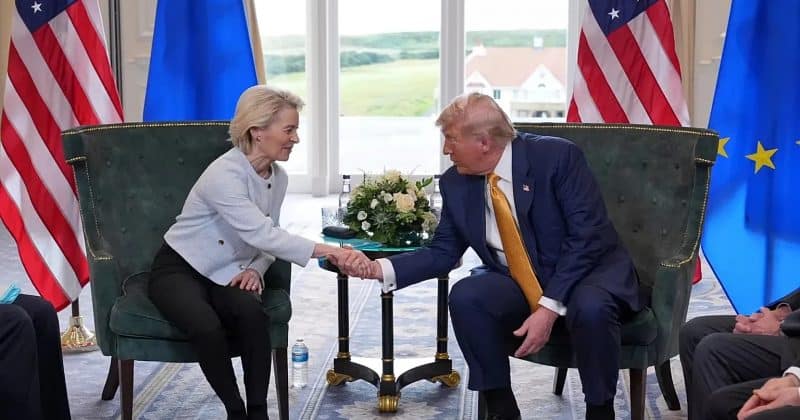
EU lawmakers endorse EU-US trade deal amid Trump tariff threat
European Parliament committee backed the transatlantic trade framework 31-6, but Trump's threat of 100% tariffs on French wine looms over the final vote
The European Parliament is moving forward with the EU-US trade framework, even as President Trump keeps waving the tariff stick. A key parliamentary committee voted 31-6 with three abstentions on June 2 to support legislation implementing the deal, setting up a full Parliament vote scheduled for June 16.
Trump has threatened to slap a 100% duty on French wines, a move that would essentially double the price of every bottle of Bordeaux crossing the Atlantic.
What the deal actually does
The trade framework, originally negotiated by Trump and European Commission President Ursula von der Leyen back in July 2025, establishes a 15% cap on tariffs for most goods traded between the EU and the US.
The deal also extends zero duties on US lobsters, continuing an arrangement that dates back to 2020. American lobster fishermen, particularly in Maine, had become unlikely pawns in the broader trade chess match, and the continuation of duty-free access represents a concrete win for that industry.
On the European side, the framework incorporates safeguard mechanisms for EU sectors that could be harmed if the US fails to hold up its end of the bargain. Steel and aluminum producers, who bore the brunt of earlier tariff rounds, get specific protections under these provisions.
The French wine wildcard
The wine tariff threat is specifically tied to France’s digital services tax, which imposes levies on revenue generated by large tech companies operating in France. The US has long viewed such taxes as unfairly targeting American tech giants like Google, Apple, and Meta.
Previous rounds of US tariffs on European wines, imposed during the Airbus-Boeing dispute, caused measurable damage to export volumes.
What this means for markets and investors
A full Parliament debate is scheduled for June 15, with the decisive vote the following day.
The framework caps general tariffs, yet the US president retains the ability to impose sector-specific duties as retaliatory measures tied to separate policy disputes like digital services taxation. Investors in European wine and spirits companies, as well as adjacent hospitality and retail sectors, should factor this ongoing risk into their positioning.
If the US imposes tariffs that breach the spirit of the agreement, the safeguard provisions built into the EU side of the deal could trigger retaliatory European measures, potentially reigniting the cycle of escalation that the framework was designed to end.