
 Earn with Nexo
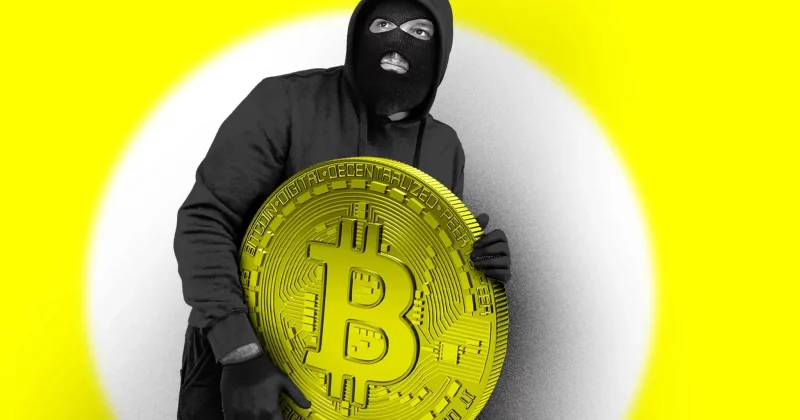
FBI creates fake crypto token NexFundAI to expose market manipulation
Operation Token Mirrors led to 18 individuals charged and over $25M in crypto seized, marking the first criminal charges against financial firms for wash trading in the industry.
The FBI did something unusual last year. It created its own cryptocurrency.
Not as an investment vehicle, not as a research project, but as a trap. The agency launched a fully functional Ethereum-based token called NexFundAI in March 2024, designed from the ground up to lure market manipulators into incriminating themselves. The operation, dubbed “Operation Token Mirrors,” resulted in 18 individuals and entities being charged with market manipulation, wash trading, and related offenses.
Authorities also seized more than $25M in digital assets and shut down trading bots that had been manipulating prices across roughly 60 different tokens.
Here’s the thing: this wasn’t just another crypto enforcement action. Prosecutors described the indictments as the first-ever criminal charges brought against financial services firms for market manipulation and wash trading in the crypto industry. That’s a significant legal milestone, regardless of how you feel about the government’s approach to digital assets.
How the sting actually worked
NexFundAI was built to look like every other AI-themed token flooding the market. It lived on the Ethereum blockchain, had the right branding, and carried the kind of vague promises that have become standard issue in the token economy.
The difference, of course, was that federal agents were watching every transaction.
The targets were market makers and promoters who specialize in a practice known as wash trading. In English: they buy and sell the same token back and forth between wallets they control, creating the illusion of genuine trading activity. This artificial volume makes a token look popular, lures in real buyers, and then the manipulators sell into that demand.
Think of it like a con artist hiring fake customers to crowd a storefront, making passersby think they’re missing out on something great. Except in crypto, the storefront is a token, the fake customers are trading bots, and the passersby are retail investors who end up holding the bag.
The FBI essentially set up a storefront and waited to see who would offer to bring the fake customers.
And people showed up. The operation identified individuals and entities who allegedly offered wash trading services for NexFundAI, not knowing the token was an FBI creation. By engaging these market manipulators directly, agents were able to document their methods, communications, and the scope of their operations across dozens of other tokens.
Why first-ever charges matter
Crypto market manipulation has been an open secret for years. Academic studies and blockchain analytics firms have repeatedly flagged suspicious trading patterns on exchanges, particularly among smaller tokens. But criminal prosecution has been rare, and going after the firms providing these services, rather than just individual bad actors, is essentially unprecedented.
The distinction matters. Charging financial services firms, not just the people running them, establishes a legal framework that treats crypto market manipulation with the same seriousness as manipulation in traditional securities markets. It sends a signal that the “it’s crypto, different rules apply” defense has an expiration date.
For legitimate market makers operating in crypto, this creates a clearer line between acceptable activity and criminal conduct. For the less legitimate ones, it suggests the enforcement playbook is evolving faster than many expected.
The scale of the operation also deserves attention. Shutting down bots manipulating around 60 tokens means this wasn’t a narrow, single-target investigation. It was a broad sweep designed to map out the infrastructure of manipulation across the market.
The copycat problem
In a twist that perfectly captures the crypto ecosystem’s relationship with irony, the public revelation of Operation Token Mirrors spawned its own set of scams. Once news broke that the FBI had created a fake token, opportunists moved quickly to capitalize on the attention.
Among the copycats was a fake “FBI”-branded token launched on the Tron blockchain, designed not to catch criminals but to harvest user data from people curious enough to interact with it. The scammers essentially weaponized the FBI’s own operation as marketing material for their scheme.
It’s the kind of recursive absurdity that makes crypto regulation feel like a game of whack-a-mole played on an infinite arcade cabinet. The FBI builds a fake token to catch scammers, the scammers build fake tokens inspired by the FBI’s fake token, and somewhere a retail investor is Googling “is this legit” at 2 AM.
What this means for investors
Look, the practical takeaway here isn’t complicated. If professional market manipulators couldn’t tell the difference between a real token and an FBI honeypot, retail investors have essentially zero chance of identifying manipulation through on-chain data alone.
The wash trading infrastructure exposed by Operation Token Mirrors was operating across approximately 60 tokens. That’s 60 projects where trading volume was at least partially fake, where price discovery was corrupted, and where real buyers were trading against bots designed to extract their money. And that’s just what one operation uncovered.
For anyone trading smaller-cap tokens, the implication is sobering. Volume figures, which many traders use as a signal of legitimate interest, can be fabricated at industrial scale. The tools exist, the services are marketed openly in certain circles, and until this operation, the legal consequences were largely theoretical.
The $25M seizure, while meaningful, represents a fraction of the value likely extracted from retail investors through these schemes across the broader market. The more important output is the legal precedent. Future prosecutions can now point to these cases as established law, making it harder for market manipulation firms to argue they were operating in a legal gray area.
Whether this actually deters manipulation depends on whether the charges result in meaningful sentences. Crypto enforcement has a mixed track record on follow-through. The indictments are the easy part. Convictions, asset recovery, and sentences that make potential manipulators think twice are what will determine whether Operation Token Mirrors was a turning point or a footnote.