
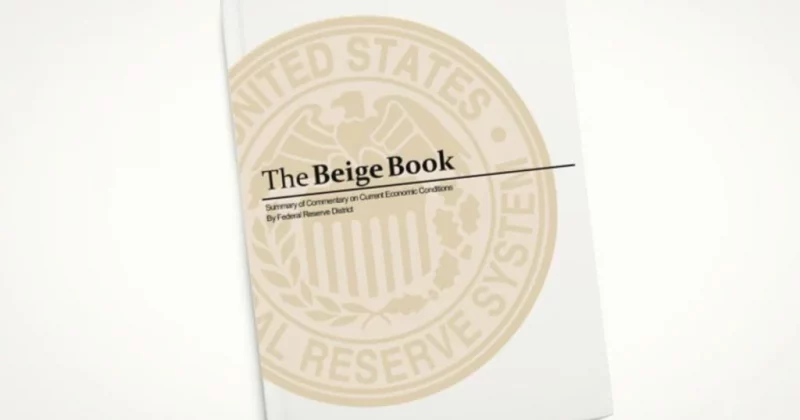
Federal Reserve’s Beige Book shows steady employment, rising inflation pressures
The Fed's latest economic snapshot paints a picture of an economy that's growing but can't shake persistent price increases, with energy costs doing most of the damage.


The Federal Reserve’s latest Beige Book shows a US economy still expanding, but only modestly, while inflation pressures are becoming harder to ignore.
The report, published June 3, said economic activity increased at a slight to moderate pace in ten of the twelve Federal Reserve Districts. One District reported a slight decline, while another reported no change. The bigger issue was prices, which rose at a moderate to strong pace overall, with most Districts reporting higher inflation than in the previous report.
The numbers behind the narrative
The Beige Book is a qualitative survey of business contacts across all twelve Fed Districts, compiled from anecdotal reports rather than hard economic data. The May 2026 edition was prepared by the Federal Reserve Bank of Kansas City using information collected on or before May 27.
Manufacturing stood out as one of the stronger areas. Nine Districts reported modest to strong gains in manufacturing activity, while only one reported a slight decline from the prior period. Demand was supported by factors including defense related activity and data center buildouts.
Employment barely moved. Eleven of the twelve Districts reported little to no change in employment, while one District recorded modest growth. Wage growth was described as modest to moderate and largely in line with inflation, although some Districts reported more frequent cost of living adjustments as fuel and household costs increased.
Macro, rates, and crypto—what moved markets and what matters next.
Daily. Free. Join 34,000+ readers across crypto, finance, and policy.
The inflation picture is where things get uncomfortable. Prices rose at a moderate to strong pace overall, with most Districts reporting stronger inflation than in the previous Beige Book. The main driver was energy related costs tied to the conflict in the Middle East, which spilled over into shipping, packaging, groceries, and fertilizer. Businesses also reported that non labor input costs were rising faster than selling prices, squeezing margins.
Consumer spending reflected the uneven nature of the current economy. Higher income households remained resilient and less sensitive to price increases, while middle income consumers were described as stretching budgets further before spending. Lower income consumers showed greater financial strain, with reports of higher credit card use, fewer retail visits, and stronger demand for necessities.
Why the Fed’s hands are tied
The Beige Book captures an awkward policy backdrop. Employment is largely flat, business sentiment is cautious, and consumer spending is increasingly divided by income. At the same time, price pressures are rising faster than in the previous report.
That combination complicates the Fed’s path. Growth is not strong enough to make tighter policy an easy call, but inflation is not soft enough to make rate cuts straightforward. Energy driven inflation also adds another challenge because central banks have limited power over supply shocks tied to geopolitical conflict.