
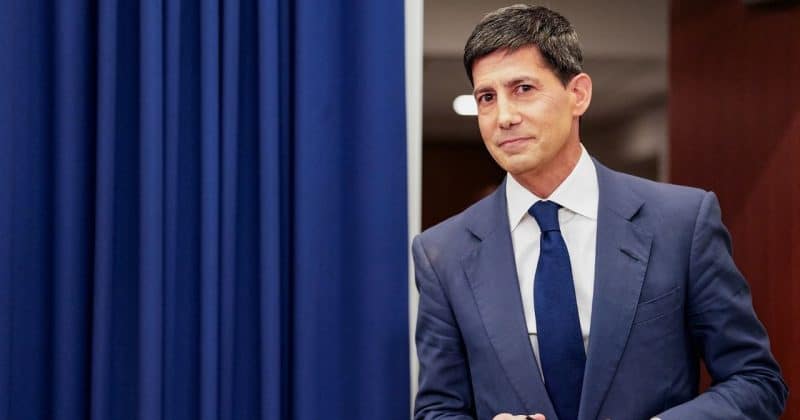
Federal Reserve’s new chairman Kevin Warsh holds first meeting, breaks from Powell’s approach
The new Fed chair left rates unchanged but signaled a hawkish shift on inflation and scrapped key communication tools from the Powell era
Kevin Warsh’s first act as Federal Reserve chairman wasn’t a rate hike. It was a vibe shift.
The newly confirmed Fed chair held his inaugural Federal Open Market Committee meeting on June 17, 2026, leaving the federal funds rate unchanged but delivering a message that landed very differently than anything Jerome Powell would have said. More officials projected potential rate hikes. The 2% inflation target got a forceful reaffirmation. And the famous “dot plot,” that constellation of anonymous rate projections that markets have obsessed over for years, got sidelined from certain reports.
What actually changed
Warsh, who was confirmed as Fed Chair on May 22, 2026, wasted no time putting his stamp on the institution. The most visible break from the Powell era came in communication strategy. Powell was known for extensive forward guidance, essentially giving markets a detailed roadmap of where rates were headed. Warsh appears to be tearing up that map.
Instead of telegraphing every move months in advance, Warsh announced the Fed would complete a comprehensive review of its communications approach by the end of 2026. He also established task forces dedicated to broader policy reviews, suggesting the institution is entering a period of internal rethinking that goes well beyond just how it talks to the public.
Markets didn’t love the ambiguity
The reaction was swift and predictable. Bond yields climbed while stock prices fell following the meeting.
The rate itself didn’t change. What changed was the distribution of expectations among Fed officials. More committee members now project potential rate hikes compared to the final months of Powell’s tenure. That hawkish tilt, combined with the communication overhaul, left traders with less certainty about the near-term path of monetary policy.
Macro, rates, and crypto—what moved markets and what matters next.
Daily. Free. Join 34,000+ readers across crypto, finance, and policy.
The Trump administration has applied pressure on the Fed regarding rate policy, creating an unusual dynamic where the new chairman must balance institutional independence with political reality. Warsh’s hawkish posture on inflation suggests he’s prioritizing the Fed’s credibility over any external pressure to cut rates, at least for now.
His term is scheduled to run through May 2030, giving him four years to reshape the institution.
What this means for crypto and risk assets
Warsh made zero references to cryptocurrency during the meeting or in surrounding communications. No mention of Bitcoin, stablecoins, digital assets, or any of the regulatory frameworks that crypto advocates have been pushing for.
A more hawkish Fed that’s willing to contemplate rate hikes creates a challenging environment for risk assets broadly. Bitcoin and other tokens have historically shown sensitivity to liquidity conditions. When the Fed tightens or even signals it might tighten, capital tends to flow toward safer harbors.
The removal of extensive forward guidance adds another layer of complexity. Under Powell, crypto markets could at least attempt to front-run Fed decisions based on his carefully worded press conferences and dot plot releases. With Warsh pulling back on that transparency, the market loses one of its key navigation tools.
Watch the communications review closely. When the Fed announces its revamped strategy later in 2026, the specifics will determine how much visibility markets have into future rate decisions.