
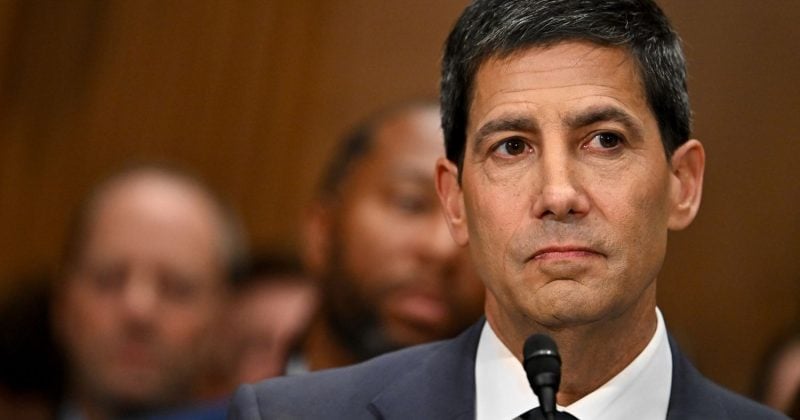
Kevin Warsh holds first press conference as Fed Chair, signals shift toward ‘strategic ambiguity’
The new FOMC chairman kept rates steady in his debut meeting while hinting that regular press conferences may become a thing of the past
Kevin Warsh just held his first press conference as Federal Reserve Chair, and the most notable thing he communicated was that he might stop communicating so much.
The FOMC voted to hold interest rates steady at its June 17, 2026 meeting, Warsh’s inaugural gathering as the 17th Chair of the Federal Reserve. The press conference began at 2:30 p.m. ET and introduced markets to a Fed leader who appears philosophically opposed to the idea that the central bank should be an open book.
A new era of fewer words
Warsh has been publicly skeptical about the necessity of holding press conferences after every FOMC meeting. Under Jerome Powell, the Fed moved toward more transparency, with pressers following each of the eight annual meetings. Warsh’s preferred approach has a name: “strategic ambiguity.”
Rates hold, inflation lingers
The decision to maintain current interest rate levels was widely expected, but the context matters. Elevated inflation pressures remain a central concern for the FOMC, and the meeting included an updated Summary of Economic Projections that reinforced just how tricky the current environment is.
Warsh was sworn in on May 22, 2026, after being nominated by President Trump. He replaced Jerome Powell, who notably remains on the FOMC as a governor.
The news moving money, markets, and the world—before your day starts.
Daily. Free. Join 34,000+ readers across crypto, finance, and policy.
Warsh isn’t new to the Fed, though. He served as a Fed Governor from 2006 through 2011, a period that included the global financial crisis.
What the Summary of Economic Projections tells us
The updated projections released alongside the June meeting reinforced a picture that hasn’t changed much in recent months. Inflation remains elevated, and the Fed is navigating an economy where cutting rates too early risks reigniting price pressures, while holding too long risks slowing growth unnecessarily.
What this means for investors
A shift toward strategic ambiguity from the Fed has direct implications for every asset class, including crypto. For the past several years, markets have been able to front-run Fed decisions with reasonable accuracy because the central bank was essentially narrating its own playbook in real time. If Warsh follows through on reducing the frequency and specificity of Fed communications, that predictability evaporates.
Bitcoin and other digital assets have become increasingly correlated with interest rate expectations. A less communicative Fed means more uncertainty, which means wider swings in both directions.
The presence of Powell on the FOMC adds another variable worth watching. If the former chair dissents on key votes or makes public comments that diverge from Warsh’s direction, it could create conflicting signals that amplify market confusion.