
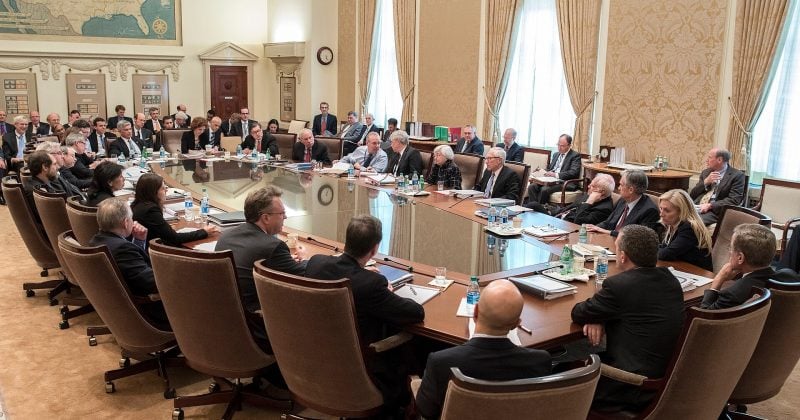
Federal Reserve Chair Warsh links high mortgage rates to inflation, signals no tolerance for above-target prices
The crypto-holding Fed chair's hawkish stance keeps 30-year mortgage rates near 6.5% while Bitcoin responds to his inflation rhetoric
Kevin Warsh, the newest occupant of the most powerful chair in global finance, wants you to know something: he’s not going to let inflation slide. In remarks tying persistent price pressures directly to elevated borrowing costs, the Fed Chair drew a straight line between inflation running above the 2% target and 30-year mortgage rates hovering near 6.5%.
The hawkish blueprint takes shape
Warsh, confirmed as Fed Chair in May 2026 to succeed Jerome Powell, has wasted little time establishing his monetary policy identity. During a speech on July 1, 2026, in Sintra, Portugal, he told markets in no uncertain terms that inflation above the Fed’s 2% target would not be tolerated.
Core PCE, the Fed’s preferred inflation gauge, was reported at 3.4% in June 2026. That’s nearly 70% above the target. And the Federal Open Market Committee held the federal funds rate steady at 3.5% to 3.75% at its June meeting. Nine out of 18 FOMC officials projected at least one rate hike before year-end.
With 30-year mortgage rates sitting in the 6.36% to 6.49% range, the housing market remains in a kind of suspended animation. Sellers don’t want to list because they’d give up their locked-in 3% pandemic-era rates. Buyers can’t afford to purchase because monthly payments at current rates are punishing.
The crypto-holding central banker
Warsh is the first Federal Reserve Chair with substantial ownership in cryptocurrencies, with disclosed holdings totaling approximately $192 million across a portfolio that reportedly includes Solana, Optimism tokens, and dYdX.
The news moving money, markets, and the world—before your day starts.
Daily. Free. Join 34,000+ readers across crypto, finance, and policy.
Warsh has publicly distinguished Bitcoin as an “important asset.” Bitcoin temporarily surpassed $60,000 following his July 1 speech.
What this means for investors
The housing market is arguably the most directly impacted sector. Mortgage rates near 6.5% mean the average monthly payment on a median-priced home remains historically elevated relative to incomes. Until core PCE moves materially closer to 2%, Warsh has given no indication that relief is coming.
Nine out of 18 FOMC members eyeing a rate hike is not a comfortable split. A single bad inflation print could tip the balance toward tightening. The smart money will be watching core PCE readings and FOMC dot plots as closely as on-chain metrics.