
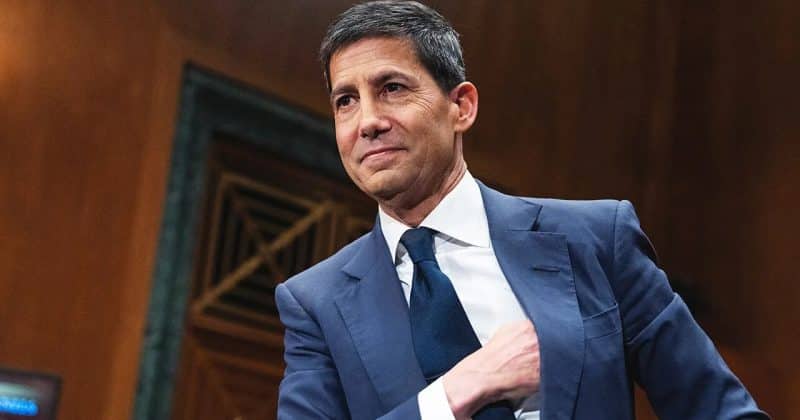
Federal Reserve chair Kevin Warsh faces pressure to raise rates amid inflation
The new Fed chair's first major test pits hawkish instincts against a president who wants the opposite
Kevin Warsh, the 17th Federal Reserve chair, was sworn in on May 22, 2026, and is already navigating one of the more uncomfortable early tenures in recent memory.
The May CPI climbed 4.2% year-over-year, the hottest reading since April 2023. The monthly increase came in at 0.5%. Core CPI, which strips out food and energy, rose 2.9% year-over-year.
President Trump, who nominated Warsh on March 4, 2026, has made it abundantly clear he wants rates going in the other direction. Trump characterized the May inflation figures as “great,” attributing the uptick to external factors like geopolitical conflicts rather than anything requiring a monetary policy response.
The rate hike calculus
Futures pricing indicates a 63% probability of a 25 basis point rate hike by October 2026, a dramatic reversal from earlier expectations of cuts that had aligned more closely with Trump’s publicly stated preferences.
Warsh’s first FOMC meeting is scheduled for mid-June 2026.
Warsh’s ideological tightrope
Warsh has publicly discussed the possibility that artificial intelligence could drive productivity gains significant enough to justify lower interest rates without reigniting inflation. But a 4.2% headline CPI reading with strong labor market numbers underneath doesn’t support that case under current conditions.
The gap between 4.2% and 2% is not subtle. It’s the kind of gap that historically demands action, not patience.
What this means for crypto investors
Rate hikes, or even credible signals that rate hikes are coming, tend to strengthen the dollar and raise the opportunity cost of holding non-yielding assets. Bitcoin falls squarely into that category. The 63% market-implied probability of a hike by October means that traders are already repositioning, and any hawkish surprise from the June FOMC meeting could accelerate that trend.
The core CPI reading of 2.9% suggests that some of the headline inflation is being driven by volatile components like energy, which are influenced by geopolitical factors outside the Fed’s control. Warsh could theoretically use that distinction to justify a more measured approach, hiking once and then pausing to assess, rather than launching an aggressive tightening cycle.