
Nexo Earn with Nexo
Federal Reserve Chair Kevin Warsh faces pressure to adjust rate stance as inflation complicates promises

Federal Reserve Chair Kevin Warsh faces pressure to adjust rate stance as inflation complicates promises

The new Fed chair promised lower rates and quieter communication, but surging inflation may force him to pick one.

Kevin Warsh walked into the Federal Reserve’s top job with two big promises: lower interest rates and a more restrained central bank that talks less and does more. He’s about to learn that the economy doesn’t care about campaign pledges.

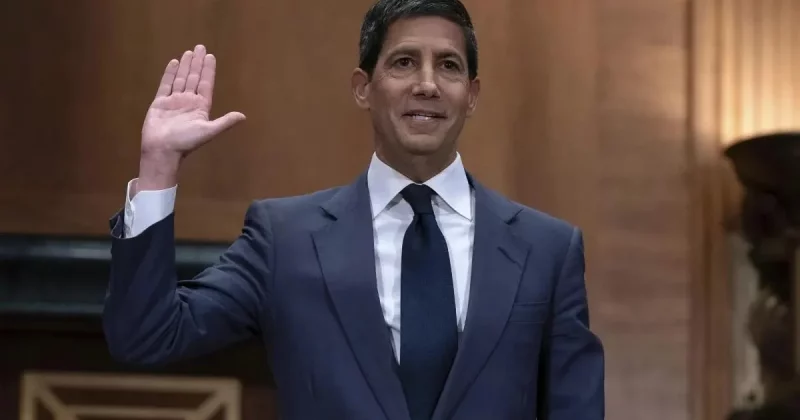
Sworn in as Federal Reserve Chair on May 22, 2026, following a Senate confirmation vote of 54-45, Warsh now faces an inflation backdrop that makes his pre-appointment advocacy for rate cuts look increasingly awkward. His first FOMC meeting, scheduled for June 16-17, will serve as the first real test of whether conviction or pragmatism wins out.

The rate cut problem

Warsh spent the lead-up to his confirmation arguing that artificial intelligence would deliver productivity gains significant enough to justify easing monetary policy. The logic was straightforward. If AI makes the economy more efficient, you can run things hotter without sparking inflation.

That thesis hasn’t aged well in recent months. Inflation pressures have surged to the point where some FOMC members are now openly discussing rate hikes, not cuts. The gap between Warsh’s stated preferences and what the economic data appears to demand is widening.

Market sentiment heading into the June meeting is predictably confused. Some traders still expect eventual rate cuts, pricing in the possibility that Warsh finds a way to thread the needle. Others are repositioning for a higher-for-longer scenario, particularly as geopolitical developments relating to Iran add another layer of uncertainty to the outlook.

Advertisement

Warsh’s track record doesn’t make the prediction any easier. During his tenure as a Fed governor from 2006 to 2011, he was generally viewed as hawkish. That historical posture sits in direct tension with the dovish promises he made on the way to the chairmanship.

The communication overhaul

The second pillar of Warsh’s agenda, reforming how the Fed talks to markets, creates its own set of complications.

He’s proposed dialing back forward guidance, reducing the frequency of speeches, and limiting press conferences. This represents a significant departure from the approach under Jerome Powell, who leaned heavily into transparency as a tool for managing market expectations.

But here’s where the two promises collide. If you’re going to break a commitment on rates, pivoting from cuts to holds or even hikes, you generally want robust communication channels to prepare markets for the shift. Pulling back on guidance at the exact moment you’re about to disappoint rate-cut hopefuls is a recipe for volatility.

The crypto wrinkle

Warsh disclosed holdings in various crypto-related entities spanning DeFi protocols, Ethereum scaling solutions, Bitcoin startups, and prediction markets. He has stated his intention to divest from these positions.

A Fed chair with personal exposure to crypto assets is unprecedented, even if he plans to sell. A chair who personally understood the crypto ecosystem well enough to invest in it, across multiple verticals no less, brings a fundamentally different perspective than one who views the space from arm’s length.

What this means for investors

The June 16-17 FOMC meeting is the immediate event to watch. Any signal about rate direction will move bond yields, equities, and crypto in tandem.

For crypto specifically, the intersection of monetary policy uncertainty and a potentially crypto-literate Fed chair creates a unique environment. Looser monetary policy, if Warsh somehow finds justification for cuts, would generally benefit risk assets including Bitcoin and Ethereum. A hawkish pivot to combat inflation would pressure them.

If Warsh’s communication reforms reduce the market’s ability to anticipate Fed actions, the volatility premium across all assets, crypto included, could increase structurally. Less information from the Fed means more guesswork from traders, and guesswork tends to produce wilder price swings.

Disclosure: This article was edited by Editorial Team. For more information on how we create and review content, see our Editorial Policy.

Federal Reserve Chair Kevin Warsh faces pressure to adjust rate stance as inflation complicates promises

Federal Reserve Chair Kevin Warsh faces pressure to adjust rate stance as inflation complicates promises

The new Fed chair promised lower rates and quieter communication, but surging inflation may force him to pick one.

Kevin Warsh walked into the Federal Reserve’s top job with two big promises: lower interest rates and a more restrained central bank that talks less and does more. He’s about to learn that the economy doesn’t care about campaign pledges.

Sworn in as Federal Reserve Chair on May 22, 2026, following a Senate confirmation vote of 54-45, Warsh now faces an inflation backdrop that makes his pre-appointment advocacy for rate cuts look increasingly awkward. His first FOMC meeting, scheduled for June 16-17, will serve as the first real test of whether conviction or pragmatism wins out.

The rate cut problem

Warsh spent the lead-up to his confirmation arguing that artificial intelligence would deliver productivity gains significant enough to justify easing monetary policy. The logic was straightforward. If AI makes the economy more efficient, you can run things hotter without sparking inflation.

That thesis hasn’t aged well in recent months. Inflation pressures have surged to the point where some FOMC members are now openly discussing rate hikes, not cuts. The gap between Warsh’s stated preferences and what the economic data appears to demand is widening.

Market sentiment heading into the June meeting is predictably confused. Some traders still expect eventual rate cuts, pricing in the possibility that Warsh finds a way to thread the needle. Others are repositioning for a higher-for-longer scenario, particularly as geopolitical developments relating to Iran add another layer of uncertainty to the outlook.

Advertisement

Warsh’s track record doesn’t make the prediction any easier. During his tenure as a Fed governor from 2006 to 2011, he was generally viewed as hawkish. That historical posture sits in direct tension with the dovish promises he made on the way to the chairmanship.

The communication overhaul

The second pillar of Warsh’s agenda, reforming how the Fed talks to markets, creates its own set of complications.

He’s proposed dialing back forward guidance, reducing the frequency of speeches, and limiting press conferences. This represents a significant departure from the approach under Jerome Powell, who leaned heavily into transparency as a tool for managing market expectations.

But here’s where the two promises collide. If you’re going to break a commitment on rates, pivoting from cuts to holds or even hikes, you generally want robust communication channels to prepare markets for the shift. Pulling back on guidance at the exact moment you’re about to disappoint rate-cut hopefuls is a recipe for volatility.

The crypto wrinkle

Warsh disclosed holdings in various crypto-related entities spanning DeFi protocols, Ethereum scaling solutions, Bitcoin startups, and prediction markets. He has stated his intention to divest from these positions.

A Fed chair with personal exposure to crypto assets is unprecedented, even if he plans to sell. A chair who personally understood the crypto ecosystem well enough to invest in it, across multiple verticals no less, brings a fundamentally different perspective than one who views the space from arm’s length.

What this means for investors

The June 16-17 FOMC meeting is the immediate event to watch. Any signal about rate direction will move bond yields, equities, and crypto in tandem.

For crypto specifically, the intersection of monetary policy uncertainty and a potentially crypto-literate Fed chair creates a unique environment. Looser monetary policy, if Warsh somehow finds justification for cuts, would generally benefit risk assets including Bitcoin and Ethereum. A hawkish pivot to combat inflation would pressure them.

If Warsh’s communication reforms reduce the market’s ability to anticipate Fed actions, the volatility premium across all assets, crypto included, could increase structurally. Less information from the Fed means more guesswork from traders, and guesswork tends to produce wilder price swings.

Disclosure: This article was edited by Editorial Team. For more information on how we create and review content, see our Editorial Policy.