
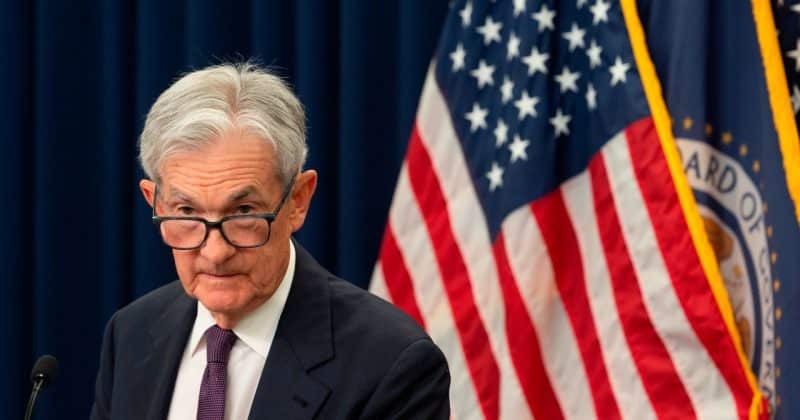
Federal Reserve chair takes initial steps toward regime change
Kevin Warsh kept rates steady at his first FOMC meeting but signaled a fundamental overhaul of how the Fed operates, with potential ripple effects across risk assets including crypto.
The Federal Reserve has a new boss, and he’s not here to maintain the status quo.
Kevin Warsh, who was confirmed by the Senate on May 13 with a 55-45 vote and sworn in as Fed Chair on May 22, 2026, has wasted little time making his intentions clear. He wants what he’s calling “regime change” at the central bank, a phrase that tends to make markets sit up and pay very close attention.
The first move: hold steady, then reshape everything
At his inaugural FOMC meeting on June 17, 2026, Warsh chose not to rock the boat on interest rates. The committee voted to keep the federal funds rate unchanged. Warsh used the meeting to signal that rate hikes may be necessary later in 2026 to combat rising inflation. He also announced the formation of task forces designed to examine major operational changes at the Fed.
Warsh previously served as a Fed governor from 2006 to 2011, a period that included the global financial crisis.
A $6.7 trillion balance sheet under the microscope
One of the most consequential areas Warsh has flagged for review is the Fed’s balance sheet, which currently sits at roughly $6.7 trillion. To put that in perspective, that’s larger than the GDP of every country on earth except the US, China, Germany, and Japan.
Macro, rates, and crypto—what moved markets and what matters next.
Daily. Free. Join 34,000+ readers across crypto, finance, and policy.
Warsh has also indicated he wants to rethink the Fed’s communication strategies. Under his predecessor Jerome Powell, the Fed moved toward more transparency and forward guidance.
The task forces he announced are expected to examine these policy frameworks, operational practices, and balance sheet management questions in detail.
What this means for crypto and risk assets
The signal of potential rate hikes later in 2026 is, by itself, a headwind for risk assets. Higher interest rates make safer investments like Treasury bonds relatively more attractive compared to speculative assets.
If Warsh accelerates the reduction of the Fed’s $6.7 trillion in holdings, that would drain additional liquidity from the system. If he slows or pauses the runoff, it could provide a tailwind.
The narrow Senate confirmation vote of 55-45 also suggests Warsh’s agenda may face political headwinds.