
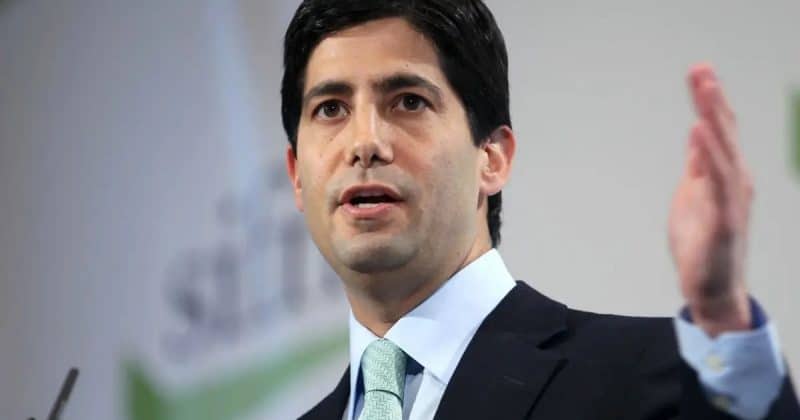
Federal Reserve chairman Kevin Warsh outlines bullish AI productivity case
The new Fed chair calls the AI revolution a 'paradigm shift' and a 'significant disinflationary force' while refusing to tip his hand on rate policy
Kevin Warsh, the newest occupant of the most powerful economic seat on the planet, wants you to know two things. First, he thinks artificial intelligence is about to reshape the US economy in ways that could be genuinely historic. Second, he’s not going to tell you what he plans to do about interest rates.
The Federal Reserve chairman, who was sworn in on May 22, 2026, after being nominated by President Donald Trump on March 4, has been making the rounds with an unusually optimistic message about AI’s potential to drive productivity, expand supply, and create jobs, all without the inflationary side effects that typically accompany economic booms.
A ‘paradigm shift’ in the early innings
Warsh isn’t shy about the scale of his conviction. During participation at the ECB Forum on July 1, he described the AI revolution as a “paradigm shift” that positions the US as a potential “big winner” in terms of productivity gains.
He also said we’re in the “first or second inning” of this transformation.
The core of Warsh’s argument is that AI represents a “significant disinflationary force.” He pointed to soaring capital expenditures within the US economy as evidence that this isn’t just Silicon Valley hype, characterizing massive AI infrastructure spending as a “good problem” to have, especially when contrasted with previous eras dominated by financial engineering rather than productive investment.
Macro, rates, and crypto—what moved markets and what matters next.
Daily. Free. Join 34,000+ readers across crypto, finance, and policy.
The inflation puzzle
Inflation has remained persistently above the Fed’s 2% target. That’s the backdrop against which Warsh is making his AI productivity case.
Warsh has pointedly avoided giving future policy guidance. He has, however, hinted at possible new task forces or model reviews to better understand the productivity advancements and inflation dynamics associated with AI.
Warsh served as a Fed Governor from 2006 to 2011, a tenure that included the global financial crisis.