
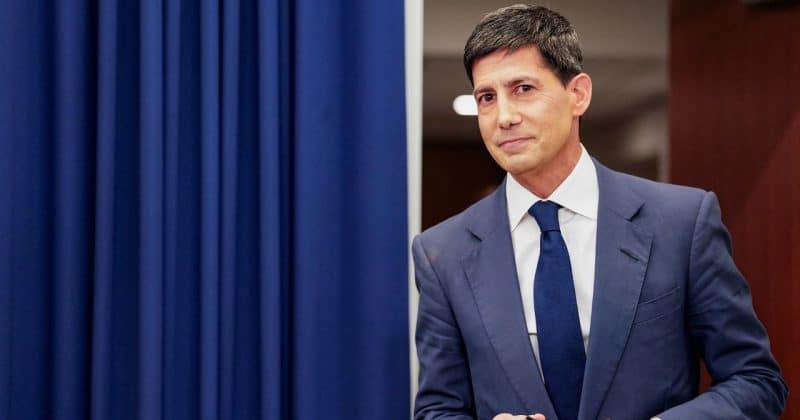
New Fed chairman Kevin Warsh holds rates steady, declares inflation ‘a choice’

New Fed chairman Kevin Warsh holds rates steady, declares inflation ‘a choice’

The 17th Federal Reserve chairman unveiled five task forces to overhaul the central bank while keeping the federal funds rate at 3.50% to 3.75%

Kevin Warsh just took the wheel at the Federal Reserve, and he’s not easing into the job. At his first FOMC meeting as chairman, Warsh held the federal funds rate at 3.50% to 3.75% and made clear that bringing inflation back to 2% is priority number one.

The declaration landed with a thud on Wall Street. Markets were hoping for dovish signals, maybe a hint that rate cuts were coming. Instead, they got a new chairman who called inflation “a choice” and announced five separate task forces to reshape how the Fed operates from the inside out.

The first meeting sets the tone

Warsh’s inaugural FOMC meeting took place on June 16-17, 2026, less than a month after he was sworn in on May 22. Warsh acknowledged that inflation has been running above the Fed’s 2% target for more than five years, with recent readings clocking in between 3.3% and 3.8%.

Advertisement

By calling inflation “a choice,” Warsh is essentially saying the Fed hasn’t been aggressive enough. That’s a pointed critique of the institution he now leads, and it suggests he views the previous approach as too accommodative, too patient, or both.

The labor market, meanwhile, was described as stable or improving during his first meeting, which removes one potential excuse for delaying action on prices.

Five task forces, one message

Warsh announced a structural overhaul of the central bank through five dedicated task forces covering communications, balance sheet management, productivity and jobs, data sources, and the overall inflation framework.

The inflation framework review is perhaps the most consequential. The Fed adopted its current framework, which allowed for periods of above-target inflation to compensate for periods below target, back in 2020. Warsh’s evident frustration with five-plus years of above-target inflation suggests that framework might not survive his tenure.

What this means for investors

The absence of any dovish language from Warsh’s first meeting triggered a negative market reaction. A Fed chairman who views persistent inflation as a policy failure is one who will lean toward tighter conditions. If inflation stays in the 3.3% to 3.8% range, the logical next step is rate hikes, not cuts.

Warsh served as a Fed governor from 2006 to 2011, meaning he was in the building during the financial crisis and its aftermath. Nominated by President Trump and confirmed by the Senate, he arrives as the 17th person to hold the chairmanship. Upon his confirmation, Warsh advocated for what he termed a “regime change” within the Fed to better ensure accountability and adherence to the dual mandate of price stability and maximum employment.

Disclosure: This article was edited by Editorial Team. For more information on how we create and review content, see our Editorial Policy.

New Fed chairman Kevin Warsh holds rates steady, declares inflation ‘a choice’

New Fed chairman Kevin Warsh holds rates steady, declares inflation ‘a choice’

The 17th Federal Reserve chairman unveiled five task forces to overhaul the central bank while keeping the federal funds rate at 3.50% to 3.75%

Kevin Warsh just took the wheel at the Federal Reserve, and he’s not easing into the job. At his first FOMC meeting as chairman, Warsh held the federal funds rate at 3.50% to 3.75% and made clear that bringing inflation back to 2% is priority number one.

The declaration landed with a thud on Wall Street. Markets were hoping for dovish signals, maybe a hint that rate cuts were coming. Instead, they got a new chairman who called inflation “a choice” and announced five separate task forces to reshape how the Fed operates from the inside out.

The first meeting sets the tone

Warsh’s inaugural FOMC meeting took place on June 16-17, 2026, less than a month after he was sworn in on May 22. Warsh acknowledged that inflation has been running above the Fed’s 2% target for more than five years, with recent readings clocking in between 3.3% and 3.8%.

Advertisement

By calling inflation “a choice,” Warsh is essentially saying the Fed hasn’t been aggressive enough. That’s a pointed critique of the institution he now leads, and it suggests he views the previous approach as too accommodative, too patient, or both.

The labor market, meanwhile, was described as stable or improving during his first meeting, which removes one potential excuse for delaying action on prices.

Five task forces, one message

Warsh announced a structural overhaul of the central bank through five dedicated task forces covering communications, balance sheet management, productivity and jobs, data sources, and the overall inflation framework.

The inflation framework review is perhaps the most consequential. The Fed adopted its current framework, which allowed for periods of above-target inflation to compensate for periods below target, back in 2020. Warsh’s evident frustration with five-plus years of above-target inflation suggests that framework might not survive his tenure.

What this means for investors

The absence of any dovish language from Warsh’s first meeting triggered a negative market reaction. A Fed chairman who views persistent inflation as a policy failure is one who will lean toward tighter conditions. If inflation stays in the 3.3% to 3.8% range, the logical next step is rate hikes, not cuts.

Warsh served as a Fed governor from 2006 to 2011, meaning he was in the building during the financial crisis and its aftermath. Nominated by President Trump and confirmed by the Senate, he arrives as the 17th person to hold the chairmanship. Upon his confirmation, Warsh advocated for what he termed a “regime change” within the Fed to better ensure accountability and adherence to the dual mandate of price stability and maximum employment.

Disclosure: This article was edited by Editorial Team. For more information on how we create and review content, see our Editorial Policy.