
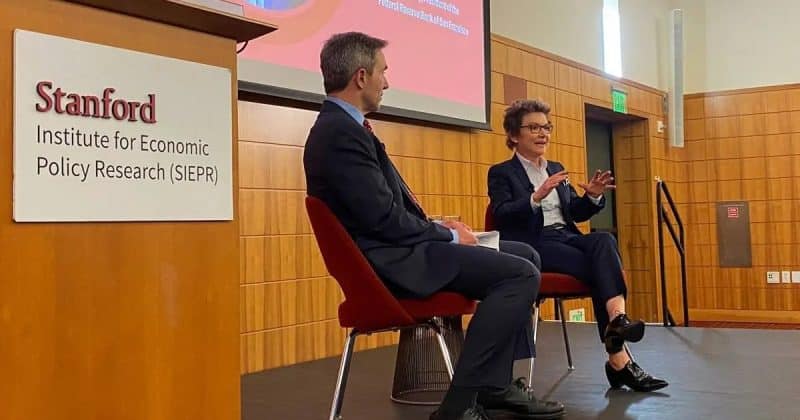
Fed’s Mary Daly warns oil shocks and tariffs are pushing inflation targets further out

Fed’s Mary Daly warns oil shocks and tariffs are pushing inflation targets further out

The San Francisco Fed president says geopolitical disruptions complicate the path back to 2% inflation, even as a ceasefire offers some hope

The Federal Reserve’s timeline for taming inflation just got longer. Mary C. Daly, President and CEO of the Federal Reserve Bank of San Francisco, said on April 10, 2026, that oil price shocks stemming from geopolitical conflict in the Middle East have thrown a wrench into what was already a complicated inflation picture.

Here’s the thing: the Fed had been expecting tariff-driven inflation to ease later in 2026. That timeline now needs a rewrite, thanks to the Iran conflict and its ripple effects on energy costs.

Oil, tariffs, and a moving target

The combination of tariff-related price pressures and a sudden spike in oil prices has made the Fed’s 2% inflation target harder to reach on any predictable schedule.

The oil price surge was driven by the Iran conflict, which disrupted energy markets and sent crude prices sharply higher. A subsequent US-Iran ceasefire announcement brought some relief, with oil prices declining from their peaks. But Daly was clear-eyed about the uncertainty: nobody knows how long that ceasefire holds, and its durability will determine whether energy costs stay manageable or become a persistent drag.

Advertisement

Fed funds target rates currently sit in the 3.50%-3.75% range. Any potential rate cuts depend on whether disinflation resumes once the tariff and oil shock effects start fading.

FOMC minutes from March and April 2026 painted a similar picture. The committee projected inflation could approach 2% by the end of 2027 as both tariff and oil effects diminish. The minutes specifically highlighted the relationship between core goods inflation and tariffs, while flagging the oil price impact as particularly difficult to forecast.

The ceasefire wildcard

Daly outlined two scenarios. If geopolitical tensions resolve quickly, oil prices stabilize, and the ceasefire proves durable, inflation pressures could ease meaningfully. If the conflict drags on or reignites, prolonged disruptions to oil markets would keep inflation elevated, slow economic growth, and potentially weaken the labor market.

Daly noted that monetary policy remains in a “stable condition” and the labor market continues to show resilience.

What this means for investors

Interest rates are likely staying put for longer than many expected. The 3.50%-3.75% range isn’t going anywhere until the Fed sees convincing evidence that inflation is trending back toward 2%. With the 2027 timeline now being the optimistic case, rate cut expectations need to be recalibrated.

Daly made no mention of digital assets or cryptocurrency regulation during her April remarks, a fact confirmed by a June 2026 CryptoBriefing report.

What’s worth monitoring closely: the durability of the US-Iran ceasefire, the next set of inflation readings, and any shift in FOMC language around rate cut timing.

Disclosure: This article was edited by Editorial Team. For more information on how we create and review content, see our Editorial Policy.

Fed’s Mary Daly warns oil shocks and tariffs are pushing inflation targets further out

Fed’s Mary Daly warns oil shocks and tariffs are pushing inflation targets further out

The San Francisco Fed president says geopolitical disruptions complicate the path back to 2% inflation, even as a ceasefire offers some hope

The Federal Reserve’s timeline for taming inflation just got longer. Mary C. Daly, President and CEO of the Federal Reserve Bank of San Francisco, said on April 10, 2026, that oil price shocks stemming from geopolitical conflict in the Middle East have thrown a wrench into what was already a complicated inflation picture.

Here’s the thing: the Fed had been expecting tariff-driven inflation to ease later in 2026. That timeline now needs a rewrite, thanks to the Iran conflict and its ripple effects on energy costs.

Oil, tariffs, and a moving target

The combination of tariff-related price pressures and a sudden spike in oil prices has made the Fed’s 2% inflation target harder to reach on any predictable schedule.

The oil price surge was driven by the Iran conflict, which disrupted energy markets and sent crude prices sharply higher. A subsequent US-Iran ceasefire announcement brought some relief, with oil prices declining from their peaks. But Daly was clear-eyed about the uncertainty: nobody knows how long that ceasefire holds, and its durability will determine whether energy costs stay manageable or become a persistent drag.

Advertisement

Fed funds target rates currently sit in the 3.50%-3.75% range. Any potential rate cuts depend on whether disinflation resumes once the tariff and oil shock effects start fading.

FOMC minutes from March and April 2026 painted a similar picture. The committee projected inflation could approach 2% by the end of 2027 as both tariff and oil effects diminish. The minutes specifically highlighted the relationship between core goods inflation and tariffs, while flagging the oil price impact as particularly difficult to forecast.

The ceasefire wildcard

Daly outlined two scenarios. If geopolitical tensions resolve quickly, oil prices stabilize, and the ceasefire proves durable, inflation pressures could ease meaningfully. If the conflict drags on or reignites, prolonged disruptions to oil markets would keep inflation elevated, slow economic growth, and potentially weaken the labor market.

Daly noted that monetary policy remains in a “stable condition” and the labor market continues to show resilience.

What this means for investors

Interest rates are likely staying put for longer than many expected. The 3.50%-3.75% range isn’t going anywhere until the Fed sees convincing evidence that inflation is trending back toward 2%. With the 2027 timeline now being the optimistic case, rate cut expectations need to be recalibrated.

Daly made no mention of digital assets or cryptocurrency regulation during her April remarks, a fact confirmed by a June 2026 CryptoBriefing report.

What’s worth monitoring closely: the durability of the US-Iran ceasefire, the next set of inflation readings, and any shift in FOMC language around rate cut timing.

Disclosure: This article was edited by Editorial Team. For more information on how we create and review content, see our Editorial Policy.