
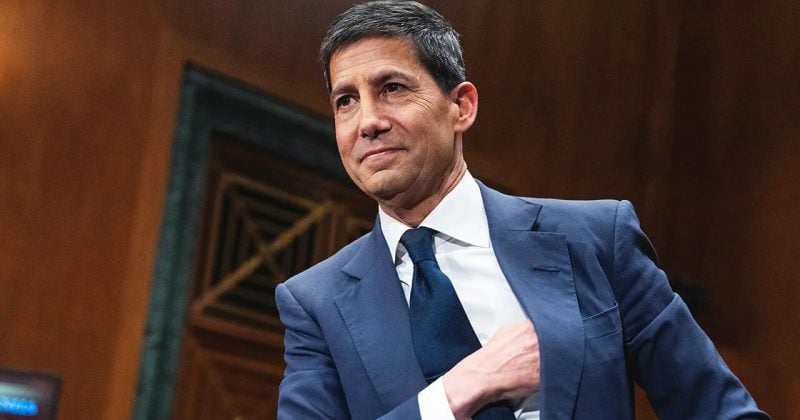
US equity-index futures flat as markets brace for Kevin Warsh’s first Fed decision
The FOMC is widely expected to hold rates steady for a fourth straight meeting, but crypto traders are watching the new chair's forward guidance more closely than the decision itself
S&P 500 futures edged up roughly 0.1% and Nasdaq-100 futures gained around 0.7% in early trading on June 17, as Wall Street collectively held its breath ahead of the Federal Open Market Committee’s latest rate decision.
This isn’t just any FOMC meeting. It’s the first one with Kevin Warsh sitting in the chair that Jerome Powell occupied for years. And while the consensus expectation is that the federal funds rate will stay parked at 3.50%-3.75% for the fourth consecutive meeting, the real action will come from whatever Warsh says afterward.
The rate hold everyone expects
Markets have essentially priced in a non-event on the rate front. The 3.50%-3.75% target range has held firm through multiple meetings now, and persistent inflation pressures have made the Fed’s path toward easing look more like a winding mountain road than a straightforward highway.
But here’s the thing. A rate hold isn’t really neutral. Every meeting where the Fed doesn’t cut is a meeting where tighter-than-desired liquidity conditions persist. That distinction matters enormously for risk assets, and it matters even more for crypto.
Why crypto traders care about a boring rate decision
The relationship between Fed policy and digital asset prices has become one of the most reliable patterns in crypto markets. Lower rates mean more liquidity sloshing around the financial system, which historically flows into risk-on assets like Bitcoin, Ethereum, and the broader altcoin universe. Higher rates, or rates that stay elevated longer than expected, tend to create a gravitational pull in the opposite direction.
Crypto markets have historically shown heightened volatility around FOMC announcements, often reacting more sharply than equities to the same information. The reason is structural. Digital asset markets trade 24/7, have thinner order books than major stock exchanges, and attract a participant base that tends to be more leveraged.
What makes this meeting particularly interesting for digital asset investors isn’t the rate decision itself. It’s the forward guidance. Traders will be parsing every sentence of the post-meeting statement and press conference for clues about when easing might begin.
The Warsh factor
Kevin Warsh brings a different profile to the Fed chair role than his predecessor. His background includes disclosed investments in various crypto projects, with ties to Solana among the most notable.
Persistent inflation has been the stubborn variable preventing rate cuts, and that dynamic hasn’t changed meaningfully. Geopolitical uncertainties continue to complicate the picture, creating supply-side pressures that monetary policy alone can’t easily resolve. These factors have contributed to a broader reassessment of when easing might realistically begin.